https://www.gosh.nhs.uk/news/new-funding-improve-outcomes-children-and-young-people-cancer/
GOSH and UCL researchers receive funding to improve outcomes for children and young people with cancer
18 Mar 2021, 10 a.m.

Researchers at University College London and Great Ormond Street Hospital receive £1.7m of grants in new Cancer Research UK-Children with Cancer UK Innovation Awards.
The Award is a new initiative to support novel and innovative approaches to childhood cancer research. Co-funded by Cancer Research UK and Children with Cancer UK, five teams of scientists who are leaders in their field have been awarded up to £1 million each to delve into the biology of children’s and young people’s cancers, with the hope of finding new ways to prevent and treat these complex cancers.
Improving outcomes for children and young people whose ALL relapses after treatment

One of the studies awarded just under £1million through this grant is the REVEALL Study (RElapse-specific therapeutic Vulnerability Evaluation in childhood & young adult ALL). This is a joint proposal led by researchers and clinicians from University College London (Cancer Institute and Great Ormond Street Institute of Child Health) and Great Ormond Street Hospital in collaboration with experts from other centres including the Francis Crick Institute and Memorial Sloan Kettering Cancer Center, New York.
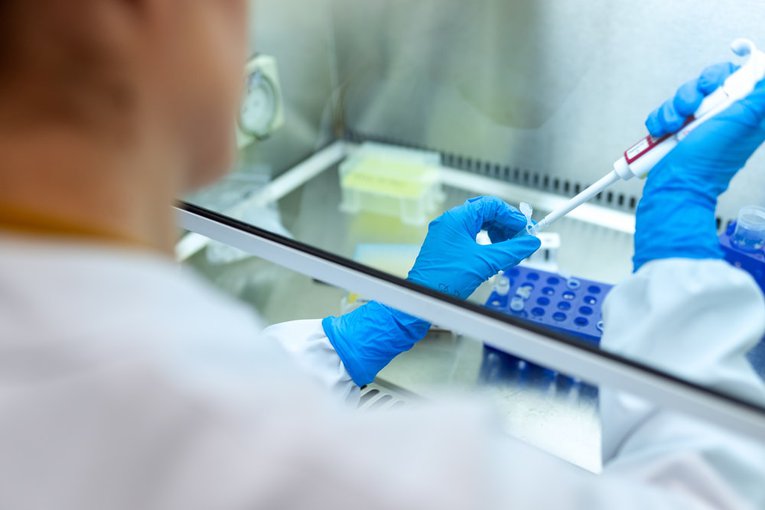
Although most children with leukaemia can be cured with standard therapy, treatment can be much more difficult if the disease returns (“relapses”). To address this issue, a nationwide study will be established, recruiting all children in the UK with relapsed leukaemia.
Dr David O’Connor, Consultant in Paediatric Haematology at GOSH, said: “through the analysis of patient samples we will characterise leukaemia in unprecedented detail, uncovering the cancer’s genetics and sensitivities to different treatments. This form of personalised medicine will guide which treatments the patients receive, giving them the best chance of survival.
We believe our approach will provide direct benefit to children with otherwise untreatable leukaemia. In addition, the wealth of data will provide a key resource for other researchers working on leukaemia, deciphering key mechanisms driving resistance, identifying predictive indicators, commonly called biomarkers, for treatment selection and uncovering new targets for drug development.”
Identifying new targets to treat rhabdomyosarcoma

Identifying new targets to treat rhabdomyosarcoma (RMS), a skeletal muscle cancer, by investigating its foetal origins.
A second study, awarded just over £750,000, looks at the biology of RMS, which is largely unexplored, but is thought to originate from cells in the foetus that develop incorrectly. Some of these cells persist in children with RMS when usually they wouldn’t. Dr Sam Behjati at the Wellcome Sanger Institute, and Dr Karin Straathof at UCL GOS ICH/GOSH, want to understand why this happens by building a cell ‘atlas’ – a complete guide to the cells that form RMS. They hope that understanding how RMS develops will help bring to light new targets for treatment.
Dr Karin Straathof, Wellcome Trust Intermediate Clinical Scientist at ICH and GOSH, and NIHR Clinical Academic Lecturer in Paediatric Oncology said: “While families of children diagnosed with cancer often ask this question, we do not yet know how cancers like rhabdomyosarcoma develop. By building a detailed map of this cancer and comparing this with what happens during normal development we will get a better understanding of the root of rhabdomyosarcoma. And importantly these insights will provide us with clues of how to develop new treatments.”
Dr Sam Behjati said: “Although treatments have dramatically improved over the past few decades, children continue to suffer from rhabdomyosarcoma, with few novel treatment approaches in sight. Moreover, survivors often experience lifelong adverse effects from treatment. I hope that our research will ultimately translate into benefits for children with rhabdomyosarcoma, in particular, better treatments.”
Junior researchers are crucial to the future of paediatric research
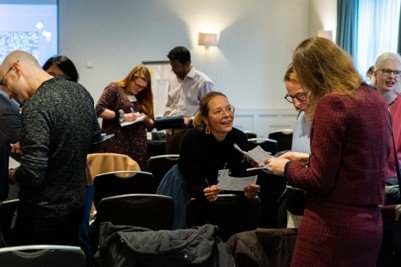
Junior researchers are central to the success and sustainability of paediatric research at GOSH and the University College London Institute of Child Health.
Creating communities and lasting involvement
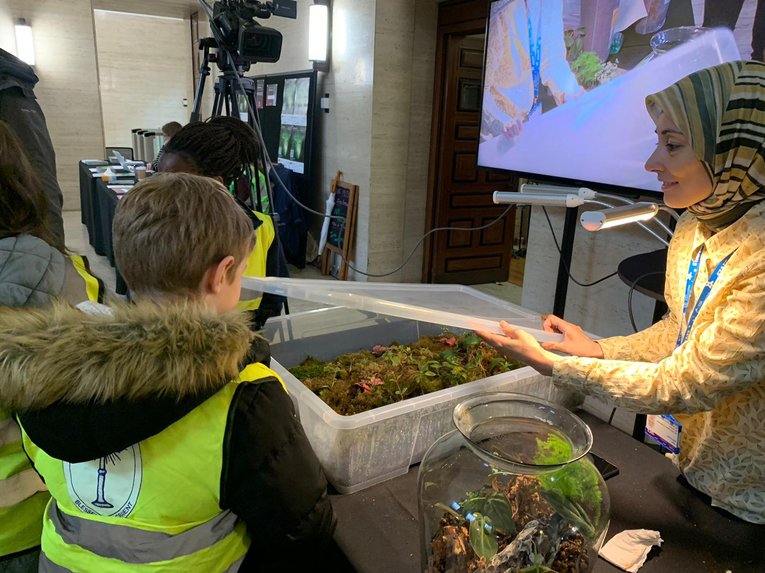
At GOSH, patient and public involvement and engagement (PPIE) builds lasting relationships and communities that shape research over time.

Building trust in data and research
At GOSH, patients and young people are helping researchers understand not just what data can do, but how it should (and shouldn’t) be used, explained and protected.