https://www.gosh.nhs.uk/news/new-consortium-aims-to-help-improve-care-for-arthritis-patients/
New consortium aims to help improve care for arthritis patients
19 Dec 2025, 10:23 a.m.
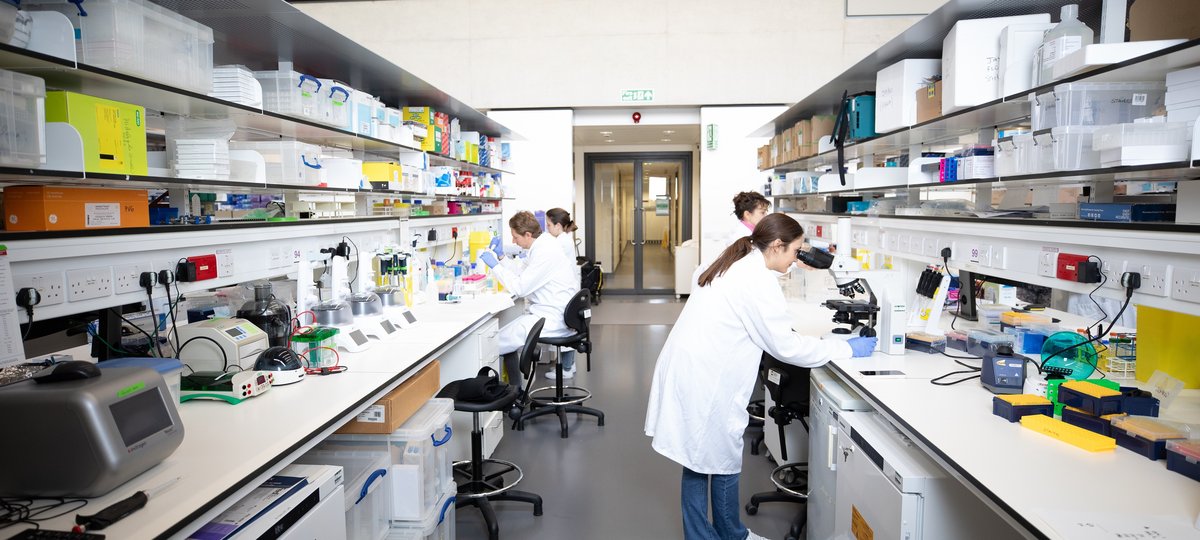
A new UK-led research group, including Great Ormond Street Hospital and University College London, aims to improve the lives of children, young people and adults with arthritis by defining for the first time what being in ‘remission’ from arthritis truly means.
The Arcadia consortium has been set up through £3 million of funding from charity Arthritis UK and is set to run clinical studies to try to accurately determine the true absence of disease.
Building on large groups of patients which include around 1,000 children and more than 3,000 adult patients in the UK and Rome, the consortium will analyse tissue samples at different stages of disease, treatment and remission.
This will help researchers better understand the differences between diseased and healthy joints, which they say is the key to knowing when a patient is truly in “tissue” remission.
Improving care
Currently, doctors assess whether a patient is in remission through measures such as a physical examination (how many joints look swollen or tender) or a blood test, like the Erythrocyte Sedimentation Rate or ESR which indicates inflammation in the body.
But the medication used to treat arthritis suppresses the inflammation and these signs can’t distinguish between the absence of the disease and its suppression.
It means that within a random sample of around 100 patients deemed to be in remission (those who have achieved so-called Low Disease activity for the last year or so), around half will see their arthritis return within a year if they stop their medication.
These can mean that patients are in a cycle of stop-starting medication – drugs which are expensive, carry risks and can have unpleasant side-effects such as nausea, vomiting and diarrhoea.
The researchers say the key to understand true remission is knowing when a patient’s joints are healthy, as opposed to just looking healthy or not swollen. Knowing how to measure this properly would enable doctors to advise patients when it is safe to stop their medication and possibly even which drug to stop first, they say.
The researchers aim to use the data gathered from the trials to develop tools to accurately determine the risk of relapse.
Remission from inflammatory arthritis is currently defined in the clinic as a significant reduction in, or absence of, symptoms such as pain, swelling and stiffness, but there is no accurate biological test for determining whether a patient is disease-free.
Professor Lucy Wedderburn, Consultant of Paediatric Rheumatology at GOSH and UCL Great Ormond Street Institute of Child Health, said: “This research is vital to reducing the burden that treatment places on individuals, particularly children.
“Despite considerable advances in the treatment of inflammatory arthritis over the past two decades, little progress has been made towards addressing the problem of when young people can safely stop their medication.
“These issues significantly impair the wellbeing of people living with arthritis and their families. Particularly for children, ongoing medication and side effects can take a significant toll.”
Inflammatory arthritis includes several different types of arthritis including rheumatoid arthritis and juvenile idiopathic arthritis (JIA).
Collectively, it affects more than 1 in 100 people, not only in later life but also in childhood and adolescence.
The disease can have a profound impact on daily life and sometimes leads to long term disability. It occurs when the immune system mistakenly attacks the joints, causing inflammation experienced as swelling, stiffness and pain.
Professor Adam Croft, principal investigator of the study and Arthritis UK Professor of Rheumatology at the University of Birmingham, said: “We believe the current definition of remission is not fit for guiding treatment decisions.
“Many people with inflammatory arthritis undertake treatment, usually for many years, to control their disease. Increasingly these drugs eliminate the noticeable symptoms of arthritis, and this is often called remission.
“However, we know that many people who are in remission and stop their medications quickly experience a relapse.
“This suggests that current drugs fail to alter the underlying causes of disease and that the causes of disease remain present even in the absence of troublesome symptoms.”
Arthritis UK chief executive Deborah Alsina MBE said: “The crux of the matter is we still lack an understanding of the root causes of inflammatory arthritis which is not only impeding our ability to define remission, but also our ability to find a cure.
“While there have been significant advances in treatment in recent decades, we are still treating symptoms. To put it another way, it is like spraying the weeds in the garden, but the roots remain out of sight in the soil.
“We are fortunate to have brought together world-leading experts in their field to undertake this foundational piece of research which will transform our understanding of inflammatory arthritis and create a springboard for researchers worldwide into new treatments.”
The five-year research study will begin this autumn.
Researchers and clinicians are from the universities of Birmingham, Glasgow, Newcastle, Oxford, Bristol, Liverpool, University College London, Kings College London, Università Cattolica del Sacro Cuore and Great Ormond Street Hospital.
All research at GOSH is underpinned by support from the National Institute for Health and Care Research GOSH Biomedical Research Centre.

World-first same-day metagenomics for children can detect hidden infections in intensive care
GOSH has successfully implemented a pioneering same-day respiratory metagenomics testing service for children in intensive care, helping clinicians identify infections more quickly and make better-informed treatment decision

Celebrating the gift of organ donation
During Organ Donation Week 2026, GOSH hosted its first Donor Family Tea Party, bringing together families whose children gave the extraordinary gift of life through organ donation.

Road closure: Great Ormond Street
There will be a partial closure of Great Ormond Street between 4am on Wednesday 21 and 10pm on Thursday 22 October.
GOSH families at the heart of major £6m project to improve support for children with complex needs
Children, young people and families from GOSH will help shape a major new research programme