
https://www.gosh.nhs.uk/our-research/our-research-infrastructure/nihr-great-ormond-street-hospital-brc/brc-news/accelerated-approval-granted-drug-developed-gosh/
Accelerated approval granted for drug developed at GOSH
14 Dec 2016, 9:55 a.m.

The United States Food and Drug Administration (FDA) granted accelerated approval for a new medication to treat Duchenne muscular dystrophy (DMD). The drug, Eteplirsen, was developed by a UK consortium led by Novel Therapies Theme lead, Professor Francesco Muntoni.
DMD is a severe, muscle-wasting condition caused by a fault in a gene, resulting in a failure to produce functional dystrophin. Currently DMD has few treatment options.
Eteplirsen was filed by Sarepta Therapeutics for accelerated approval by the FDA and is planned for immediate clinical use in the US. The approval for use in the EU is still underway. The drug will be used to treat patients with a specific subset of mutations of the dystrophin gene that affects around 13% of boys with DMD.
The drug ‘skips’ a part of the gene that makes dystrophin, which results in a shortened form of the dystrophin protein being produced, alleviating some of the symptoms of DMD and potentially extending a patient's mobility for a longer period of time.
World-first same-day metagenomics for children can detect hidden infections in intensive care
GOSH has successfully implemented a pioneering same-day respiratory metagenomics testing service for children in intensive care, helping clinicians identify infections more quickly and make better-informed treatment decision

Bagri family philanthropy enables UCL study into rare childhood neurological condition treated at GOSH
A generous donation from the Bagri family will underpin a landmark study into gene-editing treatments for Dihydropteridine reductase deficiency (DHPR deficiency), an ultra-rare childhood neurological condition, treated at GOSH
Celebrating 25 years of saving children’s lives with gene therapy
Marking 25 years since delivering the first ground-breaking gene therapy here at GOSH, having now treated more than 135 children with rare and life-threatening conditions across the world.
Landmark decision to screen for spinal muscular atrophy at birth
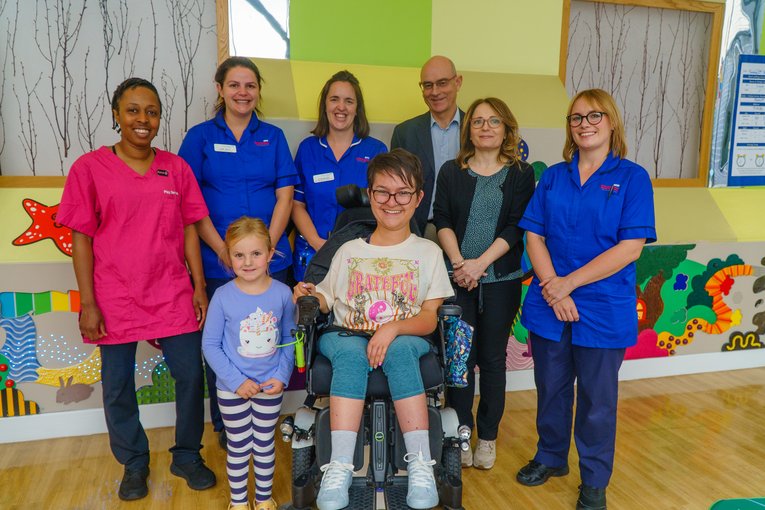
Great Ormond Street Hospital (GOSH) is delighted at the announcement that newborn babies in England will be offered screening for spinal muscular atrophy (SMA) through the newborn blood spot, or "heel prick", test programme.