
https://www.gosh.nhs.uk/news/researchers-identify-brain-network-linked-to-deadliest-childhood-brain-cancer/
Researchers identify brain network linked to deadliest childhood brain cancer
15 Jun 2026, 2:25 p.m.

Researchers at Great Ormond Street Hospital (GOSH) and University College London (UCL) have identified a human brain network associated with survival in children with diffuse midline glioma (DMG), the deadliest childhood brain cancer, raising the possibility of entirely new treatment approaches targeting tumour-brain circuits.
In a study published in Nature, researchers found that DMG tumours seem to exploit the brain’s existing network of cells to drive tumour growth and progression. Tumours that were more strongly connected to this network were associated with significantly shorter patient survival. The study builds on pioneering work in the field of cancer neuroscience which shows that brain tumours, including DMG, dynamically interact with the otherwise healthy brain.
The study was led by Dr Jai Sidpra and Dr Valentina Lind, UCL medical students, and senior author, Professor Darren Hargrave’s group at the UCL Great Ormond Street Institute of Child Health (UCL GOS ICH).
International findings
Working with collaborators from the UK, Europe, and the United States, the findings provide the first evidence in humans that a conserved and clinically important brain network underlies the progression of DMG, a devastating childhood brain cancer for which average survival remains approximately 12 months after diagnosis.
DMGs develop in the brainstem, thalamus and spinal cord – regions in the middle of the brain which are critical for consciousness, movement, and breathing – making surgical removal impossible in most children. Existing treatments, including radiotherapy and chemotherapy, provide only temporary benefit and, despite decades of research, no curative treatments exist.
Using imaging and clinical data from nearly 300 children with DMG across the world, the international team developed a method called “tumour network mapping”. Using a wiring diagram of the human brain (the “human connectome”), tumour network mapping enables researchers to look beyond individual tumour locations and map their connected brain circuitry.
This enabled them to identify a distributed pattern of networks associated with tumour progression and patient survival. They found that tumours with stronger connectivity to a specific brain network were associated with shorter overall survival, independent of tumour location and treatment received. The researchers also demonstrated that tumour growth over time followed the path of this brain network, suggesting that DMG spreads along connected neural circuits.
Some children with DMG undergo surgery to partially remove or obtain a sample of their tumour. Using generously donated patient tissue, investigators were able to perform genetic analyses that revealed fundamental biological differences between tumours with high and low connectivity to the DMG network.
The importance of mapping brain connections
Co-lead author Dr Jai Sidpra, UCL Division of Medicine and UCL GOS ICH, said: “For the first time in patients, we have mapped the brain-wide connections important for tumour growth and survival between a brain tumour and the otherwise healthy brain. Importantly, we show that these connections relate to meaningful biological differences between tumours which are known to promote the spread and integration of DMG throughout the brain’s neural circuitry.”
Crucially, the study sheds light on why DMG occur at such characteristic ages in childhood yet are very rare in adults. By cross-referencing their findings with scans of normal brain development, the authors discovered that brain regions within the DMG network undergo major transitions and maturation at two distinct periods which coincide with the peak ages at which children are diagnosed with DMG: early childhood and early adolescence. Their data suggest that, as healthy childhood brain circuits naturally mature and come online, they navigate a neurodevelopmental window of vulnerability. During these critical periods, brain regions within the DMG network may be uniquely susceptible to DMG tumour initiation.
The researchers caution that further prospective studies are required before tumour network mapping can be used clinically to guide therapeutic interventions. These studies, funded by Great Ormond Street Hospital Charity and the Little Princess Trust, are due to start in late 2026.
Senior author Professor Darren Hargrave, UCL GOS ICH and consultant neuro-oncologist at GOSH, said: “Diffuse midline glioma/Diffuse Intrinsic Pontine Glioma remains one of the most devastating diagnoses in childhood cancer and families urgently need new treatment options. This study provides an important framework for understanding how these tumours interact with the developing brain and opens up the possibility of new avenues for therapeutic investigation. Whilst further work is needed before these findings can influence patient care, they represent a significant step forward in our understanding of this disease.”
The specialist imaging support was provided by GOSH’s Neuroradiology Unit. The team facilitated international collaboration between leading radiologists and centres. They longitudinally mapped tumours, significantly advancing understanding of their patterns of spread.
Dr Kish Mankad, Clinical Director of the service, said: “This international collaboration also helped to create data sets to validate the initial observations at GOSH, strengthening the robustness of the study. This collaborative work was instrumental in developing a key prognostic biomarker, providing a non-invasive link between imaging findings and underlying tumour biology, with the ultimate aim of improving prediction and developing future treatment strategies.”
This study was supported by the Cancer Research UK City of London Centre, Olivia Hodson Cancer Fund, and University College London. All research at GOSH is underpinned by support from the National Institute for Health and Care Research GOSH Biomedical Research Centre.
GOSH families at the heart of major £6m project to improve support for children with complex needs
Children, young people and families from GOSH will help shape a major new research programme
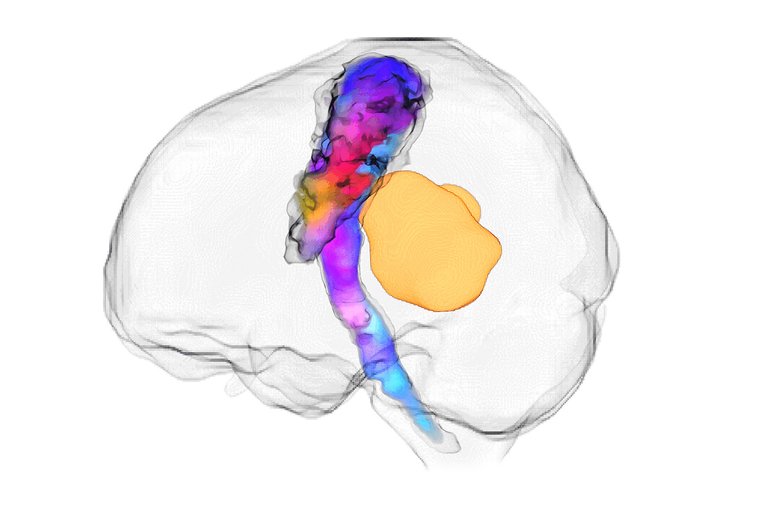
New Fellowship to develop the next generation of paediatric neuro-oncology specialists
The Tessa Jowell Brain Cancer Mission has launched it's first Paediatric Neuro-Oncology Fellowship, to support the development of specialists caring for children with brain cancers
Thousands join world-first trial to save lives of critically ill children
Some of the sickest children in the UK have started to join an innovative clinical trial designed to improve the survival and recovery of children requiring intensive care treatment, led by GOSH.

GOSH surgeon receives prestigious international award
Professor Paolo De Coppi, Consultant Paediatric Surgeon at Great Ormond Street Hospital (GOSH), has been recognised as an Honorary Fellow of the American College of Surgeons (ACS), one of the most prestigious honours in global surgery.