Search Results

Meckel's diverticulum

Meckel’s diverticulum is one of the most common congenital digestive system disorders – congenital means that the disorder was present at birth. When a child’s small intestine was developing, a small pouch formed consisting of tissue from elsewhere in the

Read more

Micturating Cystogram (MCUG)

A micturating cystourethrogram (MCUG) is a scan that shows how well your child’s bladder works. This page explains what is involved in a Micturating Cystogram and what to expect.

Read more

Septo-optic dysplasia

Septo-optic dysplasia is the name given to the condition where a child is diagnosed with two or more of the following problems: optic nerve hypoplasia, midline brain abnormalities and pituitary gland abnormalities. It is a rare condition affecting around

Read more

Cutis marmorata telangiectatica congenita (CMTC)

This information sheet from Great Ormond Street Hospital (GOSH) explains the causes, symptoms and treatment of cutis marmorata telangiectatica congenita (CMTC) and where to get help. Cutis marmorata telangiectatica congenita (CMTC) is a birthmark that aff

Read more

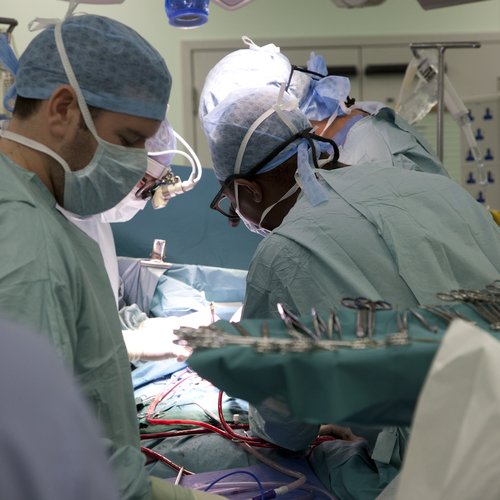
A surgical theatre showing the backs of surgeons operating and lots of bright lights

Ten GOSH staff successful in first research pilot scheme

24 Feb 2026, 5:28 p.m.

GOSH is announcing the awardees of it's first Protected Time for Research Scheme

Read more

Illustrations of grey koalas climbing trees on a hospital wall

Koala Ward

Koala Ward treats craniofacial, neurological problems, epilepsy or those who need surgery to the brain and spine. Location: Morgan Stanley Clinical Building

Read more

Graphic showing position of kidneys

New genetic test could improve treatment of children’s kidney cancer

18 Jul 2016, 4:25 p.m.

Genetic testing of tumours could enable doctors to identify children most at risk of relapsing from kidney cancer, suggests research from the UCL Institute of Child Health, research partner of Great Ormond Street Hospital.

Read more

What is epilepsy surgery?

The aim of the epilepsy surgery is to remove the underlying cause of the seizures and therefore cure the epilepsy. In some cases, however, it may only be possible to reduce the frequency of seizures as the cause cannot totally be removed.

Read more

After your child has had epilepsy surgery

Your child has recently had epilepsy surgery. We are happy that your child has now recovered from their operation and is ready to go home. This page from Great Ormond Street Hospital (GOSH) is designed to give you the advice and support you need when you

Read more

Cleft lip and palate

A cleft lip is a gap in the upper lip and can involve the gum as well. It can affect one side (unilateral) or both sides (bilateral) of the upper lip. It can be a small gap in the lip (incomplete cleft lip) or it can extend into the base of the nose (comp

Read more

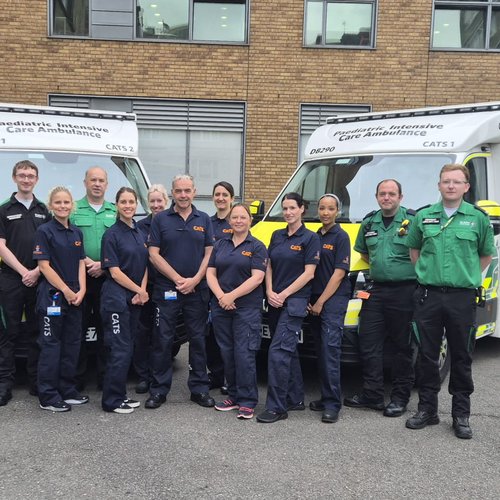
A group of medical professionals in paramedic uniforms stand smiling in front of two pediatric intensive care ambulances. They convey teamwork and readiness.

50,000th life-saving referral for super-specialist children's ambulance service

16 Jan 2026, noon

A transport service that provides life-saving care for some of the most critically ill children in the UK has reached a landmark 50,000 referrals.

Read more

Halo gravity traction

Information about the halo gravity traction system, from Great Ormond Street Hospital.

Read more

Image of Paul Brogan

GOSH BRC team define a new autoinflammatory disease caused by a mutation in WDR1

30 Mar 2017, 11:24 a.m.

Research carried out by BRC-funded Professor Paul Brogan and his team has defined a new autoinflammatory disease (AID) in humans with periodic fevers, immunodeficiency and intermittent thrombocytopenia.

Read more

Common investigations undertaken by the Tracheal service

Each referral to the Tracheal service is presented at the weekly multidisciplinary team (MDT) meeting.

Read more

Patient Emma

I was born with bilateral hip dysplasia

1 Oct 2018, 4:45 p.m.

Emma was born in a small town in West Sussex, not too far from Brighton. At birth, she was diagnosed with bilateral hip dysplasia and was referred to Great Ormond Street Hospital (GOSH) pretty much straight away. She had her first appointment there when s

Read more

Medical Photography and Health Creatives

This service forms part of University College London (UCL) and comprises photographers and designers. The team are fully qualified and are members of the Institute of Medical Illustrators and the Academy for Healthcare Science. This means that they have t

Read more

Looking after your frame – pin site care

The external fixator frame that holds the pins in place needs careful care, especially to keep them clean. This page from Great Ormond Street Hospital (GOSH) explains what you need to do and what action you need to take if problems develop.

Read more

Opsoclonus myoclonus syndrome (OMS) or dancing eye syndrome (DES)

Opsoclonus-myoclonus syndrome (OMS), also known as dancing eye syndrome (DES), is a rare neurological condition which develops over days or weeks in early childhood. This page from Great Ormond Street Hospital (GOSH) explains the causes, symptoms and trea

Read more

Sialogram

This page explains about sialogram and what to expect when your child comes to Great Ormond Street Hospital (GOSH) to have one.

Read more

Encephalocele

An encephalocele is a rare congenital (present at birth) type of neural tube defect where part of the skull has not formed properly so a portion of brain tissue and associated structures are outside the skull. The protruding sac may be covered with skin o

Read more