
https://www.gosh.nhs.uk/our-research/our-research-infrastructure/nihr-great-ormond-street-hospital-brc/brc-news/nice-recommend-drug-trialled-gosh-treatment-duchenne-muscular-dystrophy/
NICE recommend drug trialled at GOSH for the treatment of Duchenne Muscular Dystrophy
16 Sep 2016, 11:02 a.m.

NICE have published final guidance recommending ataluren for the treatment of Duchenne Muscular Dystrophy (DMD) caused by a nonsense mutation, in children aged 5 years and over who are able to walk.
DMD is a severe, muscle-wasting condition caused by a fault in a gene, resulting in a failure to produce functional dystrophin; currently DMD has few treatment options.
Ataluren is a novel drug, aimed at the root cause of the disease, allowing the body to continue to produce dystrophin by reading over the mutation in the DNA. Ataluren targets a specific change in the DNA called a nonsense mutation, which affects approximately 13% of Duchenne sufferers. Research in which GOSH recruited a substantial number of patients, has suggested that ataluren could delay the loss of walking in these patients by up to 7 years.
A 5-year managed access agreement for ataluren has been arranged, permitting patients with this disorder to access the drug whilst allowing more data to be collected on the drug’s efficacy.
Read full article here.
World-first same-day metagenomics for children can detect hidden infections in intensive care
GOSH has successfully implemented a pioneering same-day respiratory metagenomics testing service for children in intensive care, helping clinicians identify infections more quickly and make better-informed treatment decision
Bagri family philanthropy enables UCL study into rare childhood neurological condition treated at GOSH
A generous donation from the Bagri family will underpin a landmark study into gene-editing treatments for Dihydropteridine reductase deficiency (DHPR deficiency), an ultra-rare childhood neurological condition, treated at GOSH
Celebrating 25 years of saving children’s lives with gene therapy
Marking 25 years since delivering the first ground-breaking gene therapy here at GOSH, having now treated more than 135 children with rare and life-threatening conditions across the world.
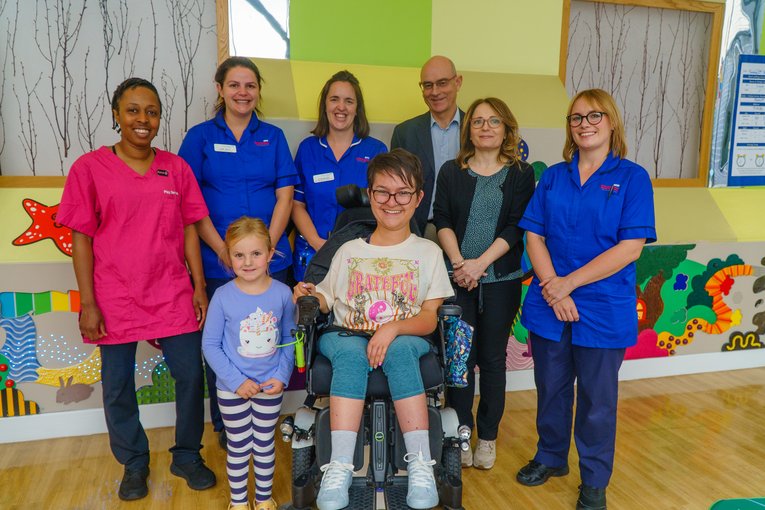
Landmark decision to screen for spinal muscular atrophy at birth
Great Ormond Street Hospital (GOSH) is delighted at the announcement that newborn babies in England will be offered screening for spinal muscular atrophy (SMA) through the newborn blood spot, or "heel prick", test programme.