
https://www.gosh.nhs.uk/our-research/our-research-infrastructure/nihr-great-ormond-street-hospital-brc/brc-news/autolus-acquires-rights-commercialise-novel-t-cell-therapy-developed-gosh-and-uclh/
Autolus acquires rights to commercialise novel T-cell therapy developed at GOSH and UCLH
24 Apr 2018, 2:56 p.m.
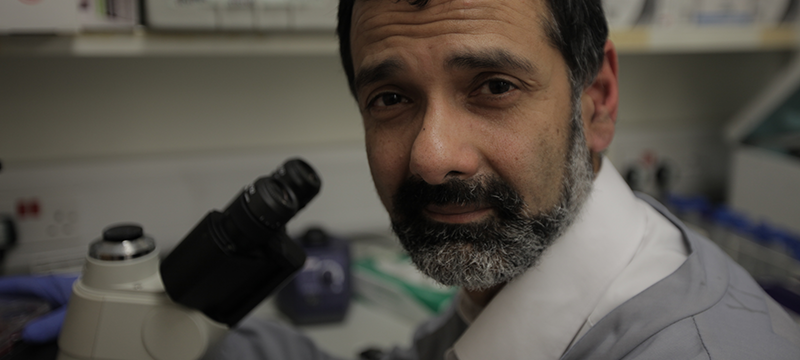
The biopharmaceutical company Autolus has acquired global rights to develop and commercialize a novel T-cell therapy for the treatment of B-cell lymphomas and leukaemias.The biopharmaceutical company Autolus has acquired global rights to develop and commercialize a novel T-cell therapy for the treatment of B-cell lymphomas and leukaemias. The therapy, known as AUTO1, is currently the subject of two Phase 1 studies: one in paediatric acute lymphoblastic leukaemia (ALL) led by National Institute for Health Research (NIHR) GOSH Biomedical Research Centre (BRC) researcher Professor Persis Amrolia and the other in adult ALL led by Dr Martin Pule at UCL Hospital (UCLH).
Autolus Limited specialises in developing next-generation programmed T-cell therapies and has acquired the rights from UCL Business plc (UCLB), the technology-transfer company of University College London (UCL).
The AUTO1 therapy uses a type of immune cell (T-cells) that have been modified to efficiently recognize and kill cancer cells. The T cells are engineered to express a novel CD19-specific chimeric antigen receptor (CAR), which targets B-cell lymphomas and leukaemia expressing the CD19 protein. AUTO1 is also designed to reduce the risk of cytokine release syndrome - a serious and potentially life-threatening side effect of immunotherapy. In the paediatric ALL study, which was recently presented at the the 2017 Annual Meeting of the American Society of Hematology, investigators observed levels of efficacy similar to those in other reported studies without the need to administer immunosuppressive drugs.
This partnership between UCL Business and Autolus will support the continued development of this promising approach and bring this ground-breaking new treatment one step closer to patients.
Read more: Autolus press release
World-first same-day metagenomics for children can detect hidden infections in intensive care
GOSH has successfully implemented a pioneering same-day respiratory metagenomics testing service for children in intensive care, helping clinicians identify infections more quickly and make better-informed treatment decision
GOSH families at the heart of major £6m project to improve support for children with complex needs
Children, young people and families from GOSH will help shape a major new research programme
Thousands join world-first trial to save lives of critically ill children
Some of the sickest children in the UK have started to join an innovative clinical trial designed to improve the survival and recovery of children requiring intensive care treatment, led by GOSH.

GOSH surgeon receives prestigious international award
Professor Paolo De Coppi, Consultant Paediatric Surgeon at Great Ormond Street Hospital (GOSH), has been recognised as an Honorary Fellow of the American College of Surgeons (ACS), one of the most prestigious honours in global surgery.