https://www.gosh.nhs.uk/news/nhs-eye-gene-therapy-restores-saffies-sight/
NHS eye gene therapy restores Saffie's sight
22 Apr 2026, 7:30 p.m.
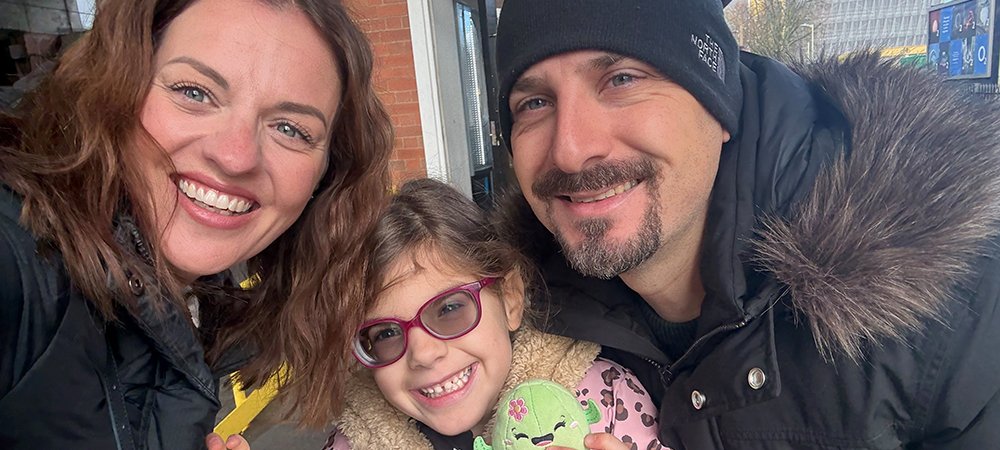
A six-year-old girl has had her sight restored thanks to life-changing eye gene therapy for rare blindness at Great Ormond Street Hospital (GOSH).
Saffie Sandford, from Stevenage in Hertfordshire, has the rare condition Leber’s Congenital Amaurosis (LCA), a mutation in the RPE 65 gene, that causes retinal dystrophy.
The condition prevents cells in the eye from making a specific protein that is essential for normal vision. Babies born with the condition have poor sight from infancy which further deteriorates, with many ultimately losing their vision completely in adulthood. Babies and children with the condition have low vision in daylight and no vision in low light.
Saffie loves her super-hero
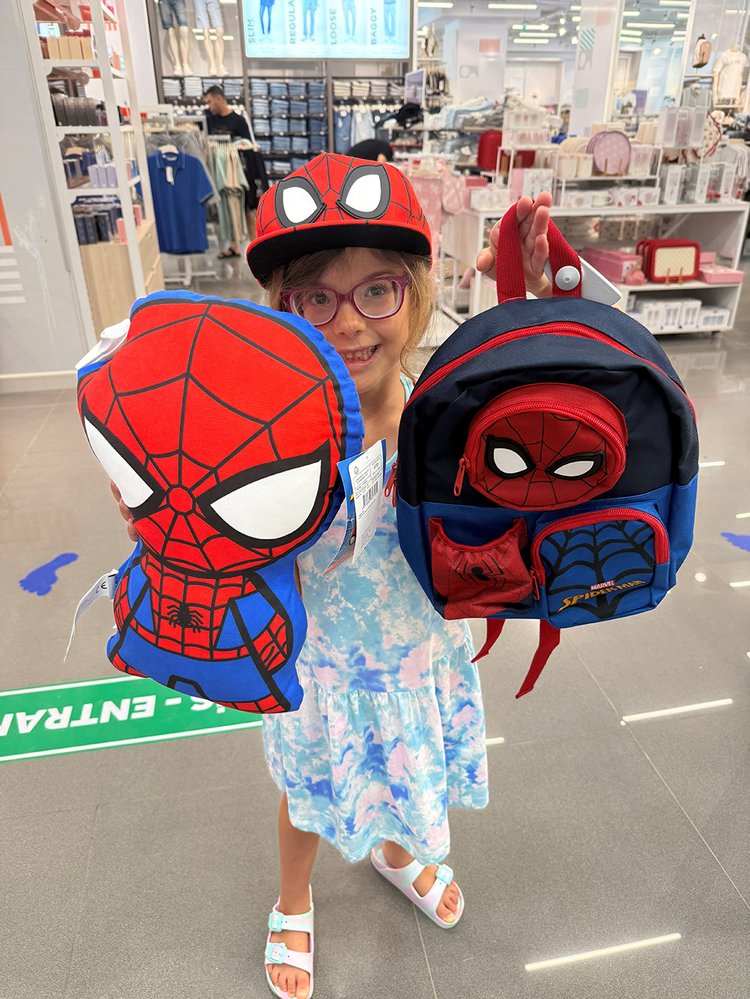
Spiderman-loving Saffie was diagnosed with LCA when she was five and a half-years-old after her parents noticed she was struggling to see in the dark.
After undergoing tests at Moorfields Eye Hospital, she was transferred to GOSH to have the eye gene therapy, Luxturna, which is the first of its kind for one of the genetic causes of LCA.
Mum Lisa said: “Saffie’s diagnosis came as a huge shock to us, as we’d never heard of the condition or knew me and her dad Tam were carriers. It was such a rollercoaster of a journey, but we were so relieved and grateful when we heard there was a treatment available on the NHS for Saffie. We were told that without the treatment, she would be blind by the age of 30.
Saffie had the eye gene therapy in her first eye in April 2025 just before her sixth birthday, and in her second eye in September 2025.
“Having the treatment has been life-changing, it’s like someone waved a magic wand and restored her sight in the dark. We’ve been able to take her trick or treating, and out to restaurants in the evening – something that was impossible before.
“Her peripheral sight in the daylight has also improved. She’s now able to see hazards and has improved at school. She’s thriving and you wouldn’t know she had the condition just by looking at her.”
Gene therapy making a big difference
Researchers at GOSH and University College London (UCL) have now published a study showing that treating younger children, like Saffie, who have a rare inherited blindness with the gene therapy, Luxturna (Voretigene Neparvovec), can improve sight and strengthen visual pathways at a critical stage of brain development.
In the largest UK study of its kind, experts followed 15 children who were treated with the gene therapy at GOSH between 2020 and 2023. The promising results have been published in JAMA Ophthalmology.
Clinicians treated babies as young as 15 months old up to children aged 12. The one-off gene therapy contains a healthy copy of the gene which is directly injected into the eye.
Results showed that the gene therapy can improve visual pathway function in young children with RPE65-related retinal disease.
Traditional vision tests can be difficult for very young children or those with neurodevelopmental conditions, the research team used pattern visual evoked potentials (VEPs) - a painless, non‑invasive electrophysiology test that measures how well signals travel from the retina to the visual cortex.
Seven out of 10 children who completed pattern VEP testing showed clinically meaningful improvements after treatment, including stronger visual signal responses and faster processing times.
Many parents reported noticeable improvements in their child’s ability to see or navigate in low‑light conditions, which was challenging for them before the treatment.
Any improvement is a big step
Rob Henderson, consultant ophthalmologist at GOSH, said: “For the first time, we’ve been able to show objectively that gene therapy can strengthen the visual pathways in babies and young children who are living with this rare eye condition. For many of the families we work with, even small improvements in their child’s ability to see the world around them make a profound difference.
“This research highlights not only the potential of gene therapy to change what’s possible for children with inherited retinal disease, but also the importance of developing age-appropriate outcome measures. Pattern VEPs could help set a new standard for how future paediatric gene therapy trials are assessed around the world.”
Oliver Marmoy, Specialist Clinical Scientist at GOSH, said: “At GOSH we offer child friendly adaptations for testing functional vision objectively in children. One of these tests, the pattern visual evoked potential (PVEP) tells us how well the signals made by the eye travel are received by the brain.
"We can do this in alert and awake children of all ages and abilities, by adapting to their needs allowing snacks, intermixing testing with watching their favourite programme, and playing games during the test. Our work has shown that pattern VEPs can be used as a reliable, reproducible outcome measure. This addresses a critical gap in the assessment of how well paediatric retinal gene therapies work.”
Saffie’s mum Lisa added: “We are happier than we can describe that we went ahead and put our trust in GOSH and in Rob. The results have been incredible, and we are eternally grateful that our little girl has been given her sight back. We know it might not last forever, but we feel fortunate every day that she has been given this chance.”
Luxturna was the first approved eye gene therapy available on the NHS, and GOSH’s joint service with Moorfields Eye Hospital NHS Foundation Trust launched in 2020.
GOSH has been at the forefront of developing and delivering gene therapies for 25 years.
World-first same-day metagenomics for children can detect hidden infections in intensive care
GOSH has successfully implemented a pioneering same-day respiratory metagenomics testing service for children in intensive care, helping clinicians identify infections more quickly and make better-informed treatment decision
Celebrating the gift of organ donation
During Organ Donation Week 2026, GOSH hosted its first Donor Family Tea Party, bringing together families whose children gave the extraordinary gift of life through organ donation.

Postponed - Road closure: Great Ormond Street
Postponed: There will be a partial closure of Great Ormond Street between 4am on Wednesday 21 and 10pm on Thursday 22 October.
GOSH families at the heart of major £6m project to improve support for children with complex needs
Children, young people and families from GOSH will help shape a major new research programme