https://www.gosh.nhs.uk/news/ich-researcher-leads-global-effort-protect-children-cancer-during-covid-19-pandemic/
ICH researcher leads global effort to protect children with cancer during COVID-19 pandemic
21 May 2020, 1:59 p.m.

New international guidance will help frontline staff around the world continue to provide effective care for children and young people with cancer, at a time when these services are under great pressure due to the COVID-19 pandemic.
Recognising a significant and immediate global threat to the safe and effective care of children with cancer, the International Society for Paediatric Oncology (SIOP) used its global network of experts to write the advice in just one month.
With hospitals around the world working in vastly different ways and infection control measures changing the way treatment can be delivered, the guidance outlines simple and practical ways of adapting cancer services to keep delivering quality care.
“We want to enable our colleagues around the world to help and guide their patients and families through informed decision making,” said Professor Kathy Pritchard-Jones, SIOP President and researcher at the UCL Great Ormond Street Institute of Child Health (ICH). “We know children with cancer and their families will be worried about what the COVID-19 pandemic means for them. We’ve used our combined experience and expertise to support their physicians with easily accessible clinical guidance, to help them continue treatment whilst doing everything possible to protect people from COVID-19.”
The team’s advice is particularly targeted at low to middle income countries, which are likely to be most severely affected.
Responding to concern that cancer diagnoses may be missed or delayed if families are holding off on reporting symptoms or visiting their GP, this new guidance supports a global drive towards encouraging diagnosis as early as possible.
The guidance includes recommendations for adapting standard approaches to care for six key children’s cancers, including acute lymphoblastic leukaemia (ALL), Wilms tumour – a cancer of the kidney, and low grade glioma - a childhood brain tumour.
Alongside practical advice for clinical care, the guidance outlines ways of supporting families during the pandemic, from making sure they have the opportunity to ask questions, to providing referral for psychological support. It also recommends steps to keep medical staff safe throughout.
“We brought together SIOP members and clinical leads from around the world to pull this together in the space of one month,” says Professor Pritchard-Jones. “It’s a fantastic example of people coming together, many of them giving up their personal time, to try and make sure a vulnerable group of children and their families keep getting the care they need.”
Professor Darren Hargrave, GOSH consultant and children’s cancer researcher at the ICH, contributed to the guidance on brain tumours. He says: “Our guidance lays out practical advice for delivering treatments such as radiotherapy and surgery, and the safety of delaying or adapting some treatments during the COVID-19 pandemic.”
The SIOP is the only global multidisciplinary professional society entirely devoted to supporting children and young people with cancer. Through global collaboration, education, training, research and advocacy, the SIOP are working towards achieving their vision that ‘no child should die of cancer’.
This study was led by the SIOP and received no specific funding, reflecting the commitment from all authors and their organisations to invest personal time and resource. Professor Pritchard-Jones is supported in part by the National Institute of Health Research (NIHR) Great Ormond Street Hospital Biomedical Research Centre (BRC).
Other organisations who provided key support in assembling the team of experts include St Jude Global Programme and the Children’s Oncology Group, based in the USA, the tumour-specific clinical trial group leaders of SIOP Europe, members of the Paediatric Radiation Oncology Society (PROS) and the International Society of Paediatric Oncology Surgery IPSO) and Childhood Cancer International, a global organisation representing childhood cancer parents’ associations.
All research at GOSH and the ICH is underpinned by support from the NIHR Great Ormond Street Biomedical Research Centre (BRC) and GOSH Charity.
Five GOSH clinicians recognised with professorial appointments at UCL
Five clinician researchers from GOSH have been promoted to professor by University College London (UCL), recognising their outstanding contributions to research, innovation and child health.

From staff idea to global innovation: Taking the next step towards improving patient safety
A simple idea developed by a GOSH clinician has secured a commercial partner.
Four research projects receive funding to improve understanding and treatment of childhood cancer
Researchers at Great Ormond Street Hospital (GOSH) and UCL Great Ormond Street Institute of Child Health (UCL GOS ICH) have received funding from The Little Princess Trust for four childhood cancer research projects.
New study brings hope for children with rare life-threatening kidney disease
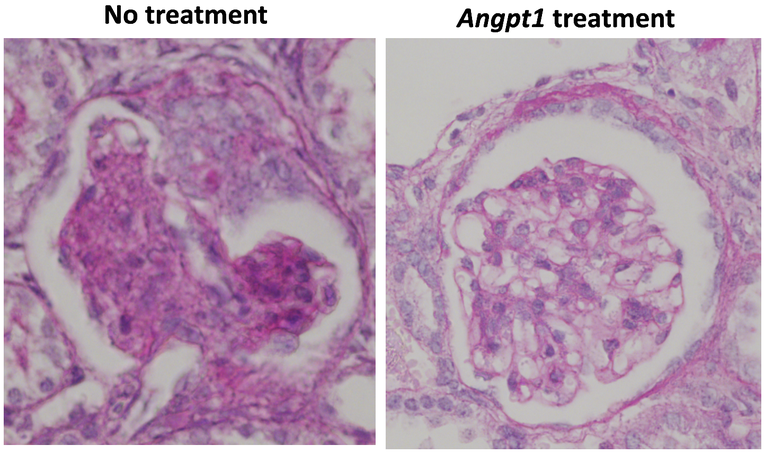
New research funded by Great Ormond Street Hospital Charity (GOSH Charity), LifeArc and Kidney Research UK has taken an important step towards developing a new treatment for serious genetic kidney diseases affecting children.