
https://www.gosh.nhs.uk/news/from-staff-idea-to-global-innovation-taking-the-next-step-towards-improving-patient-safety/
From staff idea to global innovation: Taking the next step towards improving patient safety
7 Sep 2026, 2:59 p.m.

A simple idea developed by a Great Ormond Street Hospital (GOSH) clinician to help tackle the growing challenge of antimicrobial resistance is set to reach healthcare organisations around the world after securing a commercial partner.
AseptiFlow, a device invented and developed by Dr James Soothill, Consultant Microbiologist at GOSH, was developed in response to a problem increasingly recognised in hospitals globally: sink drains can act as reservoirs for antimicrobial-resistant bacteria and may contribute to their spread.
The technology has now been licensed to Mueller Europe Ltd, creating a pathway for large-scale manufacture and wider adoption in healthcare settings and other public environments. The agreement represents an important milestone in the journey from staff-generated idea to a product with the potential to improve patient and public safety far beyond GOSH.
Turning a clinical observation into an innovation
The idea for AseptiFlow came directly from challenges observed in clinical practice.
Dr Soothill recognised that while sinks are essential in healthcare environments, contaminated drain systems can sometimes harbour harmful bacteria. He set out to develop a practical solution that could reduce the risk of contaminated droplets splashing back into sink bowls and potentially spreading bacteria.
The result was AseptiFlow, a simple device fitted between a sink outlet and U-bend that helps prevent contaminated droplets from travelling back into the sink
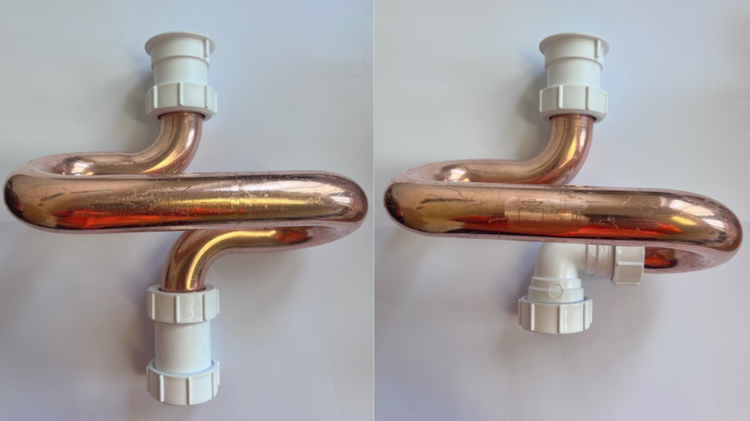
Laboratory studies and a randomised trial at GOSH demonstrated significantly lower levels of harmful bacteria in sinks fitted with the device compared with standard sinks.
Dr James Soothill, the inventor of Aseptiflow, said:
"Hospital sinks have increasingly been recognised as reservoirs for multi-drug-resistant bacteria and have been implicated in outbreaks around the world. AseptiFlow was developed as a simple, practical solution to help prevent contaminated droplets from splashing back from sink drains and spreading bacteria."
Supporting innovators to create impact
The development of AseptiFlow highlights how ideas generated by GOSH staff can be developed into innovations that benefit patients and create wider impact across healthcare.
Working with GOSH's Business Development team and innovation partners, the project received support for intellectual property protection, funding opportunities, clinical evaluation and commercial partner engagement.
The licensing agreement will help bring the technology to market while ensuring innovation developed at GOSH has the opportunity to benefit patients on a much larger scale. As with other successful healthcare innovations, commercialisation can also generate income that can be reinvested to support future research, innovation and improvements for patients.
Dr David Chapman-Jones, Head of Business Development at GOSH Research and Innovation, said:
"AseptiFlow demonstrates the power of frontline innovation. It began with a clinician identifying a problem and asking how it could be solved. Through collaboration and support across the innovation ecosystem, that idea has become a product with the potential to improve patient safety in healthcare settings around the world.
"We want colleagues across GOSH to know that if they have an idea that could improve care, there is support available to help develop it and maximise its impact."
A global challenge
Antimicrobial resistance is recognised as one of the most significant threats to global health, with drug-resistant infections becoming increasingly difficult to treat.
While originally developed for hospitals, AseptiFlow could also be used in care homes, schools, transport hubs and other public settings where reducing bacterial transmission is a priority.
Business development at GOSH is supported by the NIHR GOSH Biomedical Research Centre.
The innovation has also been shortlisted for two prestigious awards at this years IHEEM 2026 Healthcare Estates event.
World-first same-day metagenomics for children can detect hidden infections in intensive care
GOSH has successfully implemented a pioneering same-day respiratory metagenomics testing service for children in intensive care, helping clinicians identify infections more quickly and make better-informed treatment decision

Celebrating the gift of organ donation
During Organ Donation Week 2026, GOSH hosted its first Donor Family Tea Party, bringing together families whose children gave the extraordinary gift of life through organ donation.

Road closure: Great Ormond Street
There will be a partial closure of Great Ormond Street between 4am on Wednesday 21 and 10pm on Thursday 22 October.

GOSH families at the heart of major £6m project to improve support for children with complex needs
Children, young people and families from GOSH will help shape a major new research programme