
https://www.gosh.nhs.uk/news/gosh-dietitians-celebrate-research-success/
GOSH dietitians celebrate research success
13 Feb 2025, 11:39 a.m.

The GOSH dietetics team have had a busy year carrying out research alongside their clinical practice.
They authored an incredible 17 papers in 2024 and submitted 11 abstracts to the GOSH conference in November.
The breadth of research has been amazing and explores topics such as snack provision on cancer wards, patients’ experience of a blended diet, and the use of nutritional interventions for children undergoing CAR-T cell therapy.
Dr Graeme O’Connor, GOSH BRC Clinical Academic Careers Lead said:
“I feel incredibly fortunate to work with an amazing proactive department who have a questioning mind and go ‘above and beyond’ to get their research started: ultimately improving patients and families experience and clinical care.”
Changing clinical practice
Louise McAlister has worked as a dietitian in paediatric nephrology for over 20 years and has recently completed some research alongside her day-to-day role. This was supported by three grants awarded by Kidney Research UK, the European Society for Paediatric Nephrology and Vitaflo International.
She wanted to explore why there was a lack of adherence to advice around controlling dietary phosphate intake and taking phosphate binder medication in children and young people with chronic kidney disease (CKD) .
This advice is given to prevent high blood phosphate levels in these children which can result in weakened bones, increased fracture risk and adverse cardiac outcomes.
With the support and mentorship of Professor Rukshana Shroff, a consultant paediatric nephrologist at GOSH, Louise set out to understand the facilitators and barriers to adhering to this advice.
Research findings
Louise's study found that current educational material used by dietitians nationally and internationally on this topic often contained confusing and inaccurate information.
Children and young people and their caregivers also reported that the food restrictions were more challenging than taking the phosphate binder medication and focus groups with patients and families revealed the reality of the burden imposed on families when dietary advice is given.
To achieve meaningful realistic dietary changes, Louise argues that ongoing personalised support is required rather than just the provision of information from a clinician. This may require an understanding of the health literacy skills, priorities, social environment and self-management skills of each child and their family.
The results of this research will have a direct impact on dietetic practice. Practical strategies for educating, motivating, and facilitating adherence to this advice are being formulated to equip paediatric kidney dietitians with the tools for improving the effectiveness of their consultations with patients and their families.

Research success
Louise was invited to present to the paediatric group of the British Dietetic Association as the approach and results of her research are transferable to many areas of paediatric dietetics. She has also had the opportunity to share her findings with paediatric kidney dietitians and nephrologists nationally and internationally. She is in the process of publishing her results.
Louise said:
"I feel privileged to have had the opportunity and support to explore the real-life challenges experienced by the young people and their families with CKD while continuing with my clinical role part time.
"The language and skills required to carry out this research were a new challenge for me, but I was motivated by trying to improve the lives of our patients. Experienced clinical dietitians will know the questions that need to be answered in their specialty to improve the evidence base and effectiveness of their practice."
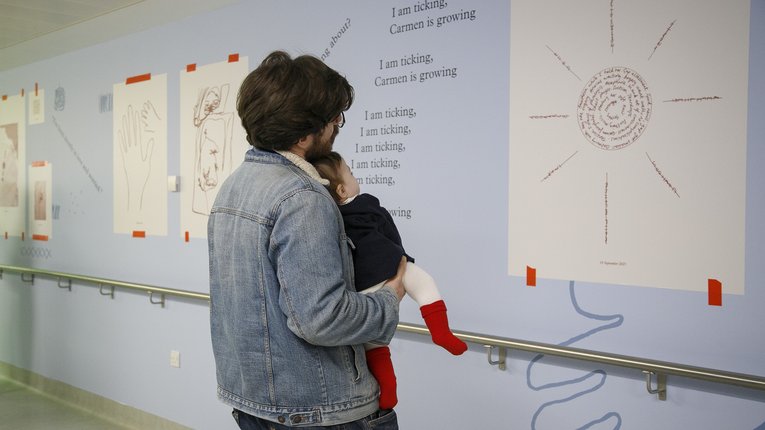
GOSH Arts launch new exhibition From the Morning Light
'From the Morning Light' is the result of a very special collaborative project between families and staff from our Neonatal Intensive Care Unit (NICU) and artist Nicole Morris.
Nominations open for the GOSH Annual Staff Awards 2026
We’re excited to share that nominations for our 2026 GOSH Staff Awards are now open.
Spotlight on our Research Co-ordinators
Meet the staff who keep clinical trials on track, ensure the data is up-to-date, that rules are followed and families get their agreed upon support.

Transport for London (TfL) strikes: May and June 2026
There are upcoming London Underground strikes planned which may affect your journey to GOSH.