https://www.gosh.nhs.uk/news/covid-19-vaccination-study-opens-at-gosh/
COVID-19 vaccination study opens at GOSH
10 Mar 2022, 10:20 a.m.

For the first time, patients at Great Ormond Street Hospital and Southampton Children’s Hospital who are aged 12-17 years and immunocompromised are taking part in research to work out how they respond to COVID-19 vaccination.
Why is this research important?
In 2021, a national study published early results which suggested that some immunocompromised adults had a lower response to COVID-19 vaccination than healthy adults. This study helped to inform the UK vaccination and booster programmes, but we need to understand more about how these vaccines perform in younger immunocompromised patients.
In September 2021, all four UK Nations approved COVID-19 vaccination for children in high-risk groups, aged 12 and over.
While trial data showed that the vaccine is safe for this age group, there was little evidence as to how much protection children with a weakened or altered immune system would get once vaccinated, and how many ‘boosters’ they might need.
This is because the body typically relies on a well-functioning immune system for a good response to vaccination, and some young people don’t have that because they are ‘immuno-compromised’, either due to medicines they take, or a medical condition.
This includes some children and young people with conditions like juvenile arthritis, who are receiving cancer treatments like chemotherapy or those who have received a new vital organ - like a heart, lung or kidney - and require immune-suppressants to limit organ rejection.
What will this research involve?
The OCTAVE study looked at the response to COVID19 vaccines in immunocompromised adults as part of the COVID-19 Immunity National Core Study. It was funded by UK Research and Innovation (UKRI), administered by the Medical Research Council, and the National Institute for Health and Research.
Now, with funding from the Vaccine Task Force, doctors and research teams from across the UK have come together to answer key questions for their teenage immune-suppressed patients, as well as adults.
The OCTAVE study, led from the Universities of Glasgow and Birmingham and run by Birmingham’s Cancer Research UK Clinical Trials Unit recruited adults across 10 sites in the UK from May 2021. The study extension for 12-17 year olds is part-funded by the NIHR GOSH Biomedical Research Centre (BRC), the only UK BRC specialising in paediatric research.
Teenagers recruited into the study will have received the COVID-19 mRNA Vaccine BNT162b2 (Pfizer/BioNTech) in line with guidelines from the National COVID-19 vaccination programme.
We encourage patients and families to come forward for vaccination when invited. This research could help us work out exactly how children and young people in ‘at-risk’ groups respond to COVID-19 vaccination, and should give important information on how often boosters may be needed in this vulnerable group.
The study will recruit up to 160 children between 12 and 17 years old who are already immunocompromised patients and expects to have its first set of results by Autumn 2022.
We are so excited to see this study open for the over 12s. Young people are often missed out as part of the research process, as they are deemed ‘too old’ for childhood research but ‘too young’ for adult research. This is a huge step forward to meet that area of unmet research need.
The OCTAVE study is an example of collaboration across adult and paediatric centres, NHS hospitals and academic institutions. It will help us answer the important questions about how well the COVID-19 vaccine works in children with a suppressed immune system.
This extension study is a great step forward for the over 12s but we are hoping to also amend the study to also include five-12 year olds to capture the full age range of immunocompromised patients receiving the COVID vaccines. As soon as we are offering this vaccine at any age, we want to be robustly and accurately recording the data through a research programme, just as we have for adults.
All research at GOSH is underpinned by support from the NIHR GOSH BRC.

GOSH surgeon receives prestigious international award
Professor Paolo De Coppi, Consultant Paediatric Surgeon at Great Ormond Street Hospital (GOSH), has been recognised as an Honorary Fellow of the American College of Surgeons (ACS), one of the most prestigious honours in global surgery.
Researchers funded to cure inflammatory disease
Researchers from University College London (UCL) and Great Ormond Street Hospital (GOSH) will join researchers across the UK and international partners in a bid to transform how chronic inflammatory disease is treated.
Innovative imaging project aims to save children’s sight
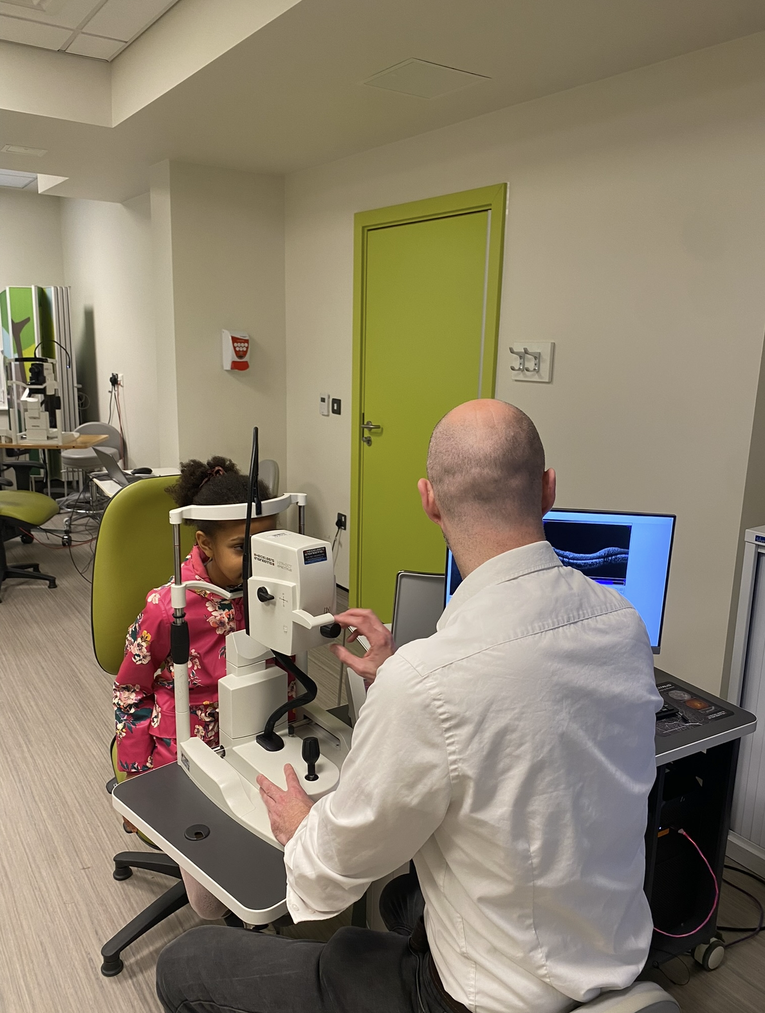
Researchers from GOSH and UCL are leading a project that could transform how children at risk of sight loss are monitored, by adapting advanced eye imaging technology for use closer to home
Five GOSH clinicians recognised with professorial appointments at UCL
Five clinician researchers from GOSH have been promoted to professor by University College London (UCL), recognising their outstanding contributions to research, innovation and child health.