

https://www.gosh.nhs.uk/our-research/our-research-infrastructure/nihr-great-ormond-street-hospital-brc/brc-news/identification-biomarkers-patients-mucopolysaccharidoses/
Identification of biomarkers for patients with Mucopolysaccharidoses
22 Mar 2016, 6:04 p.m.

Researchers have identified urine biomarkers that are altered in patients with Mucopolysaccharidoses (MPS). The team, led by Great Ormond Street BRC-funded Dr Wendy Heywood, discovered potential surrogate urine markers linked to known pathological features of MPS. The test was able to show a relationship between marker concentrations and disease severity.
In mild cases of MPS, markers were not significantly raised in comparison to controls, while three markers were able to stratify the severe neurological form of the disease – known as MPS II or Hunter syndrome – and the less severe, non-neurological clinical phenotype.
MPS is a genetic lysosomal storage disorder resulting from the body’s inability to produce specific enzymes that degrade large complex sugar molecules also known as glycosaminoglycans (GAGs). Accumulation of GAGs causes progressive cellular damage, multi organ failure and a reduced life expectancy. MPS is currently diagnosed by analysis of urinary GAG species, but GAG analysis is limited when it comes to discriminating mild and severe phenotypes of MPS I and MPS II.
The development of markers into a translatable assay has the potential to determine the severity of a patient’s disease at the point of diagnosis – where the initiation of treatment is crucial – and has further potential to monitor the effect of treatment in MPS patients.
This research was funded as part of the Great Ormond Street BRC-supported infrastructure GOSomics and was published in Analytical Chemistry.

GOSH surgeon receives prestigious international award
Professor Paolo De Coppi, Consultant Paediatric Surgeon at Great Ormond Street Hospital (GOSH), has been recognised as an Honorary Fellow of the American College of Surgeons (ACS), one of the most prestigious honours in global surgery.
Researchers funded to cure inflammatory disease
Researchers from University College London (UCL) and Great Ormond Street Hospital (GOSH) will join researchers across the UK and international partners in a bid to transform how chronic inflammatory disease is treated.
Innovative imaging project aims to save children’s sight
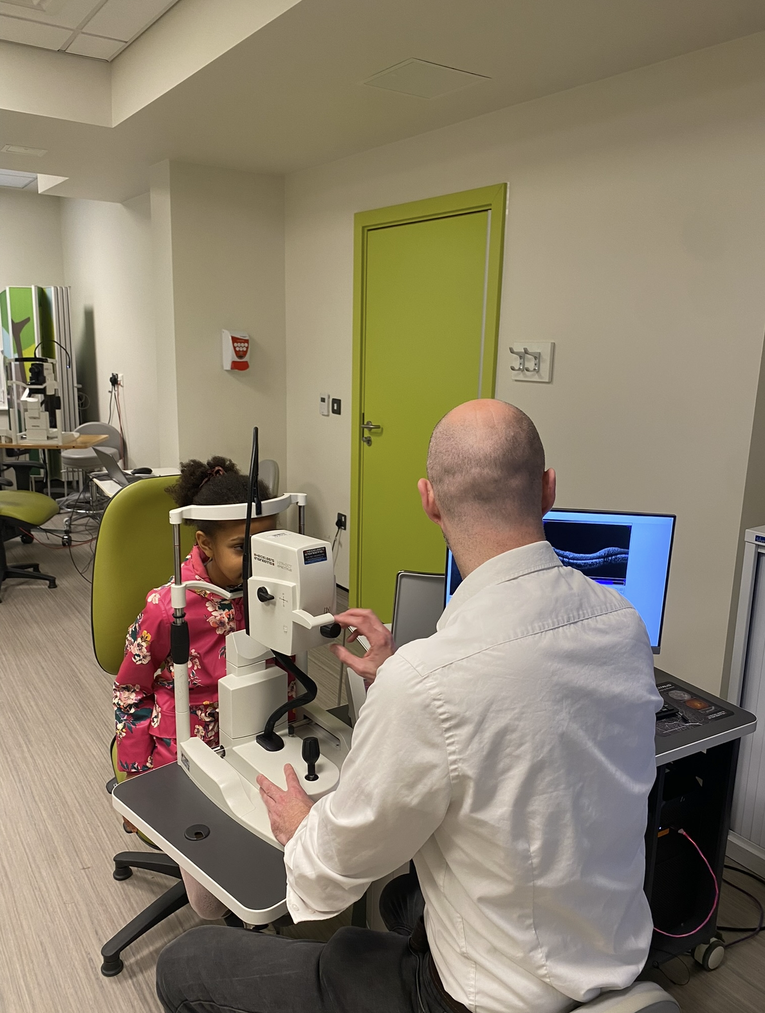
Researchers from GOSH and UCL are leading a project that could transform how children at risk of sight loss are monitored, by adapting advanced eye imaging technology for use closer to home
Five GOSH clinicians recognised with professorial appointments at UCL
Five clinician researchers from GOSH have been promoted to professor by University College London (UCL), recognising their outstanding contributions to research, innovation and child health.