
https://www.gosh.nhs.uk/news/safest-way-travel/
The safest way to travel
28 Mar 2019, 3:59 p.m.

Did you know that across the hospital, within the walls, floors and corridors, patient blood samples whizz from our wards to the labs, via the chute, where they’re processed and used for diagnostics?
In the blink of an eye, every lab sample is propelled through a network of tubes. In a hospital the size of GOSH, making good time means better medicine, and the chute is an important part of a complex chain that gives our doctors timely lab results they need to make decisions about our patients.
The clock starts ticking as soon as a sample is drawn, and our lab team relies on every ward getting samples to them as quickly as possible. The chute system has a complete set of checks and balances – sensing where containers are needed and sending them. It also controls the airflow to slow down the containers for a soft landing at their destination.
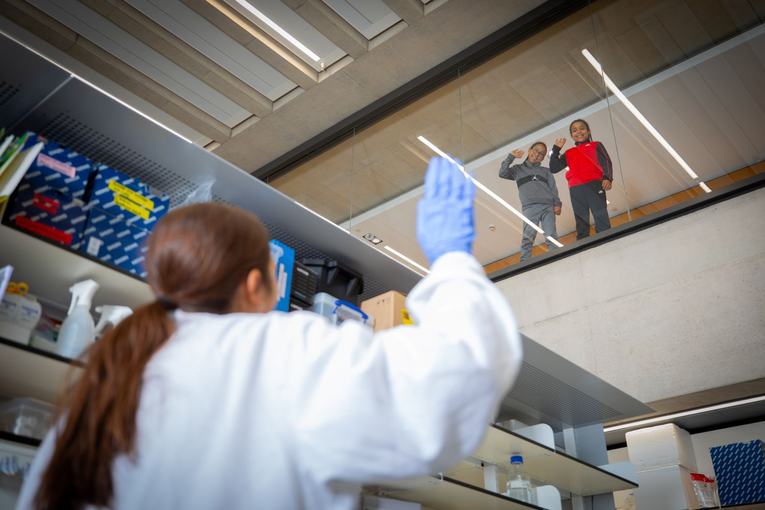
Seven years of discovery: seven researchers transforming children's lives at the Zayed Centre for Research
Seven years ago, the Zayed Centre for Research into Rare Disease in Children (ZCR) opened its doors with an ambitious vision at GOSH

GOSH and Amazon Web Services collaborate to drive digital innovation across care, research and education
GOSH and AWS have signed a Strategic Collaboration Agreement, demonstrating a shared ambition to enhance clinical care, operations, research and education through digital advancements.

Moving from Code to Clinic: how GOSH and Roche are turning data into better care
Our 5-year partnership with Roche has brought together expertise in clinical care, AI and data science to help unlock insights from complex healthcare data in a safe and secure way. Watch our new animation to learn more about the journey from code to clin

World-first same-day metagenomics for children can detect hidden infections in intensive care
GOSH has successfully implemented a pioneering same-day respiratory metagenomics testing service for children in intensive care, helping clinicians identify infections more quickly and make better-informed treatment decision