
https://www.gosh.nhs.uk/news/researchers-funded-to-cure-inflammatory-disease/
Researchers funded to cure inflammatory disease
23 Sep 2026, 10:01 a.m.
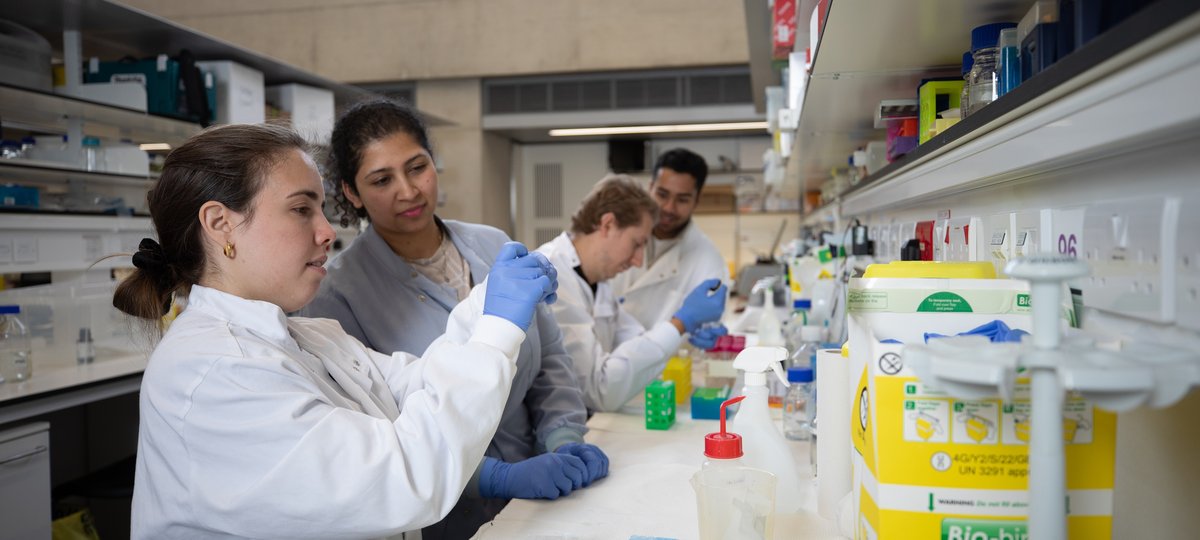
Researchers from University College London (UCL) and Great Ormond Street Hospital (GOSH) will join researchers across the UK and international partners in a bid to transform how chronic inflammatory disease is treated.
Chronic inflammatory diseases, such as arthritis, inflammatory bowel disease, autoimmune liver disease and Sjögren’s disease, currently require lifelong management but, with further investment in research investigating the cause of these diseases, it is possible that curative treatments could be found.
The researchers will join a team of leading scientists, doctors and patient research partners as part of the new £50m UKRI Medical Research Council Centre of Research Excellence (CoRE) for Restorative Immunology, funded over the next 14 years and led by a team of investigators from across the UK and Japan.
Transforming lives
The MRC CoRE aims to transform the lives of children, young people, and adults facing debilitating immune-mediated diseases which, as well as being a major burden on affected individuals, have considerable impact on health services and the wider economy. These conditions arise when the body’s immune system mistakenly attacks healthy tissues, including the joints, gut, skin, eyes, liver and salivary glands, among many others. The resulting inflammation can cause irreversible tissue and organ damage, chronic pain and lifelong disability.
Despite major advances in treatment, many people, including those whose disease begins in childhood, require lifelong therapy to control inflammation and prevent further damage. The impact can be profound, affecting health, independence and quality of life.
UCL and GOSH researchers will lead on ensuring that children and young people, who also develop immune-mediated diseases, are included in the mission of the MRC CoRE to improve outcomes for everyone living with these conditions.
Through working in partnership with clinicians including at GOSH and University College London Hospital, researchers will study how immune-mediated pathways leading to inflammation change across the life-course both those starting in childhood and adult life, and how this impacts the development of new treatments.
Professor Lucy Wedderburn, Consultant and Professor in paediatric rheumatology at GOSH and UCL Great Ormond Street Institute of Child Health (UCL GOS ICH) is co-Director, and Dr Elizabeth Rosser, Associate Professor UCL Division of Medicine will act as co-lead of the UK wide training and career development workstream.
Professor Lucy Weddeburn said: “We are so excited to be part of the Centre of Research Excellence (CoRE) for Restorative Immunology. This huge opportunity builds on our MRC-funded work in childhood arthritis and related conditions, including CLUSTER and other initiatives, and ensures that children, young people and their families always have a voice and are an integral work of this new exciting initiative.
“Families tell us that a key goal for restoring quality of life is to be able to stop medicines, especially long-term immune suppressing drugs they often need, without fear of a flare up. The growing immune system and the development of muscles and joints, which change through childhood and puberty, mean that we cannot simply assume that what happens in adults will apply to children, so a special focus is needed across these crucial developmental stages of life.”
Dr Ceri Williams, Executive Director of Challenge Led Portfolio at MRC, said: “MRC CoREs are bold and innovative in their scope, and spanning 14 years, will have the potential to transform medical fields and significantly improve lives. The MRC CoRE for Restorative Immunology will do just that: suffering could be alleviated for those with debilitating diseases such as inflammatory bowel disease, as a result of the important work the MRC CoRE will focus on. By developing therapies that restore immune balance and tissue health, true remission could be within grasp.”
World-first same-day metagenomics for children can detect hidden infections in intensive care
GOSH has successfully implemented a pioneering same-day respiratory metagenomics testing service for children in intensive care, helping clinicians identify infections more quickly and make better-informed treatment decision

Celebrating the gift of organ donation
During Organ Donation Week 2026, GOSH hosted its first Donor Family Tea Party, bringing together families whose children gave the extraordinary gift of life through organ donation.

Road closure: Great Ormond Street
There will be a partial closure of Great Ormond Street between 4am on Wednesday 21 and 10pm on Thursday 22 October.
GOSH families at the heart of major £6m project to improve support for children with complex needs
Children, young people and families from GOSH will help shape a major new research programme