
https://www.gosh.nhs.uk/news/new-funding-for-autoimmune-research/
New funding for autoimmune condition at GOSH
18 May 2022, 11:04 a.m.

Researchers at GOSH and University College London Great Ormond Street Institute of Child Health (UCL GOS ICH) are one of ten national teams to receive funding from a coalition of immune-related medical research charities.
In all autoimmune conditions, our immune systems attack healthy cells in the body, causing symptoms that have the potential to severely limit people’s lives. They affect an estimated four million people in the UK – equivalent to more than six per cent of the population – but are currently incurable. Examples include type 1 diabetes, coeliac disease, multiple sclerosis (MS), psoriasis, rheumatoid arthritis and alopecia. Although these conditions affect different parts of the body, we know from observing shared features that they are somehow linked, and that better understanding this link will pave the way to improved treatments for all autoimmune conditions.
New targets for childhood autoimmune condition
In a project led by Dr Meredyth Wilkinson at GOSH and GOS UCL ICH, a team have been awarded nearly £100,000 to better understand juvenile dermatomyositis, a rare autoimmune condition, and develop better treatments.
Juvenile dermatomyositis is a rare autoimmune condition in which the body’s immune system attacks the muscles and skin leading to muscle weakness and skin rashes. Treatments used in juvenile dermatomyositis suppress the body’s immune system. However, these medications do not work for all patients and can cause some unwanted side effects. The researchers have already examined the genes (and which are switched on and off) in immune cells from patients with juvenile dermatomyositis. They discovered that genes responsible for mitochondria (the ‘powerhouse’ energy producers of the cell) are less active in these patients, even those already on strong treatment, compared with healthy children of the same age.
The project will examine this finding in more detail and progress this discovery to look for new and very specific drugs to improve the treatment of juvenile dermatomyositis and other autoimmune conditions such as juvenile systemic lupus erythematous and adult dermatomyositis. If successful, these findings could be rapidly translated to clinical trials since some of the drugs under investigation are already licenced for other conditions.

Being awarded this funding is extremely important to me, as it will allow me to continue researching and progressing the understanding of juvenile dermatomyositis (JDM) which is a very rare, devastating childhood disease. I have worked with extraordinary young people with JDM for over 7 years and really hope to continue to work with them to make a positive impact by identifying novel, essential new treatments.
A better understanding of autoimmune diseases
This project is one of ten new 12-month pilot projects (from a partnership of the Lorna and Yuti Chernajovsky Biomedical Research Foundation and Connect Immune Research) that will explore how to target pathways common to the development of multiple autoimmune diseases to increase our understanding and generate new treatments. The ultimate aim of this initiative is to deliver significant new investment to confront the UK’s high prevalence of autoimmunity and develop new treatments for multiple autoimmune conditions, faster.
The studies funded by this initiative will take a number of approaches to increase our understanding of autoimmunity and how to treat it including:
- Examining the genetics of autoimmunity
- Looking for potential new immunotherapy treatments for autoimmunity
- Analysing how gut health might affect autoimmunity
- Building knowledge of how different types of immune cell are involved in the development of autoimmune conditions
This first round of pilot grants aims to quickly develop proof of principle for potential new treatments for multiple autoimmune conditions by examining similarities between the different diseases. On completion, the most promising projects will be invited to apply for follow-on funding to take their work forward.
All research at Great Ormond Street Hospital and the UCL Great Ormond Street Institute of Child Health is underpinned by support from the NIHR GOSH BRC.

GOSH surgeon receives prestigious international award
Professor Paolo De Coppi, Consultant Paediatric Surgeon at Great Ormond Street Hospital (GOSH), has been recognised as an Honorary Fellow of the American College of Surgeons (ACS), one of the most prestigious honours in global surgery.
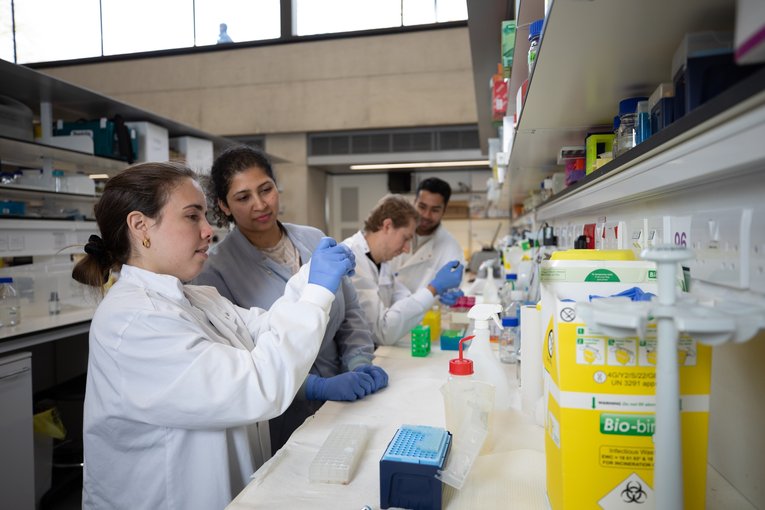
Researchers funded to cure inflammatory disease
Researchers from University College London (UCL) and Great Ormond Street Hospital (GOSH) will join researchers across the UK and international partners in a bid to transform how chronic inflammatory disease is treated.
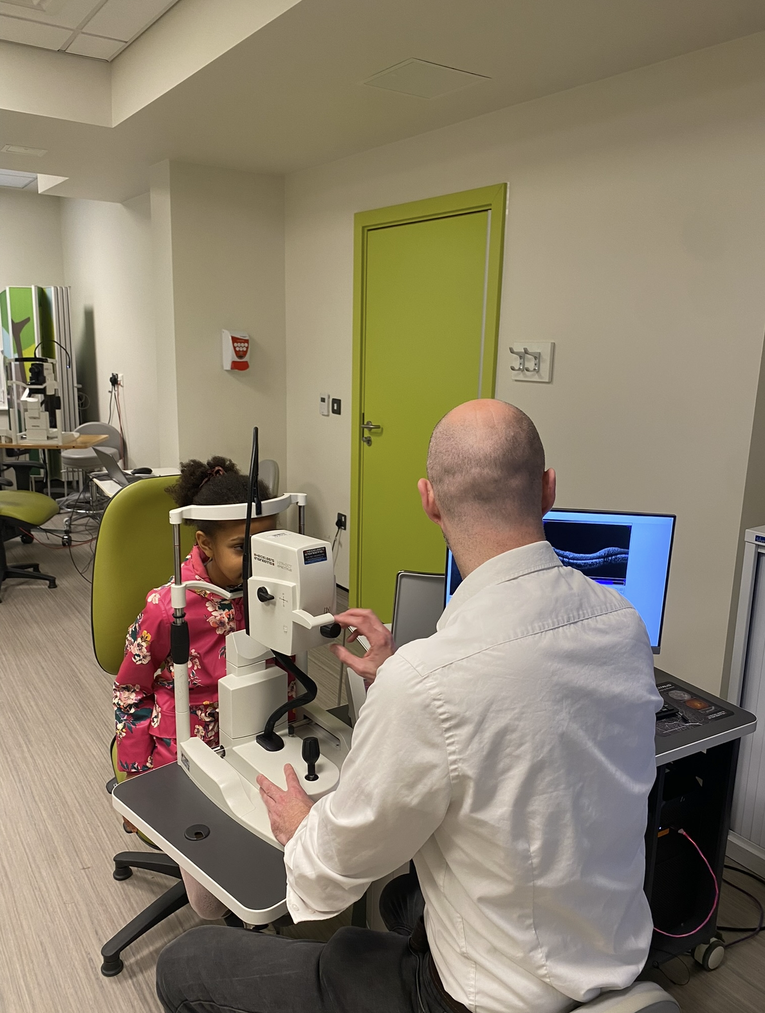
Innovative imaging project aims to save children’s sight
Researchers from GOSH and UCL are leading a project that could transform how children at risk of sight loss are monitored, by adapting advanced eye imaging technology for use closer to home
Five GOSH clinicians recognised with professorial appointments at UCL
Five clinician researchers from GOSH have been promoted to professor by University College London (UCL), recognising their outstanding contributions to research, innovation and child health.