https://www.gosh.nhs.uk/news/liquids-to-solids-the-simple-trick-transforming-childrens-lives-and-saving-thousands-of-pounds/
Liquids to solids: the simple trick transforming children's lives and saving thousands of pounds
10 Apr 2026, 9 a.m.
Switching children and young people’s medication from liquids to pills can transform their lives and save thousands of pounds for the NHS at the same time.
Many children and young people are prescribed liquid formulations of medicines despite children aged four and over being able to safely learn how to swallow tablets. A new project underway at Great Ormond Street Hospital (GOSH) has found that are switching patients to pills or tablets could save up to £40,000 per year per patient for some drugs.
The Endocrinology team, led by Clinical Nurse Specialist, Kate Morgan and Dr Antonia Dastamani, Consultant of Paediatric Endocrinology and Diabetes, identified 19 patients with the rare condition Congenital Hyperinsulinism (CHI) who could benefit from the medicine switch.
CHI affects around one in every 30,000-40,000 children and results in high levels of insulin being produced. Children must take Diazoxide multiple times a day depending on insulin and glucose levels, which until now was normally given as a liquid.
In the project, the team switched all 19 patients – all of whom were seven or older – from liquid diazoxide to a pill form of the drug which delivers the same therapeutic benefit.
Patients were monitored to ensure their blood glucose levels remained stable and asked about how the switch in medication format had impacted them.
On top of the benefits for patients and better taste, the diazoxide tablets cost significantly less than its liquid counterpart. The tablets cost £1.15 per 50mg, while the liquid costs over ten times more at £15.50 per 50mg.This equates to a saving of approximately £40,000 per patient per year.

Jess and dog Dave
Jess's story
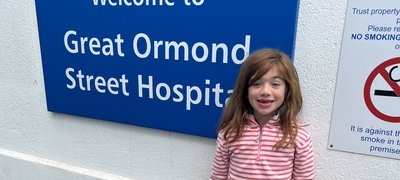
Jess, 11, was one of the patients who took part in the trial and has been a patient at GOSH since she was 15 months old. She has been treating her condition with liquid diazoxide since then.
The liquid would be stored in a glass bottle and would need to be drawn up in a syringe for each dose. This meant that Jess and her family had to fit their lives around administering the dose which Jess needed multiple times a day. It would affect school time, trips and holidays that the family of five plus their dog, Dave, would take.
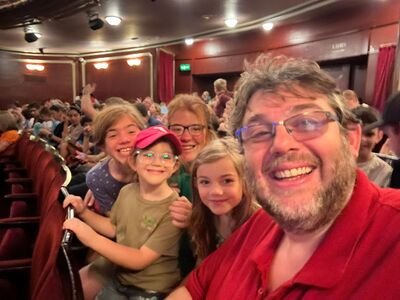
Jess, with sister Pippa and Lucy and Mum and Dad
Jess and her younger sisters, Pippa and Lucy, all take part in Scouts and often go on scouting camp trips with their mum, Steph and dad, Tom, who is scout leaders. Jess’ medication would have to be taken on the camps and carefully handled and making sure it stayed at room temperature.
Jess said: “I would always get a lot of questions about the medication when I would go away camping or at airport for holidays.
“It would always be hard to explain why I need it so much, but it isn’t always an easy condition to explain.”
In April 2025, Jess was told by her consultant, Dr Dastamani and nurse, Kate that she would be moving to try diazoxide tablets.
Mum, Steph, said: “We were so excited when the team told us we could switch to the diazoxide tablets.
“We’d been hoping for some time, we knew it was a better solution and would allow Jess to have control over her condition and that is very important.”
Jess will now prep the pill dose herself with her mum and dad checking over it. The move has given Jess new independence with her condition, and it is making a positive impact on her life.
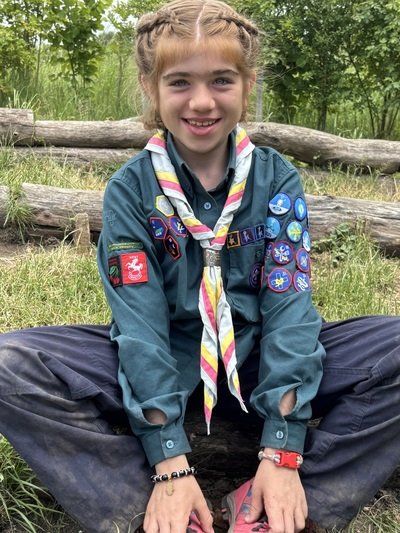
Jess in scouts uniform
Jess said: “It has made a big difference taking medicine that doesn't taste horrible. There were times where I didn’t want to take it because of the taste.
“It makes things very easy for me now, I’m able to do it myself and it doesn’t take up as much time at school or when I’m doing things I like, like climbing, it doesn’t have as much impact and that makes me happy.”
The project, which began in early 2025, has seen all 19 patients permanently switched to the tablet form with no negative effects on their blood glucose levels. The team are now looking at moving younger patients on to the diazoxide tablets which will expand the numbers of patients who make the switch and increase the cost savings.
Clinical nurse specialist, Kate Morgan said: “We knew the potential this trial had for savings, but the scale of the quality-of-life improvements for children and their families we are seeing is something we didn’t anticipate.
“Children are so much more than their diagnoses – they have full lives and families and their illnesses affects everyone, so it is very important we do all we can to make simple, positive changes that impact everyone for the better.”
Dr Antonia Dastamani said: “It is common practice to ask patients how they’re finding treatment, or how they feel when they have injections, but we never thought to ask patients about the taste of medicines and whether they like them.
“This has shed a light on key questions we now want to ask children and young people about their care and treatment so they can be more involved and have more independence in their lives.”
The team took a multi-disciplinary approach to the trial working with the play team and psychologists to work with patients as they switched over to the tablets. The play team and psychologists produced learning materials to help patients who struggled with taking tablets.
This move to tablets is a key part of GOSH’s Green Plan and further drugs are being investigated for their potential to switch formulations.
GOSH joins European health leaders to shape the future of paediatric data sharing
More than 50 clinicians, data scientists, digital health innovators and industry leaders came together in Barcelona last month to tackle one of the biggest challenges in paediatric healthcare: how to share health data safely across borders to improve care

Update for patients and families on industrial action
Some of our resident doctors at Great Ormond Street Hospital will be taking part in planned industrial action from 7am on Friday 14 November to 7am on Wednesday 19 November.

GOSH Voice to host Sibling Bowling Day for National Siblings Day
GOSH Voice will be hosting a sibling bowling day on 11 April 2026 to celebrate National Siblings Day on 10 April.
Engineered tissue offers hope for children born with ‘missing’ food pipe
Scientists from Great Ormond Street Hospital (GOSH) and University College London (UCL) have created the first lab‑grown oesophagus - the food pipe - shown to safely replace a full section of the organ and restore normal function, including swallowing, in