
https://www.gosh.nhs.uk/news/groundbreaking-study-highlights-potential-retinal-marker-that-could-identify-sensory-traits-linked-to-autism/
Groundbreaking study highlights potential retinal marker that could identify sensory traits linked to autism
13 Nov 2025, 3 p.m.
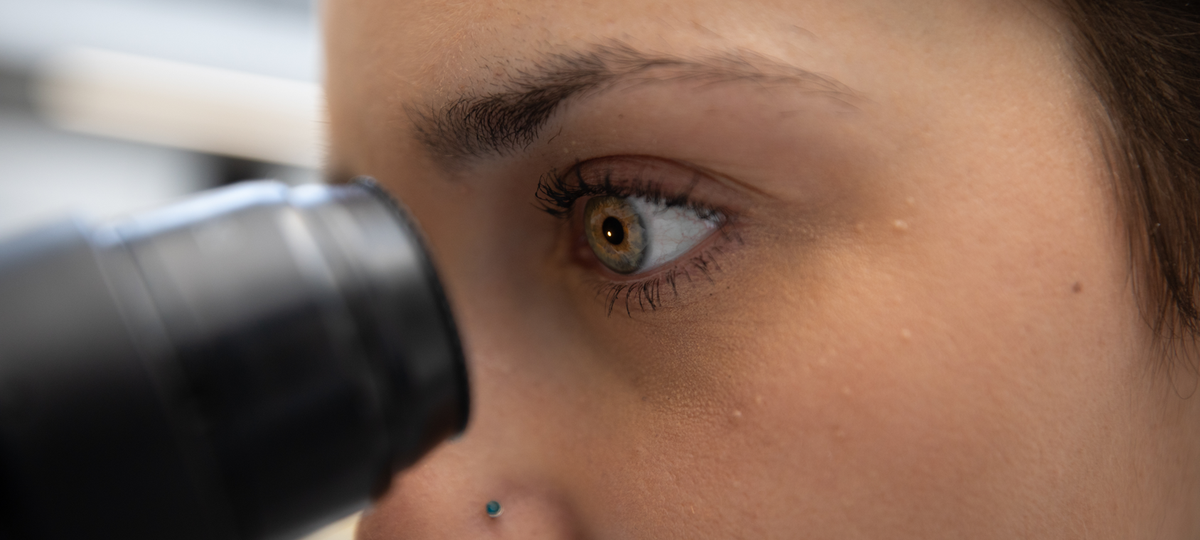
A groundbreaking study led by researchers at Great Ormond Street Hospital and University College London published in Scientific Reports has found a significant link between altered retinal function and motion perception deficits in autism spectrum disorder for the first time.
The study found a strong link between people with autism spectrum disorder (ASD) having difficulties with seeing motion and changes in how their retinas work, suggesting it may be an inherited trait. The retina is the layer of cells at the back of the eye which senses light and sends signals to the brain.
Children and young people with and without ASD were examined as a control group alongside their siblings and parents. The participants from London in the UK and Adelaide in Australia first has a measure of how well the participants perceive global motion, which is the function within the brain that brings together smaller and local motion signals to create an overall object and scene. It was then followed by an electroretinogram (ERG) reading, which measures the electrical response of the retina to light by using electrodes placed on the eye.
The findings show that over 55% of ASD participants, and more than 40% of their siblings and mothers, exhibited elevated motion coherence thresholds compared to just 4.6% in the control group.
Crucially, the study identified correlations between these perceptual deficits and specific retinal responses, including reduced a- and b-wave amplitudes and delayed time-to-peak in ERG readings. These retinal alterations were also associated with age, intelligence, and autism severity, but not with comorbidities or medications.
Lead author, Irene Lee, Data Manager in the UCL Great Ormond Street Institute for Child Health’s Behavioural and Brain Sciences Unit, said: “There are many papers exploring links between vision and ASD. However, this paper is the first of its kind which suggests a significant link between the retina and ASD.
“This new signifier is a fantastic basis for further research and will allow us to make waves in future research around vision and ASD. This gives patients and families a potential marker, which can help them and us further understand ASD.”
The study highlights the role of the magnocellular visual pathway, which begins in the retina and is crucial for processing motion. The researchers propose that inherited differences in this pathway may contribute to the sensory processing challenges commonly experienced by individuals with ASD.
This research marks an important step forward in understanding the biological basis of sensory differences in autism and underscores the importance of exploring retinal function as a potential diagnostic and research tool.
This research was funded by a generous donation from the late Professor Edward Ritvo.
All research at GOSH is underpinned by support from the National Institute for Health and Care Research GOSH Biomedical Research Centre.

Message to our patients and patient families following London-wide power outage
Following a London-wide power outage today, we experienced some local issues at GOSH.

GOSH surgeon receives prestigious international award
Professor Paolo De Coppi, Consultant Paediatric Surgeon at Great Ormond Street Hospital (GOSH), has been recognised as an Honorary Fellow of the American College of Surgeons (ACS), one of the most prestigious honours in global surgery.
Researchers funded to cure inflammatory disease
Researchers from University College London (UCL) and Great Ormond Street Hospital (GOSH) will join researchers across the UK and international partners in a bid to transform how chronic inflammatory disease is treated.
Innovative imaging project aims to save children’s sight
Researchers from GOSH and UCL are leading a project that could transform how children at risk of sight loss are monitored, by adapting advanced eye imaging technology for use closer to home