Search Results

Destiny-Rae is a little girl, she is pictured in her hospital bed wearing a white t-shirt with a purple blanket over her

Kidney swap for GOSH patient who’s spent over 3,600 hours on dialysis

23 Apr 2024, 6 a.m.

A five-year-old patient, who has spent almost 10% of her childhood on dialysis, has successfully had a transplant thanks to a kidney-swap scheme.

Read more

Oesophageal dilatation

This page explains about oesophageal dilatation and what to expect when your child comes to Great Ormond Street Hospital (GOSH) to have this procedure.

Read more

Venous sclerotherapy

Venous sclerotherapy is a procedure used to treat venous malformations. Venous malformations are made up of extra veins that have no use and cause problems. This page explains about venous sclerotherapy, why it might be suggested and what to expect when y

Read more

Bleomycin sclerotherapy

Information about bleomycin sclerotherapy, why it might be suggested and what to expect when your child comes for treatment at Great Ormond Street Hospital.

Read more

Living with a pacemaker

A pacemaker keeps your heart beating correctly. This page from Great Ormond Street Hospital (GOSH) describes the two sorts of pacemakers we use at GOSH and why you might need one. It also explains how one is inserted, and the effect it will have on your l

Read more

A young boy smiles broadly at the camera

Engineered tissue offers hope for children born with ‘missing’ food pipe

20 Mar 2026, 10 a.m.

Scientists from Great Ormond Street Hospital (GOSH) and University College London (UCL) have created the first lab‑grown oesophagus - the food pipe - shown to safely replace a full section of the organ and restore normal function, including swallowing, in

Read more

Perchlorate discharge test

This page explains about the perchlorate discharge test, what is involved and what to expect when your child comes to Great Ormond Street Hospital (GOSH) for the test.

Read more

24 hour ambulatory blood pressure monitoring

Blood pressure is a measurement of the force used by the heart to pump blood around the body. This information from Great Ormond Street Hospital (GOSH) explains about 24 hour ambulatory blood pressure monitoring, why it might be needed and how to carry it

Read more

Duodenal atresia

Duodenal atresia means the duodenum, which is the first part of the small intestine just beyond the stomach, is closed off rather than being a tube. This stops food and fluid passing from the stomach into the intestines.This page explains about duodenal a

Read more

Multiple sclerosis disease-modifying drugs: first line treatments

Disease-modifying drugs (DMDs) work by interacting with the immune system and calming the inflammation that is attacking the central nervous system.

Read more

Through Piper's Eyes

16 Feb 2020, 10:53 a.m.

Two-year-old Piper has spent her life so far visiting Great Ormond Street Hospital (GOSH) after being diagnosed with a rare condition that caused her to be blind from birth. Her mum, Jade, shares their story.

Read more

A Happy New Year for Declan's Family

24 Dec 2020, 11:59 a.m.

Declan was diagnosed with a condition called medullablastoma, the most common type of cancerous brain tumor in children. Declan's mum, Tasha, shares their story and plans for a positive 2021.

Read more
Boy spends record time with artificial heart

10 Apr 2012, 2:34 p.m.

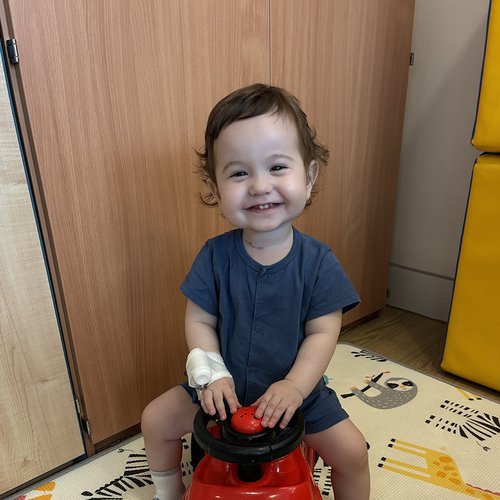
Three year old Joe Skerratt is now a picture of health, but he was kept alive for 251 days by an artificial heart – longer than any other child in the UK.

Read more

A biorector developing a tissue-engineered oesophagus

GOSH team reveals the world’s first functional tissue engineered oesophagus

16 Oct 2018, 4:31 p.m.

A pioneering new study from Great Ormond Street Hospital (GOSH) and The Francis Crick Institute has seen researchers grow the world’s first oesophagus engineered from stem cells and successfully transplanted them into mice, according to results published

Read more

Video Fluoroscopy

This page explains what is involved in a Video Fluoroscopy and what to expect.

Read more

Bone marrow transplant (BMT) diet precautions for children going home following transplant

This page explains about food-borne diseases and how to avoid them when preparing or serving food to children after a bone marrow transplant. The range of foods your child can eat will increase after you have come home, but you will still need to take pre

Read more

Having a biopsy in Interventional Radiology

Information about having a biopsy in the Interventional Radiology department at Great Ormond Street Hospital.

Read more

Leukocyte Kaleidoscope

Our first research image competition winner

3 Mar 2022, 12:52 p.m.

To capture a snapshot of our life-changing research, we asked our researchers to send us images that showed ‘A Moment of Research’. Shortlisted images ranged from beautiful microscopy to intricate representations of data and photography.

Read more

Monobloc advancement with or without using a rigid external distraction (RED) frame

Monobloc advancement is an operation to reshape the front portion of the skull and face including the upper jaw to correct an abnormal head shape. This page from Great Ormond Street Hospital (GOSH) explains about the operation called monobloc advancement

Read more

Refer a patient to the Nephrology department

The Renal Unit provides a comprehensive diagnostic and treatment service for children with renal disorders. It is the largest renal unit in the UK. This page includes information on how to refer a patient to the Nephrology department at Great Ormond Stree

Read more