Search Results

Megalencephalic leukoencephalopathy with subcortical cysts (MLC1)

Megalencephalic leukoencephalopathy with subcortical cysts (MLC1) is a very rare disorder affecting the ‘white matter’ of the brain, often leading to progressive loss of physical, and sometimes mental, skills over very many years.

Read more

Ventricular tachycardia

Ventricular tachycardia is a type of arrhythmia or abnormal heart rhythm. It is caused by the electric signals in the heart starting in a different place and travelling a different way through the heart. If you have had ventricular tachycardia on yo…

Read more

Worster Drought syndrome

Worster-Drought syndrome (WDS) is a type of cerebral palsy (movement disorder) that affects the muscles around the mouth and throat. This causes problems with swallowing, feeding, talking, dribbling and other actions controlled by these muscles, such as c

Read more
Trust comment on Jayden Wray and family

20 Apr 2012, 8:34 a.m.

A Trust spokesman said:

Read more

About the Department of Radiology

The Department of Radiology at Great Ormond Street Hospital (GOSH) offers a comprehensive range of diagnostic imaging and interventional radiology services for children and young people up to 18 years of age.

Read more

Anorectal anomaly

An anorectal anomaly is a disorder affecting the anus and the rectum, the last part of the digestive system.This page explains about anorectal anomaly, how it can be treated and what to expect when a child comes to Great Ormond Street Hospital (GOSH).

Read more

Biopsy

A biopsy is a small sample of tissue taken from the body so it can be examined under a microscope and tested chemically in the laboratories. This page from Great Ormond Street Hospital (GOSH) explains about the procedure to take a biopsy in the Interventi

Read more

Cerebral angiography

Information about cerebral angiography procedures and what to expect when your child comes into Great Ormond Street Hospital (GOSH).

Read more

Spinal surgery at GOSH

At Great Ormond Street Hospital (GOSH), we have developed a pathway for children and young people having spinal surgery. Spinal surgery is a complex procedure, so we want you to understand the benefits and risks of the operation so you can make an informe

Read more

Haemangiomatosis

A haemangioma is a collection of small blood vessels that form a red mark or a swelling. The term haemangiomatosis is used when there are multiple haemangiomas. This page from Great Ormond Street Hospital (GOSH) explains the causes, symptoms and treatment

Read more

Bicoronal craniosynostosis

Bicoronal craniosynostosis is a type of craniosynostosis which may be part of a syndrome (collection of symptoms often seen together) or non-syndromic. This page from Great Ormond Street Hospital (GOSH) explains the causes, symptoms and treatment of bicor

Read more

Refer a patient to the Plastic and Reconstructive Surgery department

The Plastic Surgery department at Great Ormond Street Hospital (GOSH) offers general plastic and reconstructive surgery to complex paediatric patients. This page includes information on how to refer a patient to the Plastic Surgery department at Great Orm

Read more

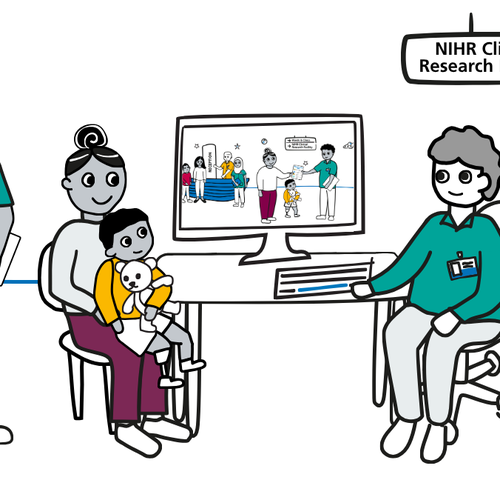
A family sitting at a computer screen with hospital staff

Taking part in a clinical trial at GOSH - easy read

Harnessing the power of data at GOSH – Easy Read version - at Great Ormond Street Hospital.

Read more

Going out after a bone marrow transplant (BMT)

This page from Great Ormond Street Hospital (GOSH) explains the guidelines for taking your child out of the hospital following a bone marrow transplant (BMT). The general rule is that your child should only leave the ward when they are in yellow precautio

Read more

Factor V deficiency

Factor V deficiency (also occasionally known as Owren’s disease or parahaemophilia) is a clotting disorder. A specific protein is missing from the blood so that injured blood vessels cannot heal in the usual way. This information sheet from Great Ormond S

Read more

Factor VII deficiency

Factor VII deficiency (also known as Alexander’s disease) is a type of clotting disorder. A specific protein is missing from the blood so that injured blood vessels cannot heal in the usual way. This information sheet from Great Ormond Street Hospital (GO

Read more

Factor X deficiency

Factor X (previously known as the Stuart-Prower factor) deficiency is a type of clotting disorder. A specific protein is missing from the blood so that injured blood vessels cannot heal in the usual way. This information sheet from Great Ormond Street Hos

Read more

Prothrombin (factor II) deficiency

Prothrombin (factor II) deficiency is a type of clotting disorder. A specific protein called prothrombin is missing from the blood so that injured blood vessels cannot heal in the usual way. This information from Great Ormond Street Hospital (GOSH) explai

Read more

Atrioventricular block

Atrioventricular (AV) block is a type of arrhythmia or abnormal heart rhythm. The passage of the electrical message travels at a different speed which can make the heart beat more slowly. There are different levels of AV block – first degree, second degre

Read more

Barium Swallow Study

This page explains what is involved in a Barium Swallow Study and what to expect.

Read more