
https://www.gosh.nhs.uk/our-research/our-research-infrastructure/nihr-great-ormond-street-hospital-brc/brc-news/film-celebrates-success-biomedical-research-centres-set-outgoing-uk-chief-medical-officer/
Film celebrates success of Biomedical Research Centres set up by outgoing UK Chief Medical Officer
14 Oct 2019, 11:37 a.m.
NHS patients who have taken part in clinical trials have expressed their gratitude to researchers in a film celebrating the work of the National Institute for Health Research (NIHR) Biomedical Research Centres (BRCs), including GOSH BRC, to mark the retirement of outgoing Chief Medical Officer Professor Dame Sally Davies.UCLH BRC produced the film in close collaboration with nine other BRCs across England to thank Dame Sally for her vision and leadership in setting up the BRCs in 2007. UCLH BRC Director Professor Bryan Williams said Dame Sally had “a bold vision which is now being delivered, transforming the UK into a biomedical, translational powerhouse, invigorating our life sciences economy and delivering life-saving innovation.”
The 20 BRCs across England – which follow the initial creation of five – have dramatically cut the time it takes for scientific research to be translated into new treatments. Dr Mariya Moosajee, a consultant ophthalmologist linked to Moorfields BRC said: “The BRCs have provided a pathway from bench to bedside.”The film also celebrates the success of BRCs in working with industry, and how BRC research has led to ‘spin out’ companies which are investing in and taking forward potential treatments – boosting the UK economy and bringing in money to the NHS.
Professor Adrian Thrasher at GOSH BRC said: “We’ve been able to spin out several companies from activities within the BRC, one example of which is Orchard Therapeutics” – a company which is investing in gene therapies for patients with rare diseases.
And speaking of healthcare company Syncona’s decision to invest in UCL and GOSH spin out Autolus – which is developing CAR T therapies following on from Dr Martin Pule’s work – Syncona Chief Executive Martin Murphy said: “The infrastructure provided by the [UCLH] BRC was really fundamental to the investment that we made.”
The film looks at advances supported by BRCs including a world-leading study to sequence the whole genome of the most critically ill babies (Cambridge); efforts to tackle anti-microbial resistance (Oxford); ground-breaking cancer treatment CAR T therapy (UCLH and GOSH); and building of the first NHS proton therapy centre (Manchester).
Film producers interviewed patient James Bowey who took part in a UCLH trial of CAR T-cell therapy, where the immune system is ‘re-programmed’ to recognise and kill cancer cells – an approach which has succeeded where all other treatment options have failed.
He said: “I was diagnosed with lymphoma three and a half years ago. I’ve had four lots of chemo. Doctors couldn’t do any more.”
James said that after he received CAR T therapy: “It was a very, very quick reaction. It almost dissipated within days. I’ve got 10 years, 20 more years – who knows now.”
Dr Martin Pule, who leads UCL CAR T research, said: “Car T cell therapy has been one of the most important advances in the treatment of patients with lymphoma and also children and young adults with leukaemia.”
The film also featured Mark Chatterley, who is taking part in research supported by Birmingham BRC to investigate a new immunotherapy for chronic liver disease.
Mark said: “I’ve got endless gratitude for [the researchers and healthcare staff]. Even if it comes to nothing, the fact that people are trying to make my life better, that’s more than I can put into words.”
The film also looks at the BRCs’ impact on gender equality, following Dame Sally’s decision to make it a requirement for academic departments applying for NIHR funding to hold the silver award of the Athena SWAN Charter, which recognises commitment to advance the careers of women.
Director of Leicester BRC Professor Melanie Davies said Dame Sally’s work in this area “has made an absolutely amazing difference.”
Collaboration – between academic researchers and healthcare professionals and between the various BRCs – is also a strong theme of the film. The film highlights, for instance, the BioAid project – a collaboration between Imperial, Kings and UCLH aiming to create a register of 5,000-10,000 adults presenting with infectious disease. Biological samples from participants – such as DNA – are analysed by researchers to identify biological causes of infectious disease and potential treatments.
Speaking of Dame Sally’s legacy, Professor Bryan Williams said: “When all treatments have been exhausted, and there’s nothing left, to be able to offer a treatment developed in a British University, delivered to a patient for the first time in the world, in our NHS hospitals, and saving their lives – that is a humbling experience.”
Watch the full film on NIHR's youtube channel.
GOSH BRC is featured from 4 mins 58 second and again at 13 mins and 44 seconds.
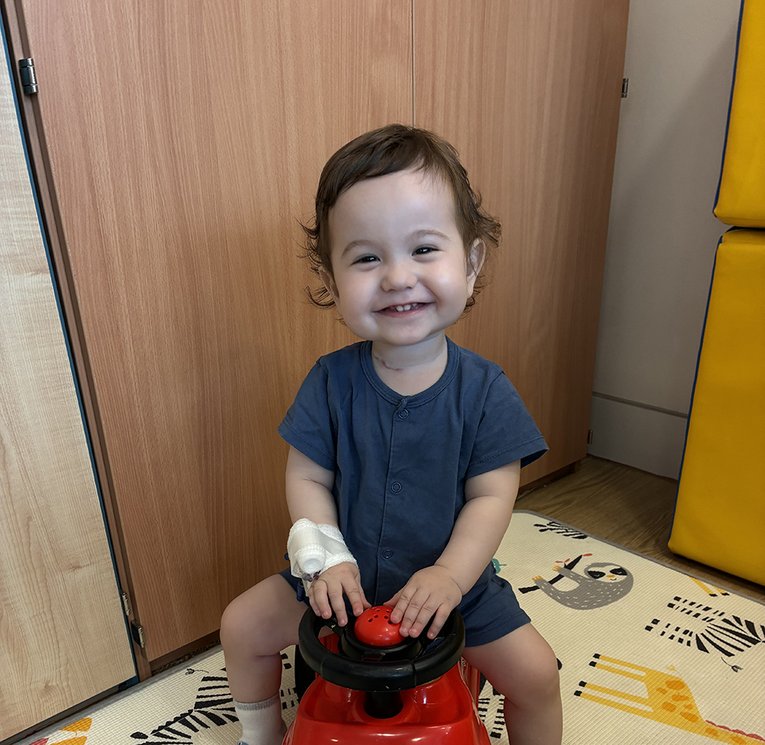
Engineered tissue offers hope for children born with ‘missing’ food pipe
Scientists from Great Ormond Street Hospital (GOSH) and University College London (UCL) have created the first lab‑grown oesophagus - the food pipe - shown to safely replace a full section of the organ and restore normal function, including swallowing, in
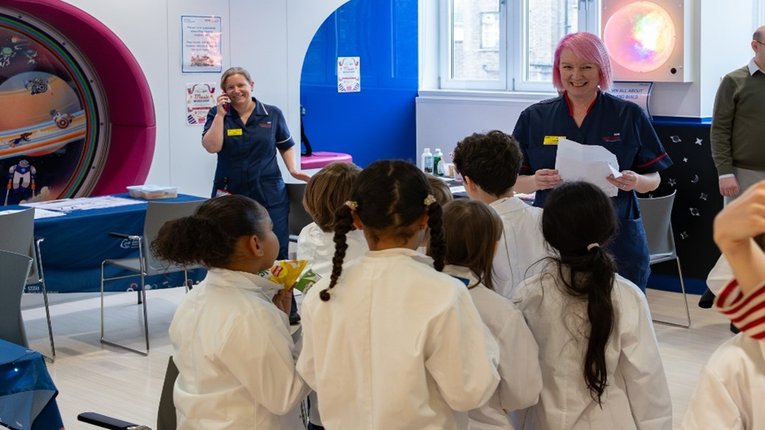
GOSH celebrates Rare Disease Day 2026 with local community
GOSH specialises in rare disease research and to celebrate, we recently invited two local North London Year 4 classes to join us for the day to learn about how we care for patients with rare diseases.
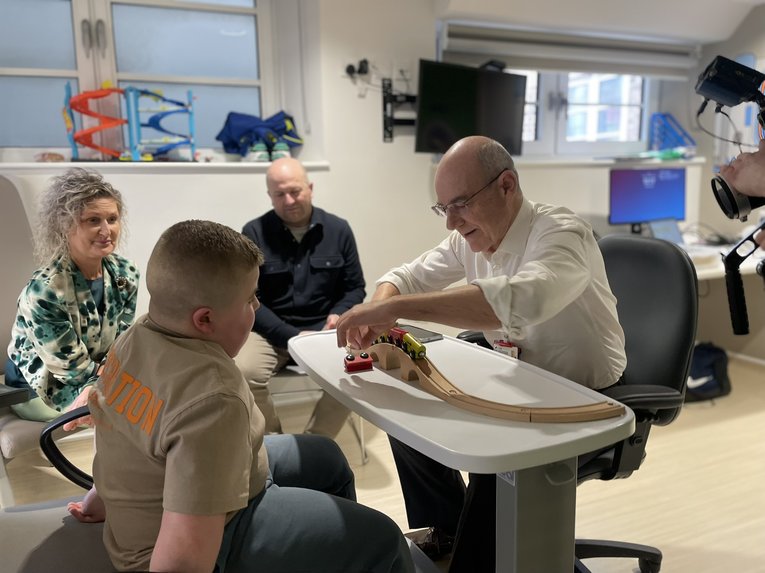
Professor Francesco Muntoni wins prestigious research prize
Professor Francesco Muntoni, GOSH Paediatric Neurology Consultant, has been awarded the 2026 Novo Nordisk Prize in recognition of his pioneering work transforming the outlook for children with Duchenne muscular dystrophy (DMD).
GOSH secures £1.4m in NIHR capital equipment funding to boost research capability
This investment will significantly strengthen our research infrastructure and enhance our ability to deliver world‑leading paediatric research across the whole hospital.