
https://www.gosh.nhs.uk/news/peter-pan-and-tinkerbell-statue-fly-away-for-now/
Peter Pan and Tinkerbell fly away for now
13 Nov 2023, 10:11 a.m.
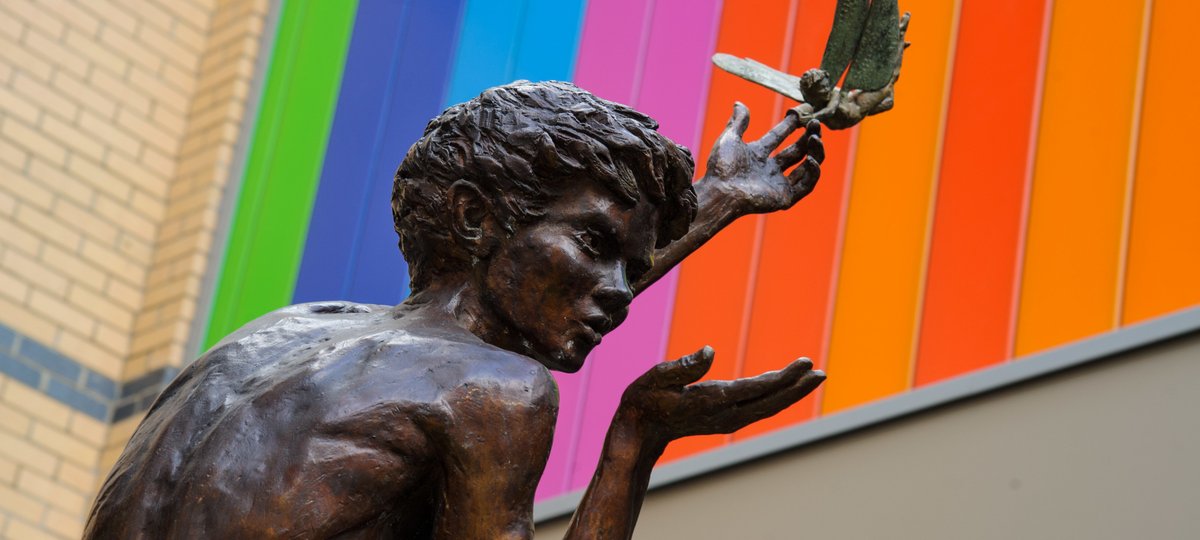
During November 2023 our iconic Peter Pan and Tinkerbell sculpture will be moving from their current home at the main entrance to Great Ormond Street Hospital, as we prepare for the construction of the Children’s Cancer Centre and build a new amazing entrance for the hospital.
Once the Children's Cancer Centre is complete, Peter and Tinkerbell will return to their prime location on Great Ormond Street at the new main entrance.
History of the statue
The bronze statue of JM Barrie’s famous and lovable character’s was originally installed outside Great Ormond Street Hospital in 2000, with Tinkerbell and the thimble being added in 2005.
The Peter Pan and Great Ormond Street connection
In 1929, with the popularity of both the Peter Pan play and the novel firmly established, JM Barrie unexpectedly and generously gifted his copyright of Peter Pan to GOSH.
Barrie had already supported GOSH for many years and in 1929 he was approached to sit on a committee to help buy land, so that the Hospital could build a much-needed new wing. Barrie declined but said that he ‘hoped to find another way to help’.
Two months later, the hospital board was stunned to learn that Barrie had donated all his rights for Peter Pan to GOSH.

Bagri family philanthropy enables UCL study into rare childhood neurological condition treated at GOSH
A generous donation from the Bagri family will underpin a landmark study into gene-editing treatments for Dihydropteridine reductase deficiency (DHPR deficiency), an ultra-rare childhood neurological condition, treated at GOSH
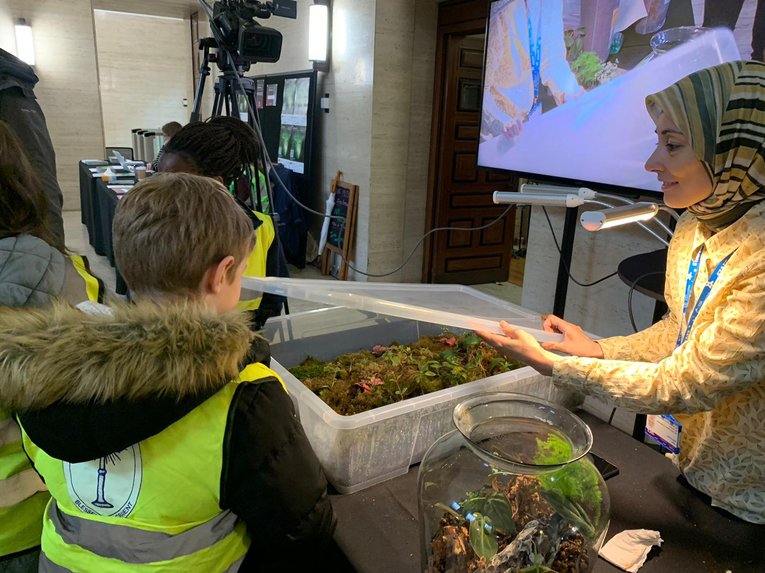
Creating communities and lasting involvement
At GOSH, patient and public involvement and engagement (PPIE) builds lasting relationships and communities that shape research over time.
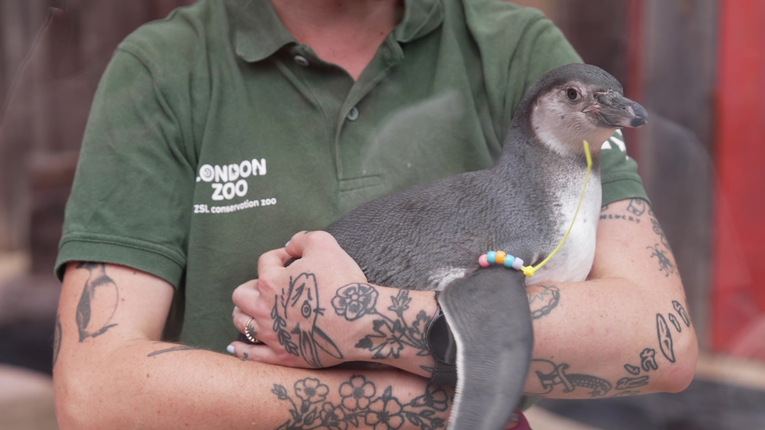
Penguin chick named after GOSH ward to celebrate London Zoo partnership
A Humboldt penguin chick that hatched on 30 April at ZSL London Zoo this year has been named Mildred, celebrating the start of a special partnership between the Zoo and Great Ormond Street Hospital for Children GOSH.

Junior researchers are crucial to the future of paediatric research
Junior researchers are central to the success and sustainability of paediatric research at GOSH and the University College London Institute of Child Health.