
https://www.gosh.nhs.uk/news/over-300-innovative-projects-completed-since-the-launch-of-gosh-drive-in-2018/
Over 300 innovative projects completed since the launch of GOSH DRIVE in 2018
25 Sep 2023, 1:09 p.m.

The Data Research, Innovation and Virtual Environments (DRIVE) unit at GOSH was launched five years ago. Our new report explains how this first-of-its-kind unit has led to improvements in research and innovation, and care for children and young people with serious and complex health conditions.
The NHS must innovate to make better use of data and digital technologies to improve the outcomes and experience of patients and their carers, and to better support healthcare staff.
In just five years, the DRIVE unit has supported over 300 data research projects. We have built collaborations with staff at GOSH, as well as other hospitals, industry, and academia, both in the UK and internationally. The unit has been instrumental in setting up secure and trusted systems to introduce innovation into the NHS. Our new report shows progress towards our goals, including as a go-to centre for paediatric innovation.
“Innovation cannot happen in isolation and embracing new ideas can break down existing silos and uncover new ways of working... I would like to thank our collaborators that have contributed their expertise, their ideas, and their time to take forward projects to improve health services for the future.”
A centre for engagement
GOSH is well positioned to catalyse innovation with the DRIVE unit as a dedicated hub. In just 18 months, the unit captured over 100 ideas from GOSH staff and connected innovators across the NHS, life sciences and technology industry and academia.
Our secure, trusted Digital Research Environment (DRE) is world-leading, and contributes to projects across the UK and internationally. For example, as a founding member of the European Children’s Hospitals Organisation.
“When the DRE launched in 2018, it felt like a miracle that data were pouring in, the likes of which we’d never seen before. It was fantastic that we could now securely access data that measured and visualised every single breath, of every single airway clearance treatment, and every heartbeat and footstep that our participants took during the study to evaluate the impact on clinical outcome.”
Professor Eleanor Main, who worked with the DRIVE unit on a pioneering study to improve treatment for children with cystic fibrosis.
Looking ahead
In the last five years, the DRIVE unit has accelerated cutting-edge data science research and collaborations across the healthcare sector to develop and test novel technologies in the NHS. Our focus remains on improving the health outcomes and the experience for children and young people with serious and complex health conditions.
In the next five years, we will focus our efforts, alongside our existing and new collaborators on key areas including:
- Clinical Intelligence Unit: To leverage operational data and embed the use of data in clinical care
- Virtual wards and remote monitoring: To improve patient experience and research
- Artificial intelligence: To optimise the use of medical and administrative data
“We are excited by the work of the GOSH DRIVE unit that is exploring the potential for technologies, like artificial intelligence to improve care for children and young people, and support healthcare staff. We hope the unique combination of researchers, clinicians, and young people brought together through the GOSH DRIVE unit means new technologies that are always human-centred, empathetic, and safe can be introduced to healthcare”
Oceiah Annesley, member of GOSH Young Persons Advisory Group for research

GOSH surgeon receives prestigious international award
Professor Paolo De Coppi, Consultant Paediatric Surgeon at Great Ormond Street Hospital (GOSH), has been recognised as an Honorary Fellow of the American College of Surgeons (ACS), one of the most prestigious honours in global surgery.
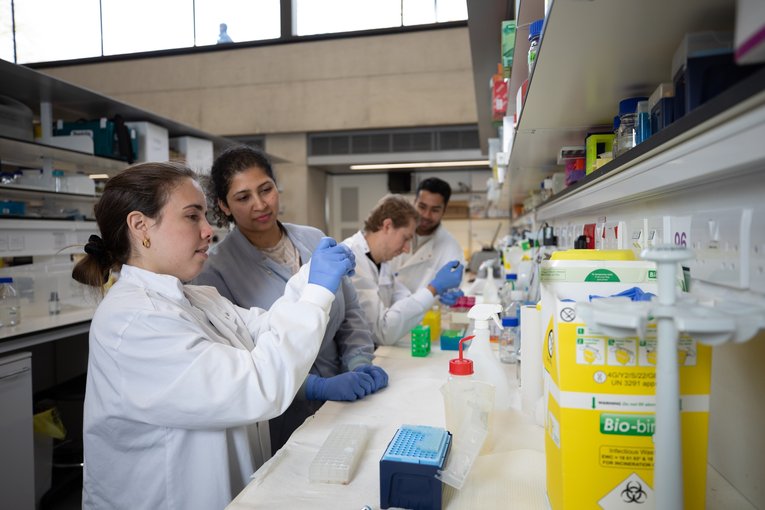
Researchers funded to cure inflammatory disease
Researchers from University College London (UCL) and Great Ormond Street Hospital (GOSH) will join researchers across the UK and international partners in a bid to transform how chronic inflammatory disease is treated.
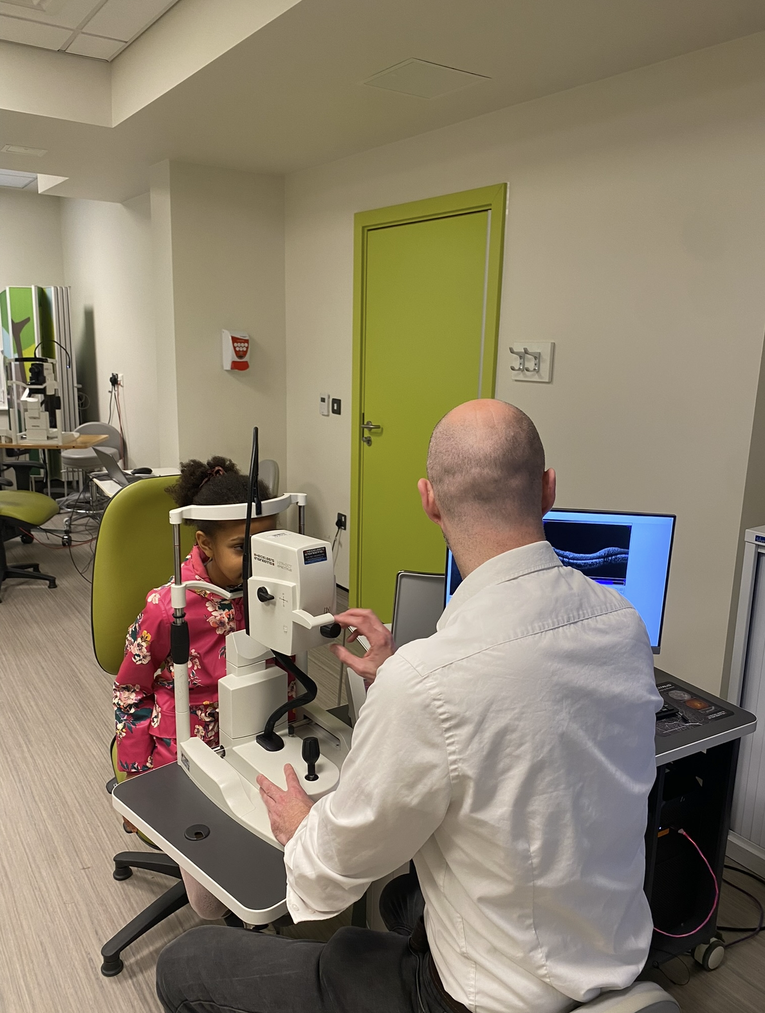
Innovative imaging project aims to save children’s sight
Researchers from GOSH and UCL are leading a project that could transform how children at risk of sight loss are monitored, by adapting advanced eye imaging technology for use closer to home

Five GOSH clinicians recognised with professorial appointments at UCL
Five clinician researchers from GOSH have been promoted to professor by University College London (UCL), recognising their outstanding contributions to research, innovation and child health.