https://www.gosh.nhs.uk/news/new-trial-to-support-childhood-survivors-of-brain-tumours/
New trial to support childhood survivors of brain tumours
19 Feb 2026, 9:33 a.m.
Experts at Great Ormond Street Hospital have launched the first trial of its kind to support children’s cognitive development following treatment for a brain tumour.
Funded by the National Institute for Health and Care Research (NIHR) and Success Charity - Life After Cure, the pioneering study will aim to evaluate a novel cognitive rehabilitation programme.
The FLaME study aims to address a critical gap in post-treatment care by testing the feasibility and acceptability of a practical strategy-based cognitive rehabilitation treatment.
Currently there are no tested cognitive rehabilitation treatments available for children following brain tumour treatment in the NHS. Despite improved survival rates, there is little recovery support for the long-term, and most survivors face challenges with cognition, such as memory and attention, and cognitive fatigue. These problems are well known to significantly affect quality of life, including educational progress, social and emotional wellbeing, independence, and achieving employment as adults.
Focusing on practical strategies
The FLaME study will recruit 36 children aged seven to 17 who have been treated for brain tumours at Great Ormond Street Hospital (GOSH). Together with University College Hospital London, it forms the largest Principal Treatment Centre in Europe for treating childhood cancer.
Participants will be randomly assigned to have either cognitive rehabilitation with cognitive fatigue management, or cognitive rehabilitation alone, or usual healthcare.
The programme focuses on teaching children and families practical strategies to manage cognitive difficulties, such as how to focus attention and remember information better. The study will assess how practical the therapy is to deliver, how acceptable families find it, and whether integrating cognitive fatigue management into the rehabilitation improves outcomes.
Dr Charlotte Malcolm, Chief Investigator and Principal Clinical Neuropsychologist at GOSH, said: “This is the first trial of its kind to explore cognitive rehabilitation tailored for children and young people following treatment for brain tumours in the UK. We hope the FLaME programme will empower young people and their families with tools to better manage the cognitive challenges they face after treatment and to improve their quality of life.
“National guidelines recommend cognitive rehabilitation, yet access remains limited due to a lack of research and funding, and practical barriers. We hope this trial will address this gap and lead to improved post-treatment care.”
A dedicated Patient and Public Involvement and Engagement (PPIE) group are involved in the development and design of the study and highlighted the need for this study in an under-represented area of healthcare.
Sophia's story
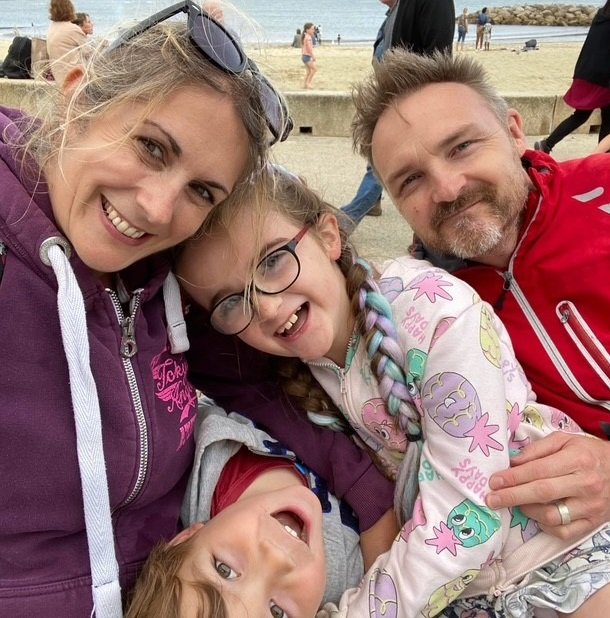
11-year-old Sophia from Leigh-on-Sea was diagnosed with hydrocephalus, a build-up of fluid on the brain, when she was just five months old. She was transferred to GOSH for life-saving treatment and further investigations found that she had a brain tumour.
Sophia underwent a year of chemotherapy to shrink the tumour and several operations. She spent a large part of her childhood in and out of hospital having treatment, scans of her brain, and follow-ups with her clinical team.
In 2017 she went into remission and has regular check-ups at the hospital.
Mum Nina said: “Having the opportunity to be part of this study has been life changing. It’s given us a way forwards as a family. It’s helped Sophia understand her brain fatigue and problems with her memory, and her different feelings and emotions. It’s given us all some good techniques for how to deal with these and also apply them in different situations such as at home and at school.
“The team was so kind and supportive, and we were able to join the sessions online and in-person too. The study really took into consideration the whole family. We’re so grateful for the care Sophia has had at GOSH both during and after her brain tumour treatment.”
The findings from this study will inform the development of a larger UK-wide randomised controlled trial and could pave the way for national implementation of cognitive rehabilitation services for children and young people following a brain tumour.
All research at GOSH is underpinned by support from the NIHR GOSH Biomedical Research Centre.
GOSH is developing a new Children’s Cancer Centre, putting children at the front and centre, with their needs as the very heart of the design. The new facility will also make it easier for clinical teams to combine the very best care with the latest research and innovation - working together to deliver a step change for children with cancer.
Engineered tissue offers hope for children born with ‘missing’ food pipe
Scientists from Great Ormond Street Hospital (GOSH) and University College London (UCL) have created the first lab‑grown oesophagus - the food pipe - shown to safely replace a full section of the organ and restore normal function, including swallowing, in
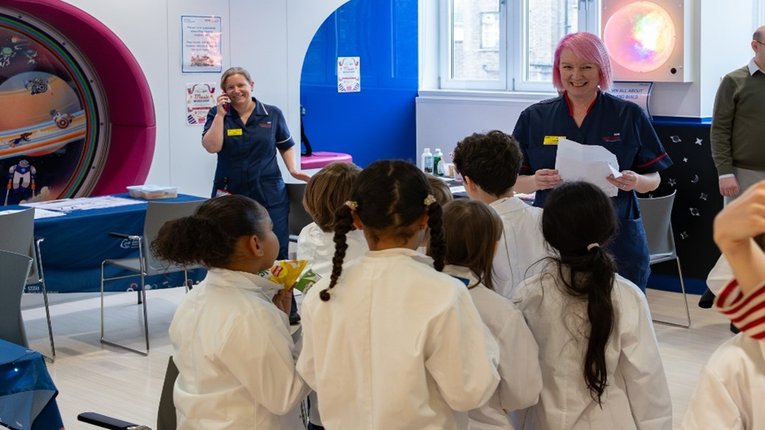
GOSH celebrates Rare Disease Day 2026 with local community
GOSH specialises in rare disease research and to celebrate, we recently invited two local North London Year 4 classes to join us for the day to learn about how we care for patients with rare diseases.
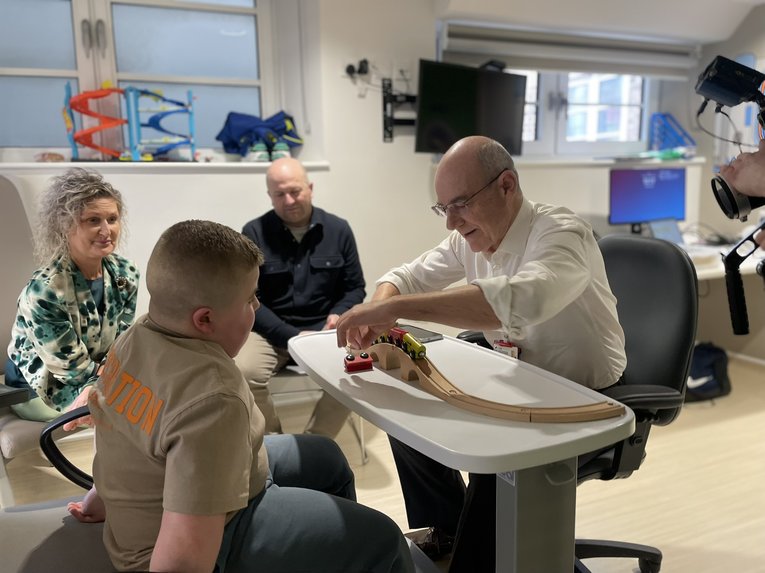
Professor Francesco Muntoni wins prestigious research prize
Professor Francesco Muntoni, GOSH Paediatric Neurology Consultant, has been awarded the 2026 Novo Nordisk Prize in recognition of his pioneering work transforming the outlook for children with Duchenne muscular dystrophy (DMD).
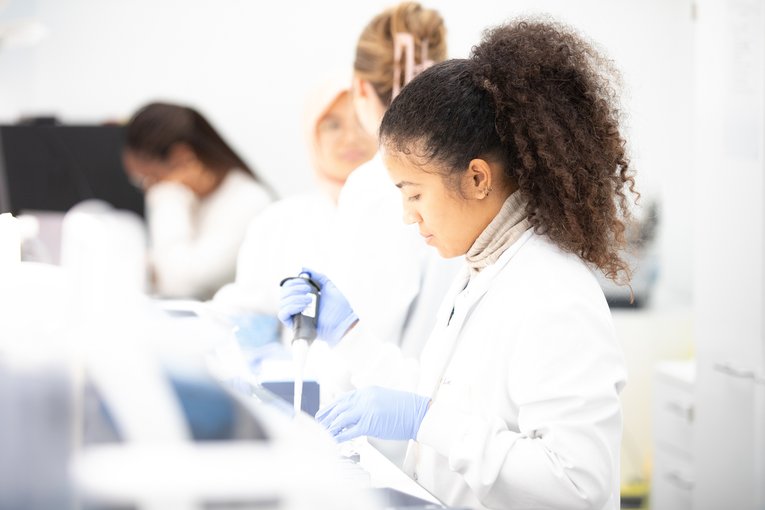
GOSH secures £1.4m in NIHR capital equipment funding to boost research capability
This investment will significantly strengthen our research infrastructure and enhance our ability to deliver world‑leading paediatric research across the whole hospital.