
https://www.gosh.nhs.uk/news/hospital-website-homepage-changing/
Hospital website homepage is changing
20 Mar 2018, 1:36 p.m.

Exciting changes are afoot on the Great Ormond Street Hospital (GOSH) website (www.gosh.nhs.uk).
As part of a careful, user-centred research project, we will be making small and frequent improvements to the website in the next couple of months. Huge thanks to all of you, who participated in the surveys, interviews and workshops to get the website to this point.
The first major change is to place a new video/image banner on the homepage. The unresponsive carousel of images has been replaced with a single engaging video, which brings to life the hospital experience. This video/image will be updated regularly to reflect the vital services the hospital provides. It will change dependent on what patients, parents and their families tell us they want to see.
Rest assured all the content links which featured in the carousel previously can be found, either from the top navigation or from the content areas listed on the current homepage.
Keep your eyes peeled for more significant changes and if you have any questions and feedback, please contact web.content@gosh.org
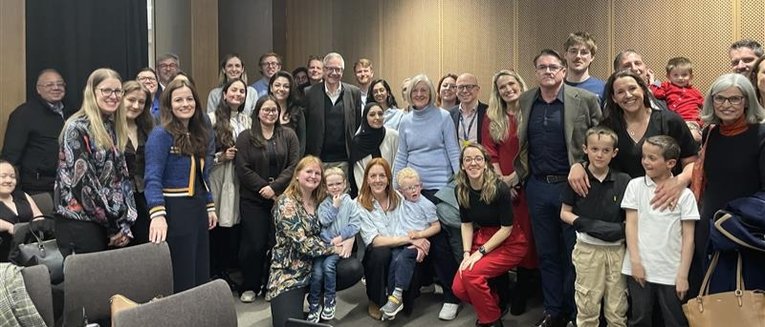
Surgeon who saved children’s sight surprised by patients, family and colleagues
Professor Chris Lloyd, consultant ophthalmic surgeon and paediatric ophthalmologist, was given a surprise to remember as a part of the BBC The One Show’s ‘One Big Thank You’.

Gentler treatment eliminates early deaths for children with relapsed leukaemia
A groundbreaking national study led by clinicians at Great Ormond Street Hospital (GOSH) has shown that children and young people with relapsed acute lymphoblastic leukaemia (ALL) can be treated safely with significantly less intensive chemotherapy.

NHS eye gene therapy restores Saffie's sight
Saffie has had her sight restored thanks to life-changing eye gene therapy for rare blindness at GOSH
£3M study led by patient voices targets pain in inflammatory arthritis
A new £3 million research programme involving Great Ormond Street Hospital and University College London researchers aims to tackle one of the largest unmet clinical needs in inflammatory arthritis – pain reduction.