
https://www.gosh.nhs.uk/wards-and-departments/departments/clinical-specialties/audiological-medicine/the-balance-clinic/
The Balance Clinic
Important information and what to expect when you come to the Balance Clinic at Great Ormond Street Hospital (GOSH).
What to expect
- Your child will be seen by a doctor and an audiologist during their visit.
- This is a long appointment and can last between one and three hours.
- We may ask you or your child to complete a questionnaire during the appointment.
- Some children may feel dizzy during some of the tests, but this should settle soon after the test.
- The doctor will take a history. This will involve asking about events leading to the referral to GOSH, your child’s condition, symptoms, and day-to-day life.
- The doctor will also perform a clinical examination.
- The audiologist will perform specialised balance tests (explained below) and will then discuss with the doctor how to manage your condition.
How to prepare
- Your child should avoid large meals one hour before testing. They can still have small snacks and drinks.
- Please avoid using make up or cream/oil on your child’s face on the day of testing.
- Please stop any dizziness medication two days before the appointment. Please check with your child’s doctor that it is safe to do so.
- You can help your child prepare for the appointment by practicing putting stickers on their forehead and neck.
- If you feel they may dislike being on the rotary chair, they can practise sitting on a stationary chair or office chair (under strict adult supervision) and wearing sunglasses or swimming goggles. This can help ease anxiety around testing.
- Please feel free to bring one or two toys – or a device such as an iPad/tablet – if it will help calm your child if they are anxious.
Tests your child may have
Your child may not have all these tests. This will be decided based on their needs. Each test lasts around 20 minutes.
Vestibular evoked myogenic potentials (VEMP)
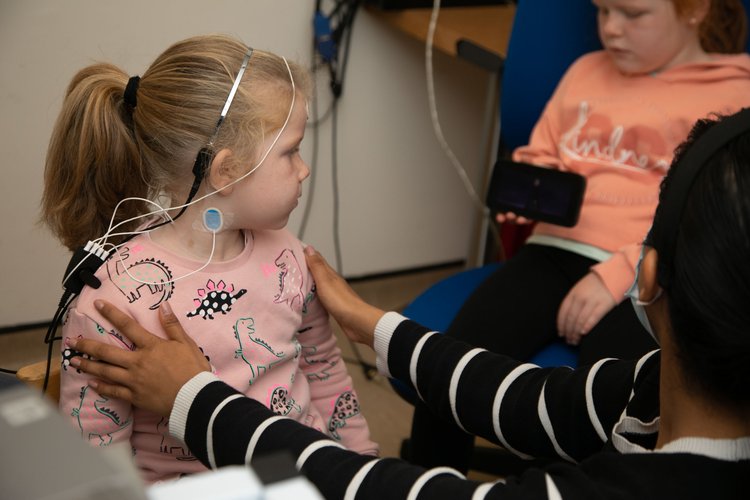
- A sticky pad is attached to your child’s forehead, chest, and each side of their neck.
- A soft foam tip or a band sends a click sound to the ear.
- We will ask your child to look at the opposite side and will measure neck muscle activity in response to these sounds. We may also ask your child to look up at the ceiling.
Calorics
- Your child will be lying on a couch wearing goggles with a camera attached over one eye.
- We will put warm water in each ear, followed by cool water.
- We will record the speed of the resultant eye movements.
Video head impulse test (VHIT)
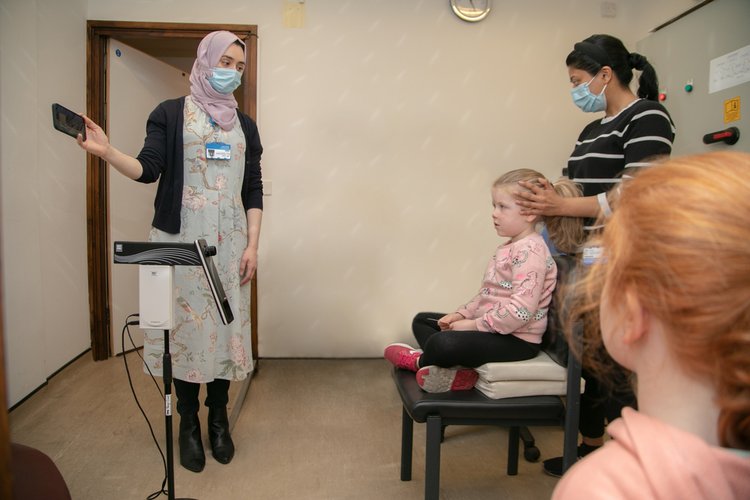
- Your child will be seated on a chair.
- We will encourage small quick head movements (up, down, and side-to-side), whilst looking at a marked spot on the wall (or a video on a mobile phone).
- We will record the eye movements using a camera (older children may be asked to wear goggles).
Rotary chair
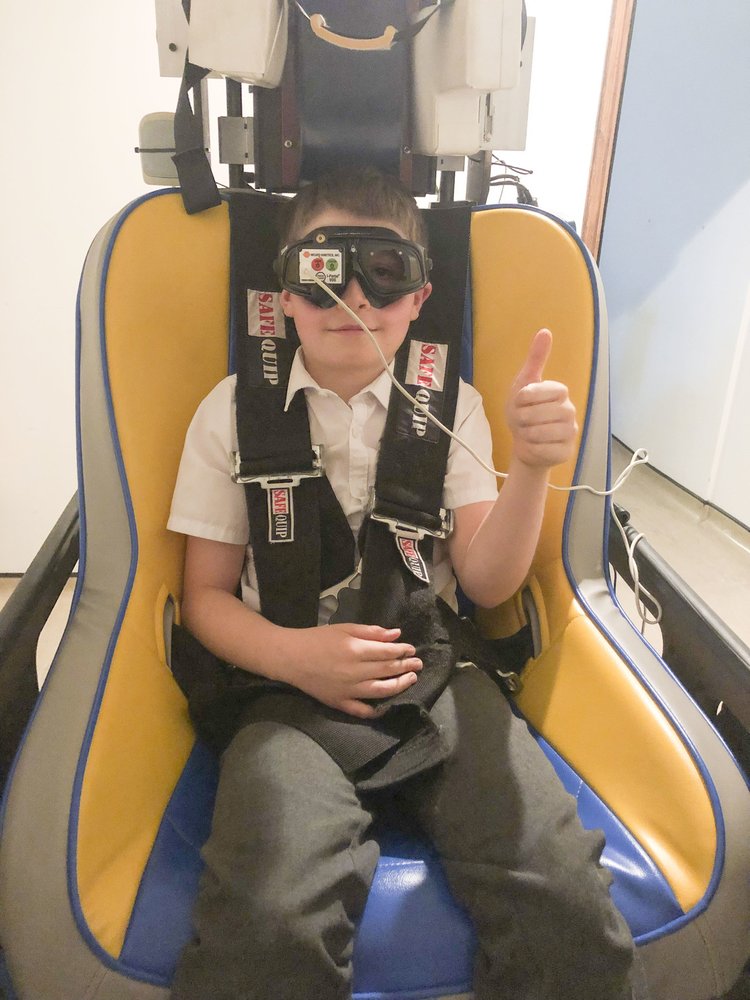
- Your child will be sitting on a computer-controlled chair that spins for 30 to 60 seconds at a time (with breaks between rotations).
- Your child’s eye movements will be recorded by goggles or sticky pads.
- The room will be dark but you can sit with your child in the same room to keep them company.
- You can communicate with the audiologist during the test.
Contact information
If you have any questions, please get in touch.
Email: audiology.info@gosh.nhs.uk
Phone: 020 7813 8315
Alternatively, you can directly message the department through the MyGOSH app.
Written by: Audiology
Reference number: 0126WAD0049
Last reviewed: January 2026
Next review due: January 2030