

https://www.gosh.nhs.uk/our-research/our-research-infrastructure/nihr-great-ormond-street-hospital-brc/brc-news/how-purify-photoreceptors-retina-grown-dish/
How to purify photoreceptors from retina grown in a dish
9 Sep 2015, 4:54 p.m.

Work recently published in Stem Cells has shown that photoreceptor cells can be grown and purified in the lab before being transplanted into a mature host retina. This research, led by BRC-supported Professor Jane Sowden, suggests that cell replacement therapy involving the transplantation of new photoreceptor cells, isolated from retina grown in a dish, may be a possible treatment for blindness.Retinal diseases causing loss of the light-sensing photoreceptor cells in the retina are a major cause of blindness worldwide. These conditions are largely untreatable. Current research is aiming to develop photoreceptor cell therapy as a future treatment for blindness due to photoreceptor cell death.
Stem cell cultures offer an inexhaustible source of new photoreceptor cells for cell therapy. Stem cells grown under certain conditions have the ability to form three dimensional eye cups containing layers of retinal cells resembling the embryonic eye.
In this study, the team showed for the first time that photoreceptor cells suitable for transplantation can be isolated from stem cell-derived retina using specific tags, termed biomarkers, which are located on the surface of the cells.
The next step following these proof-of-concept studies is to develop similar strategies for the purification of human photoreceptor cells from stem cell cultures for clinical photoreceptor cell therapy.

GOSH surgeon receives prestigious international award
Professor Paolo De Coppi, Consultant Paediatric Surgeon at Great Ormond Street Hospital (GOSH), has been recognised as an Honorary Fellow of the American College of Surgeons (ACS), one of the most prestigious honours in global surgery.
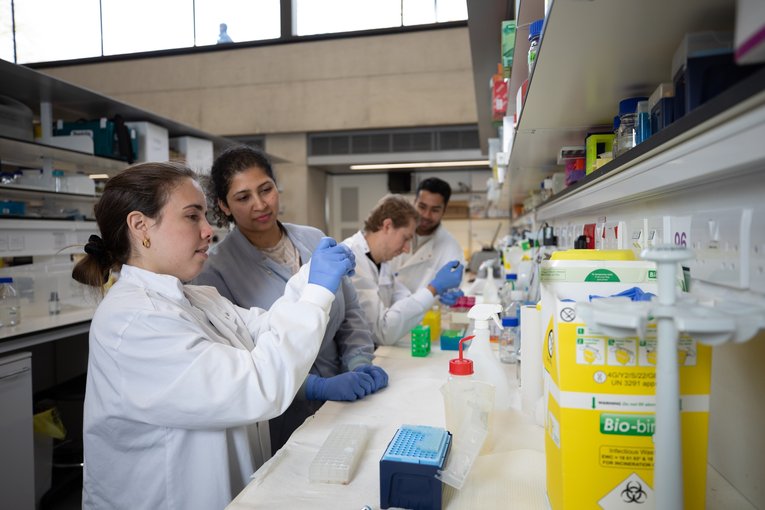
Researchers funded to cure inflammatory disease
Researchers from University College London (UCL) and Great Ormond Street Hospital (GOSH) will join researchers across the UK and international partners in a bid to transform how chronic inflammatory disease is treated.
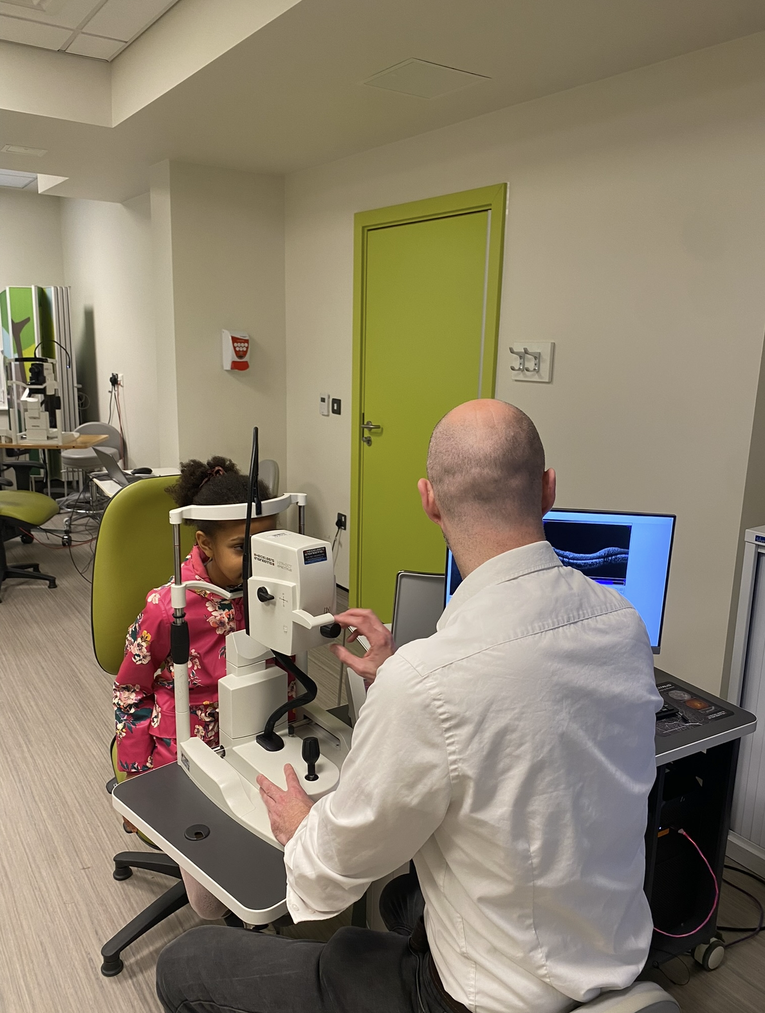
Innovative imaging project aims to save children’s sight
Researchers from GOSH and UCL are leading a project that could transform how children at risk of sight loss are monitored, by adapting advanced eye imaging technology for use closer to home
Five GOSH clinicians recognised with professorial appointments at UCL
Five clinician researchers from GOSH have been promoted to professor by University College London (UCL), recognising their outstanding contributions to research, innovation and child health.