

https://www.gosh.nhs.uk/our-research/our-research-infrastructure/nihr-great-ormond-street-hospital-brc/brc-news/when-is-it-ok-to-link-our-data/
When is it OK to link our data?
12 Jan 2026, 11:34 a.m.

A guide for researchers by children and young people
Working together with GenerationR Young Persons’ Advisory Groups (YPAGs) from Great Ormond Street Hospital and Liverpool in 2025, we have co-produced a guide containing key principles which reflect children’s and young people’s views about when it is ok to link their data for research.
What data are we talking about?
There are a lot of data that are collected about us as we go about our daily lives. For example, when we use the NHS, hospitals record information on our individual characteristics, our health conditions and the treatments we receive. This data is routinely collected for record-keeping, costing and planning. These data also contain invaluable insights into the health of the whole population over a long period of time and are often used for research. We call these administrative data. Linking administrative health data to other non-health data – e.g. school records like in ECHILD, or information about the environment like the KEHC – creates far richer resources which enable researchers to understand the factors that influence children’s and young people’s health and well-being, vital for improving their lives as a result.
When can the data be linked?
Due to the confidential and sensitive nature of such data, there are very stringent controls on when and how researchers may use it. Permission to use health data for research must be obtained from research ethics committees, confidentiality advisors and data guardians, all of whom want assurance that studies are carried out ethically, legally and safely to protect people’s rights and privacy. These decision-making bodies also want to know what children and young people (whose data are being used) and the public think about linking data for research.
The purpose of this guidance
We frequently approach YPAGs to discuss their views on whether it’s ok to link their data for specific projects. But there are many common issues concerning linking administrative health and non-health data for research. We therefore wanted to create guidance that can serve as future reference for other researchers, decision-makers and anyone involved in research.

Engineered tissue offers hope for children born with ‘missing’ food pipe
Scientists from Great Ormond Street Hospital (GOSH) and University College London (UCL) have created the first lab‑grown oesophagus - the food pipe - shown to safely replace a full section of the organ and restore normal function, including swallowing, in
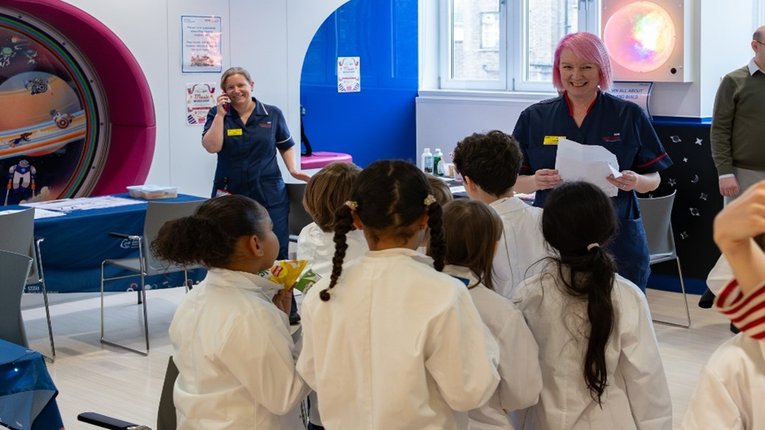
GOSH celebrates Rare Disease Day 2026 with local community
GOSH specialises in rare disease research and to celebrate, we recently invited two local North London Year 4 classes to join us for the day to learn about how we care for patients with rare diseases.
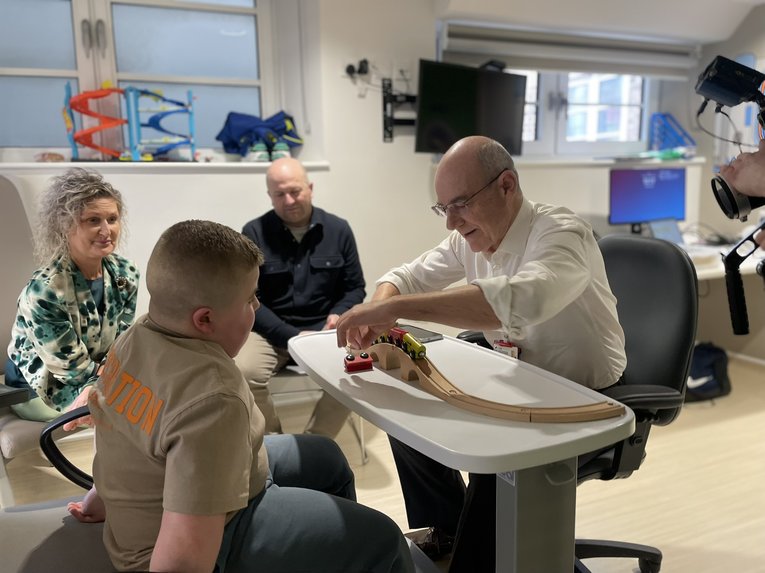
Professor Francesco Muntoni wins prestigious research prize
Professor Francesco Muntoni, GOSH Paediatric Neurology Consultant, has been awarded the 2026 Novo Nordisk Prize in recognition of his pioneering work transforming the outlook for children with Duchenne muscular dystrophy (DMD).
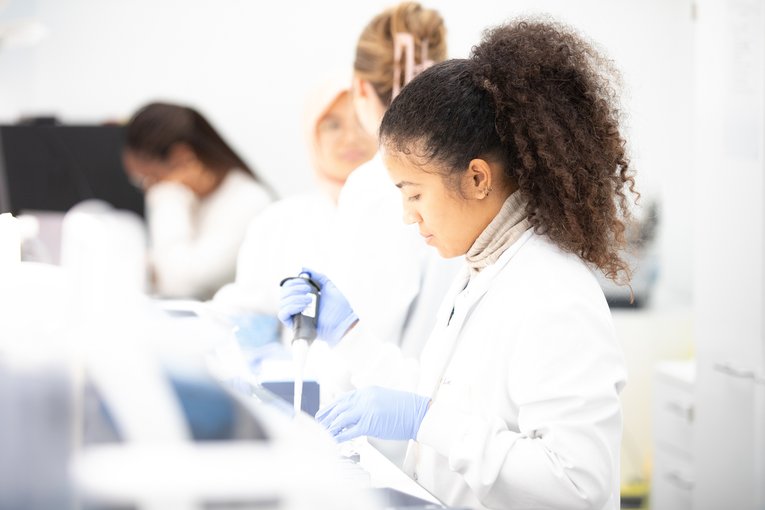
GOSH secures £1.4m in NIHR capital equipment funding to boost research capability
This investment will significantly strengthen our research infrastructure and enhance our ability to deliver world‑leading paediatric research across the whole hospital.