
https://www.gosh.nhs.uk/our-research/our-research-infrastructure/nihr-great-ormond-street-hospital-brc/brc-news/next-five-years-ground-breaking-research/
The next five years of ground-breaking research
3 Apr 2017, 12:23 p.m.

The NIHR Great Ormond Street Biomedical Research Centre (BRC) starts a new five-year funding term today.
In September 2016 the NIHR announced the £37 million award to GOSH BRC which will underpin translational research at Great Ormond Street Hospital (GOSH) and allow us to continue bringing the scientific discoveries made in laboratories into ‘first in child’ clinical trials. The GOSH BRC is one of 20 NIHR BRCs across the UK, and the only such centre specifically focusing on research into children’s medicine.
Professor Thomas Voit, Director of the NIHR GOSH BRC discussed his vision for the centre: “We want to be at the forefront of early development of medicines and bringing those to the children that need them. This £37million investment in infrastructure and people will help us achieve this.”
Funding research at GOSH
Funding allows the NIHR GOSH BRC to support vital research facilities at GOSH and the UCL Great Ormond Street Institute of Child Health, including GOSgene, an in-house gene sequencing facility that is helping researchers pinpoint the genes underpinning childhood disease. There will also be funding available to support individual researchers and students.
The funding also supports the NIHR Somers Clinical Research Facility which provides a dedicated space for children from across the UK who are taking part in clinical trials.
Research at the NIHR GOSH BRC will focus on four core themes that will build on previous work to understand the underlying causes of rare childhood diseases and find new drug-based and surgical treatments. A new theme for 2017-2022 is Advanced Treatments for Malformations and Tissue Damage, which will pioneer advanced technologies such as regenerative medicine to provide more treatment options for children born with birth defects or with malformations that develop early in childhood.
“We need to fully understand the molecular causes of the rare diseases we hope to treat”, said Professor Voit “This will be indispensable for starting new trials and offering new treatments.”
“The inspiration for developing new therapies is in the bloodstream at GOSH” he added. “The combination of pioneering researchers, excellent research facilities and NIHR support provides us with all the raw materials for us to continue to innovate in children’s medicine.”
Meet the BRC
On 17 May 2017 the NIHR GOSH BRC is holding a symposium to celebrate the launch of the new funding term. Register your interest to learn more about the world-leading research taking place at the GOSH BRC.
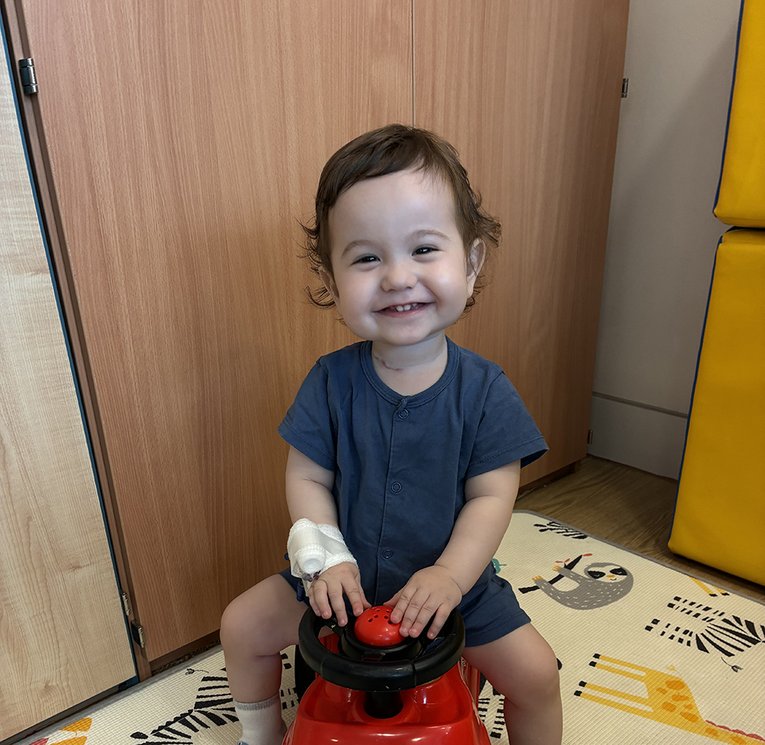
Engineered tissue offers hope for children born with ‘missing’ food pipe
Scientists from Great Ormond Street Hospital (GOSH) and University College London (UCL) have created the first lab‑grown oesophagus - the food pipe - shown to safely replace a full section of the organ and restore normal function, including swallowing, in
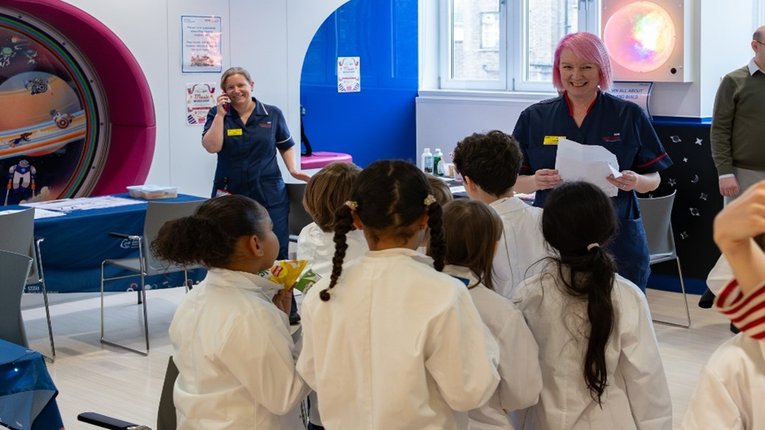
GOSH celebrates Rare Disease Day 2026 with local community
GOSH specialises in rare disease research and to celebrate, we recently invited two local North London Year 4 classes to join us for the day to learn about how we care for patients with rare diseases.
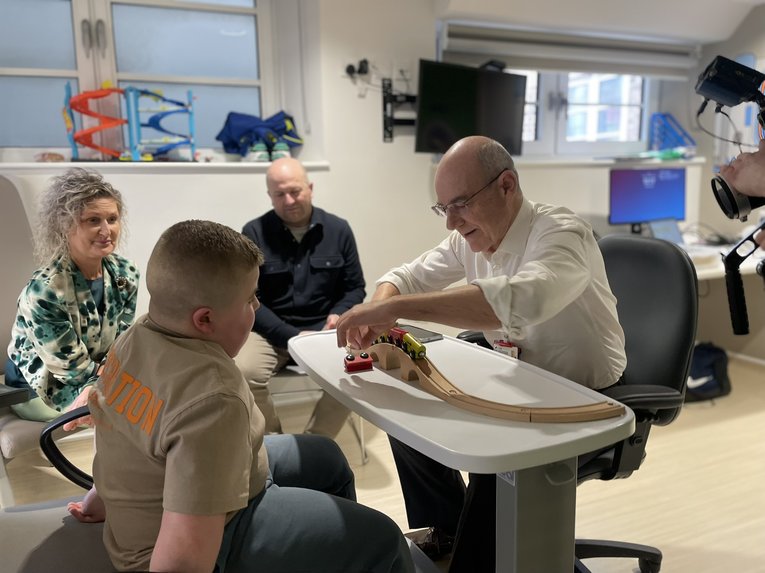
Professor Francesco Muntoni wins prestigious research prize
Professor Francesco Muntoni, GOSH Paediatric Neurology Consultant, has been awarded the 2026 Novo Nordisk Prize in recognition of his pioneering work transforming the outlook for children with Duchenne muscular dystrophy (DMD).
GOSH secures £1.4m in NIHR capital equipment funding to boost research capability
This investment will significantly strengthen our research infrastructure and enhance our ability to deliver world‑leading paediatric research across the whole hospital.