
https://www.gosh.nhs.uk/our-research/our-research-infrastructure/nihr-great-ormond-street-hospital-brc/brc-news/how-linked-health-and-education-data-is-changing-what-we-know-about-children-with-neurodisability/
How linked health and education data is changing what we know about children with neurodisability
9 Feb 2026, 9:36 a.m.

Children with neurodisability often have complex health and educational needs, but population‑level data on long‑term outcomes remains limited. New research from GOS-ICH addresses this gap using one of the largest national birth cohorts to date.
New research from UCL Great Ormond Street Institute of Child Health addresses this gap by analysing data from one of the largest national birth cohorts to date. The study examines 3.5 million children born in England between 2003 and 2009, using linked hospital and education records from the ECHILD database. Researchers developed a new method to identify, or “phenotype”, neurodisability using routinely collected hospital admissions data. This approach enables health and educational outcomes to be studied longitudinally and at population scale.
The study showed that one in 28 children in England had a neurodisability recorded in hospital admission data. Although children with hospital‑recorded neurodisability made up less than 4% of the cohort, they accounted for 26% of all planned and 14% of all unplanned hospital admissions by age 11, and they experienced higher mortality rates than their peers.
The study also revealed marked differences in educational outcomes for children with neurodisability and their peers. Among the three million children enrolled in state‑funded primary schools, three‑quarters of those with neurodisability had special educational needs or disability provision recorded at least once, compared with 30% of children without neurodisability. More than one in three had an Education, Health and Care Plan, compared with 2.4% of their peers. A parallel study of 2 million children born between 2003 and 2008 who were enrolled in primary school in England showed that those with hospital-recorded neurodisability had 5 to 7 times higher rates of planned and unplanned hospital admissions during primary school, and 60% higher rates of school absence than children without.
The most commonly recorded neurodisability included inherited or congenital conditions, perinatal conditions, developmental disorders, and epilepsy. However, some conditions — particularly visual, hearing, and motor impairments or autistic spectrum conditions — appeared to be under‑recorded in hospital data, highlighting known limitations of relying on hospital records alone.
The two studies were part of the HOPE Research Programme which explored how special educational needs provision affects children's health and education. To support future research, the diagnostic code list developed for the study has been made publicly available. While hospital data underestimates the true prevalence of neurodisability, this new method provides a powerful tool for informing service planning and improving coordination across health, education, and social care.
Read the full paper here: https://pubmed.ncbi.nlm.nih.gov/40708380/ and https://onlinelibrary.wiley.com/doi/10.1111/dmcn.70128?af=R.
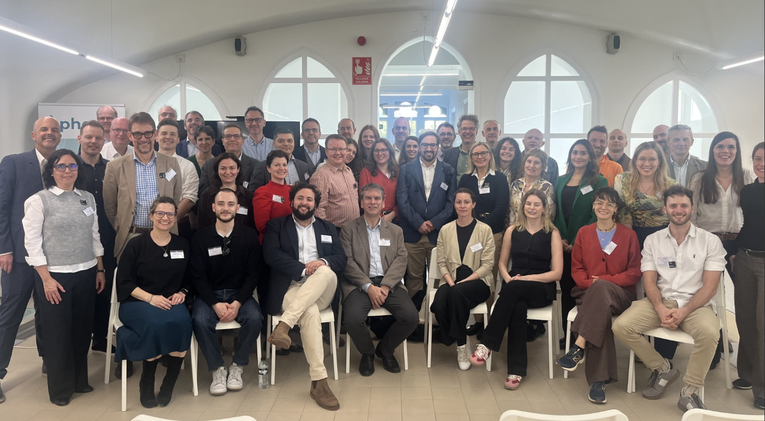
GOSH joins European health leaders to shape the future of paediatric data sharing
More than 50 clinicians, data scientists, digital health innovators and industry leaders came together in Barcelona last month to tackle one of the biggest challenges in paediatric healthcare: how to share health data safely across borders to improve care
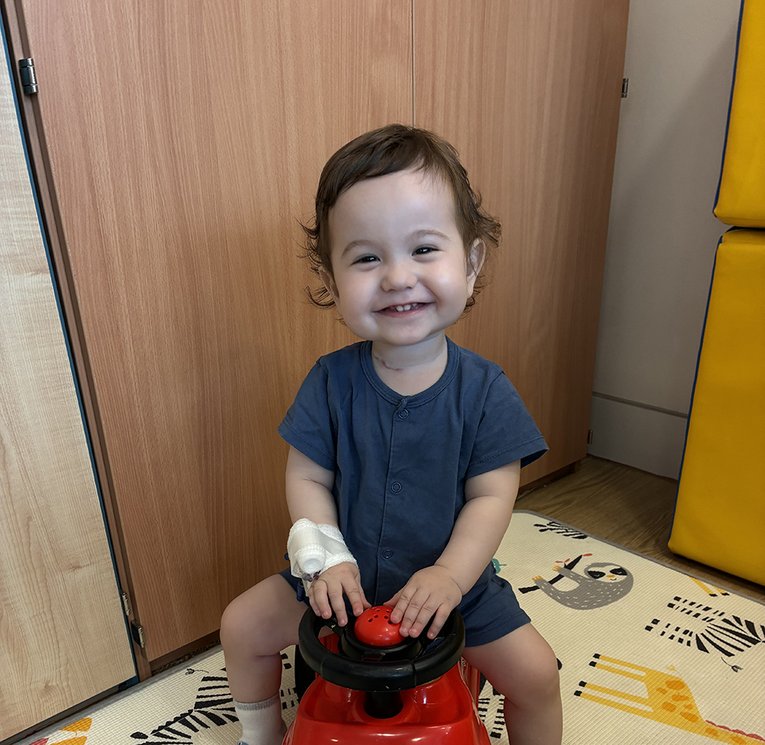
Engineered tissue offers hope for children born with ‘missing’ food pipe
Scientists from Great Ormond Street Hospital (GOSH) and University College London (UCL) have created the first lab‑grown oesophagus - the food pipe - shown to safely replace a full section of the organ and restore normal function, including swallowing, in
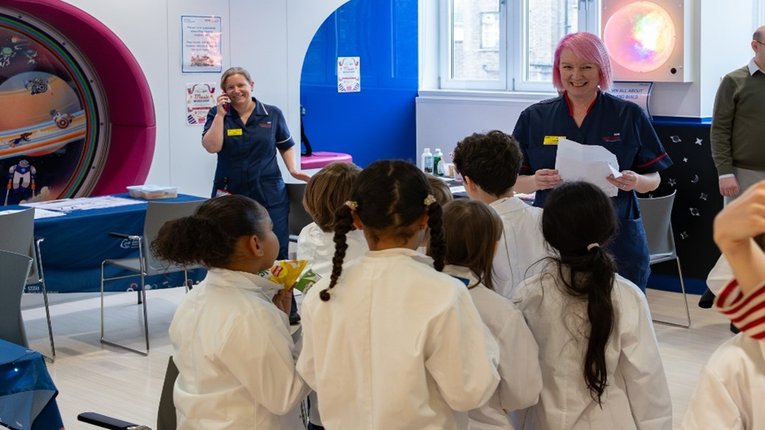
GOSH celebrates Rare Disease Day 2026 with local community
GOSH specialises in rare disease research and to celebrate, we recently invited two local North London Year 4 classes to join us for the day to learn about how we care for patients with rare diseases.
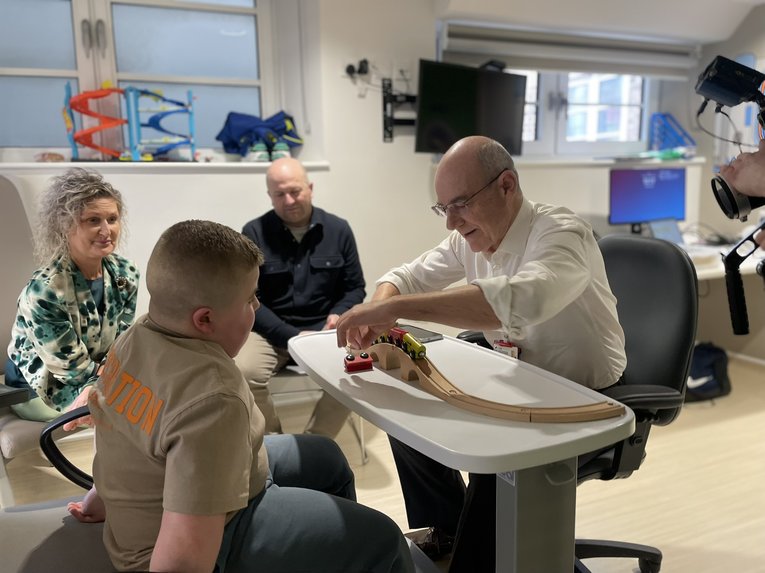
Professor Francesco Muntoni wins prestigious research prize
Professor Francesco Muntoni, GOSH Paediatric Neurology Consultant, has been awarded the 2026 Novo Nordisk Prize in recognition of his pioneering work transforming the outlook for children with Duchenne muscular dystrophy (DMD).