
https://www.gosh.nhs.uk/news/study-sheds-light-on-sight-threatening-arthritis-in-children/
Study sheds light on sight-threatening arthritis in children
4 Feb 2026, 4:59 p.m.
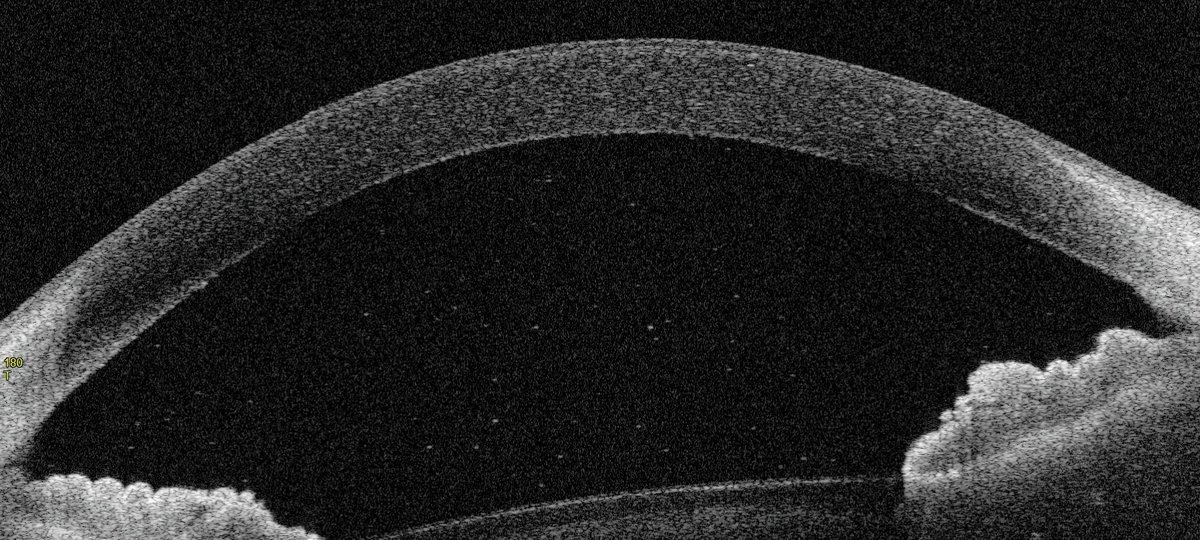
A team led by UCL researchers, in collaboration with Great Ormond Street Hospital (GOSH) and Moorfields Eye Hospital, have discovered B-cells alongside T-cells, play a major role in the development of arthritis‑associated eye disease, JIA‑uveitis, which can cause long-term vision loss in children.
Published in Nature Communications, the study challenges how the disease has been previously understood and could open the door to new treatments that help protect children’s sight.
Juvenile idiopathic arthritis (JIA) is the most common form of arthritis in children under the age of 16, affecting around one in every 1,000 children in the UK. Approximately 30% of patients with JIA also develop uveitis – an inflammatory condition of the eye that is potentially sight-threatening.
Although some treatments are available for the condition, up to a third of affected children still experience some degree of permanent vision loss by the time they reach adulthood.
JIA-associated uveitis
The new research provides a clearer picture of the immune cells involved in JIA-associated uveitis.
Dr Bethany Jebson, Research Fellow at UCL and first author of the study, said: “JIA-uveitis can be difficult to detect early, because in some patients, it can cause no obvious symptoms,”
Within the immune system, B- and T-cells are crucial white blood cells that protect the body against specific pathogens, each playing distinct roles in providing resistance against infections and toxins. As an autoimmune condition, JIA-uveitis occurs when the immune system mistakenly attacks tissues in the eye.
To date, T cells have been considered the primary drivers of the disease’s autoimmune response and subsequent tissue damage. However, this new data suggests that B-cells are also playing a role in the disease – presenting a new potential treatment target.
However, studying the disease effectively and understanding the immune responses that cause eye inflammation requires careful analysis of eye samples from children, which are difficult to safely obtain. This has affected how researchers have been able to study the disease – until now.
Senior author of the study, Dr Elizabeth Rosser, Associate Professor at UCL, explains, “Through immense collaborative effort with Great Ormond Street Hospital and Moorfields Eye Hospital, we examined rare samples taken directly from the eyes of children with uveitis, who were already undergoing surgery for related complications such as cataracts. We also were able to investigate carefully preserved historical eye samples.”
In this study, the team combined blood data with these rare eye samples to explore disease mechanisms more directly. They first compared blood samples from children with arthritis alone (JIA) and children with both arthritis and eye inflammation (JIA-uveitis). They then identified and counted various types of immune cells in the eyes of patients.
“This allowed us to see which immune cells were present in the inflamed eye and compare this with what we saw in the blood,” adds Dr Rosser.
The researchers observed that B-cells were consistently present in increased numbers in the blood and inflamed eyes of JIA-uveitis patients.
Fundamentally, this highlights the pivotal role of B-cells as additional drivers in the disease pathology of JIA-uveitis. “Our findings challenge the idea that uveitis is driven by T cells alone and show that B cells may also be playing an important role,” says Dr Jebson.
Moreover, in a mouse model of uveitis, the researchers found that blocking communication between the two immune cell types led to reduced eye inflammation.
“While results from animal studies cannot be directly applied to children, they can help identify immune pathways that may be important in disease,” adds Dr Rosser.
Dr Ameenat Lola Solebo, Consultant Paediatric Ophthalmologist at GOSH and author of the study, said: “This work is a great example of the power of patient-driven research. It uses samples from a new biobank (called ‘CHOIR’) which was inspired by and named by our patients.”
Looking to the future
The findings mark a major shift in how the disease process of uveitis is understood, shedding light on key mechanisms that lead to vision loss in children with the condition.
Dr Rosser adds, “The pathway targeted in this study is already being explored in adults with autoimmune diseases. Following careful clinical trials, we hope that existing treatments could one day be adapted or tested for this sight-threatening condition.
“Our next steps are to understand if we can find similar pathways at play in children with eye disease who do not have arthritis, as this group is underrepresented in research studies.”
Angela Hind, Chief Executive at the Medical Research Foundation, comments, “For reasons we still don’t fully understand, children with arthritis can also develop uveitis, and for many the disease does not respond to current treatments, with devastating consequences for their sight and long-term health.
This research has uncovered vital new insights into the immune responses driving eye inflammation, highlighting the importance of medical research in improving outcomes for children with serious and potentially blinding eye diseases. We hope these findings will lay the groundwork for future research and more effective treatments.”
The study was co-funded by the Medical Research Foundation, Moorfields Eye Charity, Great Ormond Street Hospital Children’s Charity, Arthritis UK (formerly Versus Arthritis), Fight for Sight, and the Lister Institute for Preventative Medicine.
All research at GOSH is underpinned by support from the NIHR GOSH Biomedical Research Centre.

Update for patients and families on industrial action
Some of our resident doctors at Great Ormond Street Hospital will be taking part in planned industrial action from 7am on Friday 14 November to 7am on Wednesday 19 November.
Engineered tissue offers hope for children born with ‘missing’ food pipe
Scientists from Great Ormond Street Hospital (GOSH) and University College London (UCL) have created the first lab‑grown oesophagus - the food pipe - shown to safely replace a full section of the organ and restore normal function, including swallowing, in
GOSH celebrates Rare Disease Day 2026 with local community
GOSH specialises in rare disease research and to celebrate, we recently invited two local North London Year 4 classes to join us for the day to learn about how we care for patients with rare diseases.
Professor Francesco Muntoni wins prestigious research prize
Professor Francesco Muntoni, GOSH Paediatric Neurology Consultant, has been awarded the 2026 Novo Nordisk Prize in recognition of his pioneering work transforming the outlook for children with Duchenne muscular dystrophy (DMD).