
https://www.gosh.nhs.uk/news/protein-responsible-rare-childhood-disorder-gives-clues-common-neurodegenerative-conditions-0/
Protein responsible for rare childhood disorder gives clues to common neurodegenerative conditions
1 Jul 2015, 11:35 a.m.
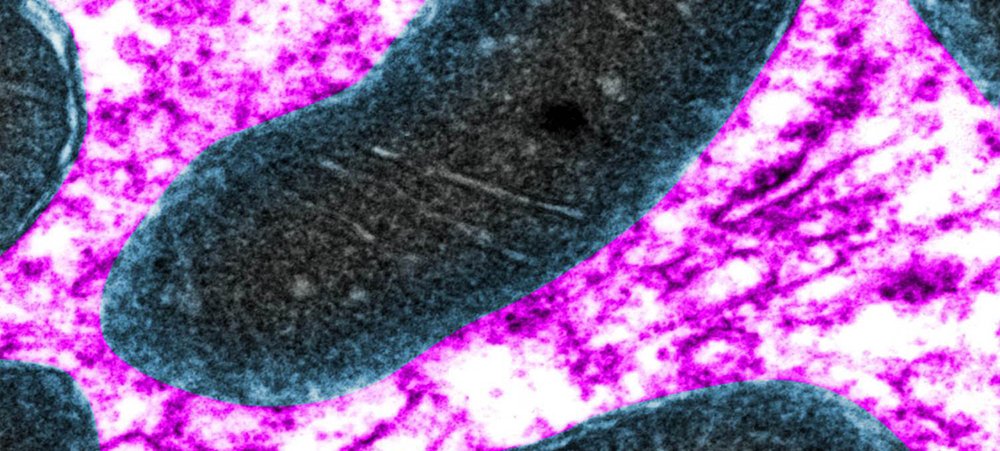
A new protein that appears to play a role in mitochondrial disease – a rare condition where a lack of energy in cells means that they can’t function properly – could prove to be important in conditions such as Alzheimer’s, Parkinson’s and Huntington’s diseases.This discovery, led by teams at Great Ormond Street Hospital, suggests a potential new avenue for developing drugs to treat mitochondrial diseases, for which no effective treatments to cure the diseases exist at present, and for exploring neurological disorders that affect millions of people worldwide.
Mitochondrial diseases are a set of conditions affecting around 1 in 5,000 people worldwide that are caused by dysfunctional mitochondria – the power stations of cells. Symptoms can include poor growth, loss of muscle coordination, muscle weakness and pain, seizures, vision and/or hearing loss, gastrointestinal issues, learning disabilities, and organ failure.
A delicate balance of activity within cells usually acts as a quality control process and removes dysfunctional mitochondria, but disruption in this balance leads to problems within the cells and the development of mitochondrial diseases. The exact processes in the body that control this balance have been unknown although research carried out at GOSH and its research partner the UCL Institute of Child Health, now uncovers a protein that may be key.
The team looked at three patients with mitochondrial diseases, and noticed that they had abnormally long mitochondria. By carrying out 'whole exome sequencing' (i.e. sequencing the coding part of all 20,000 genes in the human body) in these patients, they found that the change in mitochondrial shape was caused by a deficiency of the protein STAT2. They suggest that this protein may be important for fine-tuning the balance of mitochondria, stabilising their shape and structure and allowing cells to function adequately. Targeting STAT2 may therefore be a potential new treatment for mitochondrial diseases, which remain largely untreatable.
Abnormalities in the shape and structure of mitochondria have also been linked to Alzheimer’s, Huntington’s and Parkinson’s diseases. This suggests that STAT2 activity may also play a role in these conditions and could give us important information about how they progress.
Professor Shamima Rahman, Consultant in the Metabolic Department at GOSH and lead researcher says: “This is an exciting step towards potentially finding a treatment for mitochondrial diseases that are progressive and for which there is currently no cure. It also shows the potential of rare disease research for finding clues about more common disorders that affect a large proportion of the population.”
This work is published in the journal Brain and has been funded by the Great Ormond Street Children’s Hospital Charity, Muscular Dystrophy UK and the Lily Foundation.
World-first same-day metagenomics for children can detect hidden infections in intensive care
GOSH has successfully implemented a pioneering same-day respiratory metagenomics testing service for children in intensive care, helping clinicians identify infections more quickly and make better-informed treatment decision
GOSH families at the heart of major £6m project to improve support for children with complex needs
Children, young people and families from GOSH will help shape a major new research programme
New Fellowship to develop the next generation of paediatric neuro-oncology specialists
The Tessa Jowell Brain Cancer Mission has launched it's first Paediatric Neuro-Oncology Fellowship, to support the development of specialists caring for children with brain cancers
Thousands join world-first trial to save lives of critically ill children
Some of the sickest children in the UK have started to join an innovative clinical trial designed to improve the survival and recovery of children requiring intensive care treatment, led by GOSH.