https://www.gosh.nhs.uk/news/orthopaedic-review-end-of-patient-recall-report-published/
Orthopaedic Review: End of patient recall report published
29 Jan 2026, 1:16 p.m.
Today we have published the summary of our findings into the review of patients who were under the care of Mr Yaser Jabbar at Great Ormond Street Hospital for Children between 2017 and 2022.
We want to offer our sincerest apologies to all patients and families who have been impacted. We also recognise that the review process has added to the distress and worry that they may have felt and we are sorry for this.
We have heard extensively from patients and families about how they have been impacted, and we know nothing we can do will make up for the experiences they have had. We hope that by sharing our findings in a comprehensive way and being clear about the actions we have taken we can begin to rebuild the trust we know has been broken.
Background to the patient recall process
In 2022 concerns were raised about the practice of a Consultant Orthopaedic Surgeon, Mr Yaser Jabbar, who worked at GOSH from 2017 to 2022. We invited the Royal College of Surgeons (RSC) into the hospital to review his work and the wider Orthopaedic Service.
They recommended we review a cohort of Mr Jabbar’s patients. We took the decision to review all 789 of his patients. We hired independent Paediatric Orthopaedic Surgeons from other UK hospitals to review the care these patients had received and determine if they had come to harm.
They also produced a report into the review of The Orthopaedic Service which detailed a number of recommendations and actions to ensure it was providing the highest quality of care.
Patient Recall Findings Report
The report details the findings of the patient recall process in full. It also explains the background of how the review came about and the work we have done as a hospital to improve. The report has been written for patients and their families, and we have done our best to make clear what happened, the processes we followed and what we did as a result.
We do however recognise that this report may be upsetting for patients and families to read. It does not contain any individual patient information, but it does discuss poor clinical care and children and young people who have come to harm.
What the review of patient care found
The independent experts reviewed the care of 789 patients. The experts followed NHS England guidelines to determine whether harm had been caused and if it had been, graded this as severe, moderate or mild. They found that 94 patients had come to harm that was attributable to Mr Jabbar.
642 patients did not come to harm that was attributable to Mr Jabbar. An additional 53 patients had incomplete records which meant the experts were unable to determine whether harm had been caused.
We have included further data and detail of the themes we identified within the patient reviews in the report. It also includes themes identified during the conversations we held with patients and families and what we can learn from these.
Actions we have taken
We have undertaken significant work to make the care we give at GOSH better and safer for all patients. The Royal College of Surgeons review set out 122 recommendations for the hospital, all of which have been completed.
These recommendations were predominantly focused on improving the work of the Orthopaedic Service, however there were broader actions that we have applied across the hospital.
Within the Orthopaedic Service, actions include:
- Standardising the way we accept patients and manage waiting lists
- Ensuring every surgical patient is reviewed by a large team before and following surgery (MDT)
- Fortnightly meetings with Royal National Orthopaedic Hospital to discuss complex cases with a wider specialist team
- Strengthening the processes we have to discuss care that has not gone to plan at monthly Mortality and Morbidity Meetings
- Agreeing outcome measures for children and young people with limb differences, conditions that affect the foot and ankle and for neuromuscular conditions which require orthopaedic surgery
Wider learnings and actions that are being applied across the hospital include:
- Standardising multidisciplinary teams (MDT) and mortality and morbidity (M&M) meeting governance
- Reviewing outcome measures for our services
- Investing in our clinical leaders through speciality lead training
- Further developing our Speak Up culture including supporting patients to raise concerns
- Improving our induction processes including training a cohort of mentors
The changes we have made come too late for these patients and families, but we hope that they will help prevent future patients and families going through what happened to them.
Support for patients and families
We remain deeply sorry to everyone who have been hurt and impacted. We also recognise that the findings within the report will be difficult for some patients and their families to read and we are sorry for any distress that this causes.
Psychological support remains available for any patients and families impacted. If you feel you would benefit from this, please contact the Patient Advice and Liaison Service (PALS):
Telephone: 020 7829 7862
Email: pals@gosh.nhs.uk
Next steps
The patient recall process has concluded and we have completed all recommendations made to us by the Royal College of Surgeons. The extensive learnings from this process have been taken forward as part of a hospital-wide Quality and Safety Improvement Programme to significantly strengthen our governance across our clinical services and to minimise the risk of something like this happening again.
As our commissioner, NHS England has a role in identifying and sharing learning to improve services for future.
Engineered tissue offers hope for children born with ‘missing’ food pipe
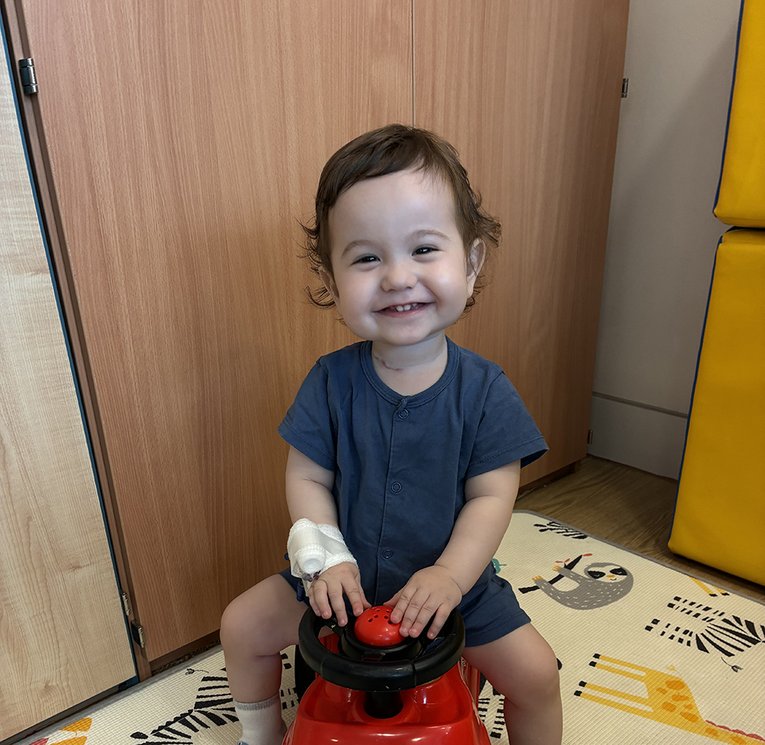
Scientists from Great Ormond Street Hospital (GOSH) and University College London (UCL) have created the first lab‑grown oesophagus - the food pipe - shown to safely replace a full section of the organ and restore normal function, including swallowing, in
GOSH celebrates Rare Disease Day 2026 with local community
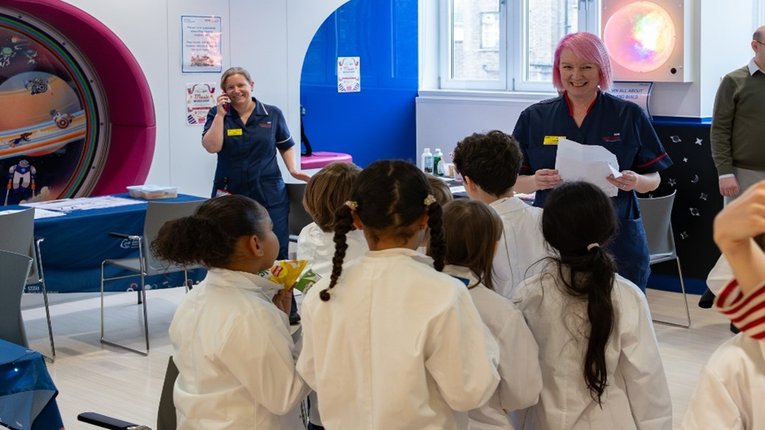
GOSH specialises in rare disease research and to celebrate, we recently invited two local North London Year 4 classes to join us for the day to learn about how we care for patients with rare diseases.
Professor Francesco Muntoni wins prestigious research prize
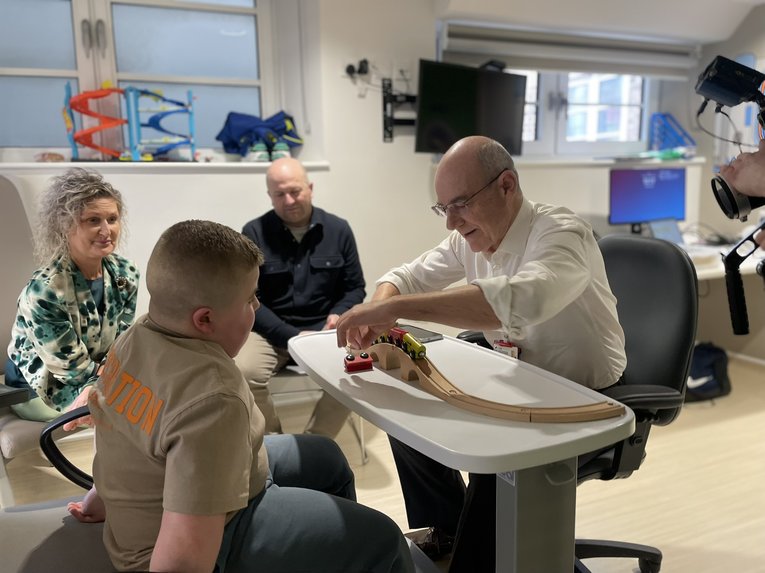
Professor Francesco Muntoni, GOSH Paediatric Neurology Consultant, has been awarded the 2026 Novo Nordisk Prize in recognition of his pioneering work transforming the outlook for children with Duchenne muscular dystrophy (DMD).
GOSH secures £1.4m in NIHR capital equipment funding to boost research capability
This investment will significantly strengthen our research infrastructure and enhance our ability to deliver world‑leading paediatric research across the whole hospital.