
https://www.gosh.nhs.uk/conditions-and-treatments/clinical-outcomes/tourette-syndrome-clinical-outcomes/
Tics clinical outcomes
If you would like this information in another language or format, please contact the Patient Advice and Liaison Service (PALS).
Clinical outcomes are measurable changes in health, function or quality of life that result from our care. Constant review of our clinical outcomes establishes standards against which to continuously improve all aspects of our practice.
About the Tics Service
We are a national service specialising in the assessment, diagnosis and treatment of children and young people with tic disorders. Tics are fast, repetitive muscle movements that result in sudden body jolts or sounds that are difficult to control.
Our multidisciplinary team includes clinical psychologists, psychiatrists and a neurologist. We work closely with referring teams to understand and offer joined up care. The clinic provides care for children and young people with complex tics aged 3-16 years. Young people are most often referred to the Tics Service if they have additional co-occurring difficulties and where there is a question about the diagnosis or advice on treatment is required.
We provide a ‘stepped care’ approach to treatment, meaning that the child’s treatment will be matched to their needs. We aim to offer all interventions in collaboration with the child’s local child and adolescent mental health team (CAMHS) or paediatrician. Depending on the specific needs identified at the assessment, interventions may include psychological treatment or medication recommendations.
Clinical outcome measures
1. Number of cases by intervention
The table below outlines the interventions received by patients within our service following an initial assessment between April 2025 and April 2026. Some patients received multiple interventions.
Intervention and number of patients (N = 181)
- Individual Therapy- 67 (37%)
- Group Behavioural Therapy - 27( 15%)
- Tic Psychoeducation Group - 111 (61%)
- Local Service Consultation - 25 (14%)
- School Consultation - 67 (37%)
2. Evaluation of tics assessment clinic
You said, we did: Feedback from our Assessment Clinic December 2024-May 2026
All young people who come to our service are offered a detailed initial assessment. To learn about families’ experiences of the assessment process, we sent everyone a questionnaire after their appointment. 114 out of 231 families responded (49%), and this is what the results showed:
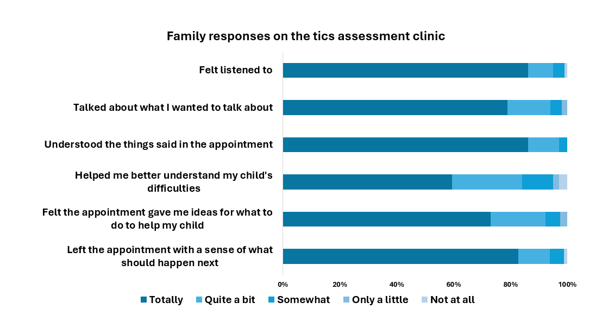
Fig 2. Family responses to an assessment feedback questionnaire, 2024 to 2026
We also asked families for their thoughts on what was helpful and what could be improved in the initial assessments. The families’ comments were grouped into four main themes: emotional parent/carer support, practical parent/carer support, improved understanding and how their child felt.
Parents/carers described feeling heard, finding the assessment helpful and noted that the clinicians carrying out their assessments as “friendly, engaging, professional and knowledgeable”. They reported their children felt the clinicians were kind and compassionate and that they felt comfortable and understood during the assessment. Families shared that they left the appointment feeling “empowered and optimistic…with a renewed sense of hope and clarity” and described feeling well supported by the follow-up care after the assessment.
Suggested improvements included having more information about the appointment before it took place, and more time at the end of the assessment to reflect on feedback received.
What we did
In response to this feedback, we:
- have added further information to our appointment letters to make clear what will be covered during the appointment.
- dedicate extra time for questions at the end of the assessment.
3. Psychoeducation group for tics and Tourette syndrome
We run a tailored group psychoeducation session on tics and Tourette syndrome. The aim of this session is for young people and their families to learn more about tics and how to cope with them.
We evaluated the group with Goal Based Outcomes (GBOs) to find out how useful it is for young people and parents. GBOs measure progress towards a goal that a young person or their family may have chosen to work on. It is rated on a 0-10 scale (0 rated as not yet begun to achieve goal and 10 rated as goal achieved).
The bar chart below shows the average GBO rating before and after the psychoeducation group. These are based on 95 goals collected from 69 young people between June 2025 and May 2026. The data indicates the participants made progress towards achieving their goals.
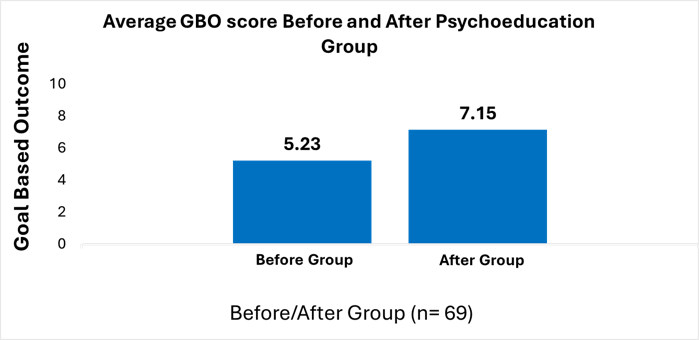
Fig 3. Average GBO scores before and after psychoeducation group, 2025 to 2026
4. Group Behavioural Therapies for Tics
We have delivered group-based interventions for children with tics in our clinics since the late 1990s. In addition to developing strategies to manage and control tics, we noticed that meeting other children helped children feel more comfortable with their tics and be more knowledgeable about their conditions. They also made friends with other young people with tics, and their parents also found new friends who had children with tics.
We initially carried out a study that offered Habit Reversal Training in a group intervention, which was found to be effective. After a few years, we then adapted our individual exposure and response prevention (ERP) therapy to a group therapy approach. This facilitated young people meeting one another and enabled the team to work through our waiting list efficiently.
The group therapy was delivered once per week over a period of eight weeks. We now collect GBOs before and after each eight-week group. The bar graph below shows the average GBOs before and after the group. These are based on 34 goals collected from 17 young people between January 2025 and May 2026. Following the group, participants made progress towards achieving their goals.
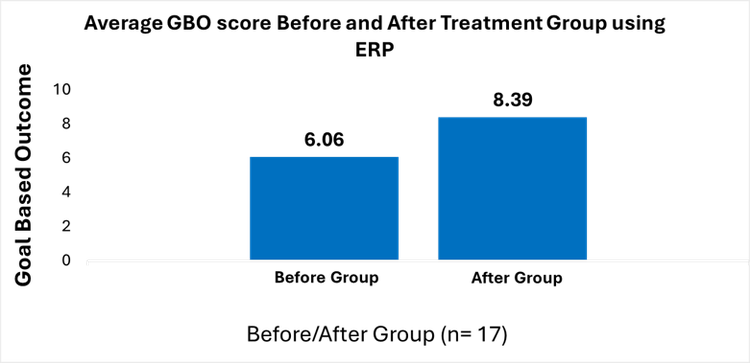
Fig 4. Average GBO scores before and after treatment group using ERP, 2025 to 2026
Continuous improvement
Given the vast geographical area we serve, our team offers the option for families to attend their initial assessment remotely. We surveyed families about their experiences of remote assessment and they reported they valued the avoidance of travel expenses, increased flexibility and reduced absenteeism from school and work. Virtual appointments where clinically appropriate may help to reduce health inequalities.